This year, the talks programme brings together multiple voices and perspectives addressing needs and ideas that have already been circulating across dancefloors, studios and communities.
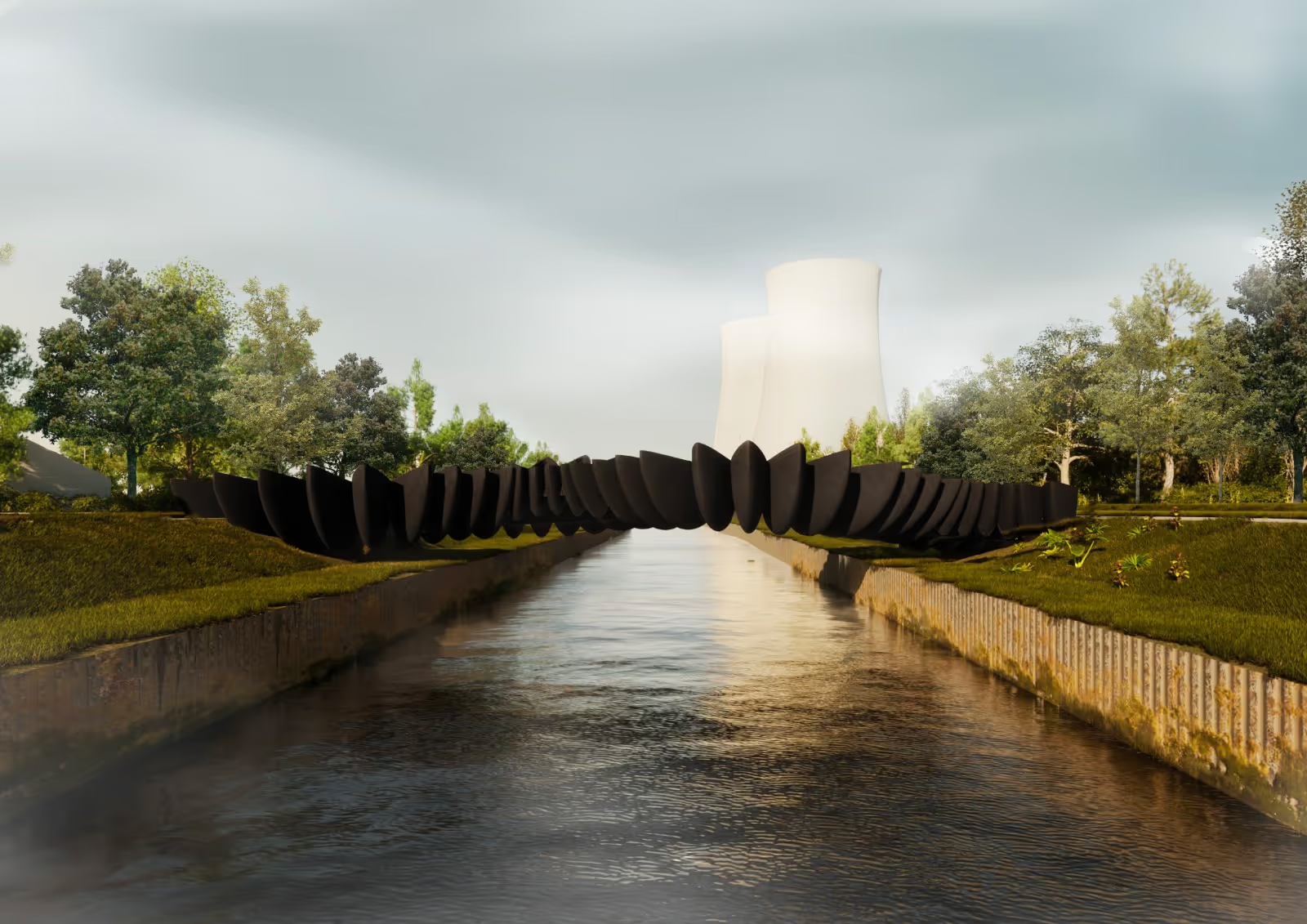
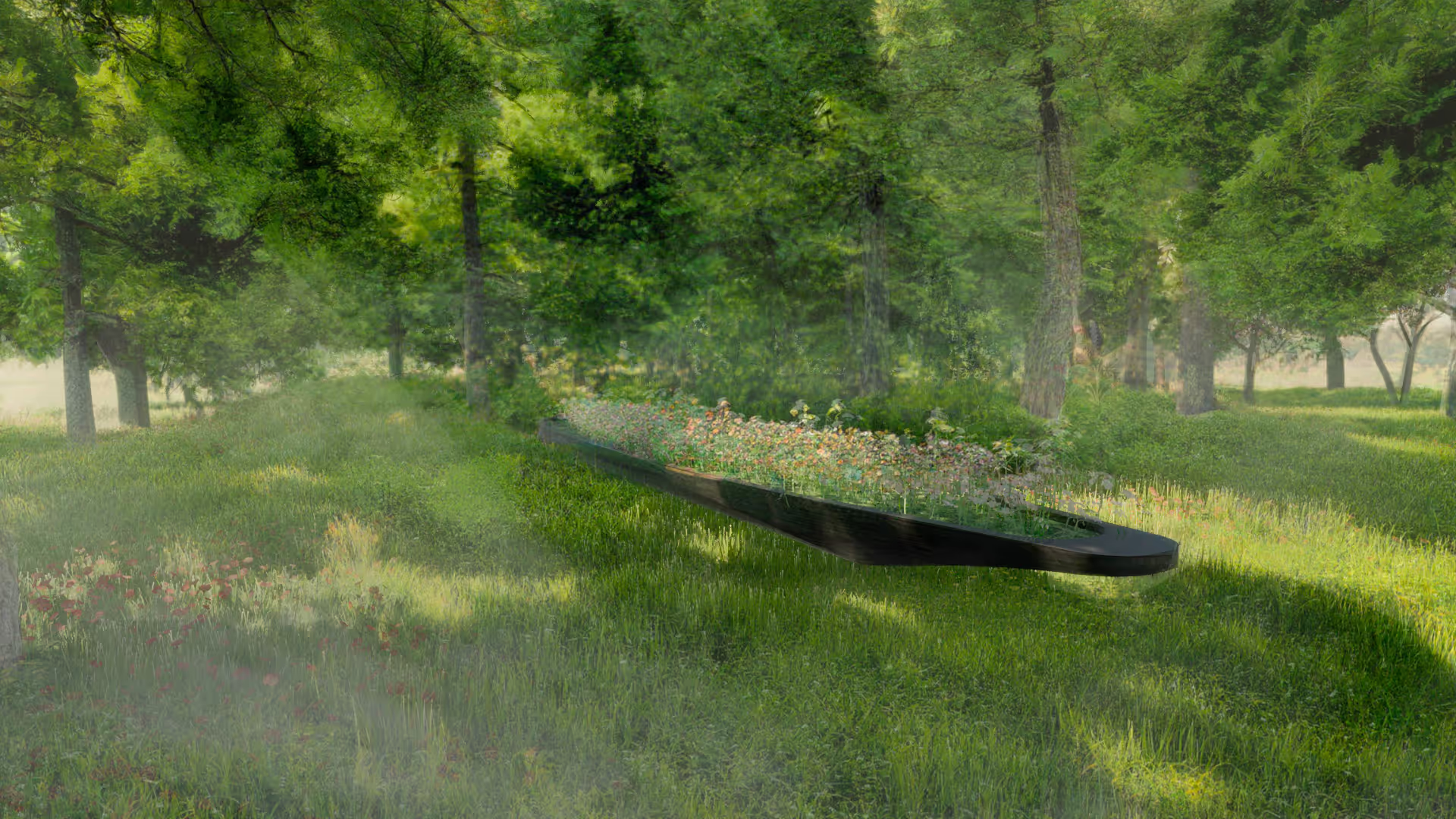
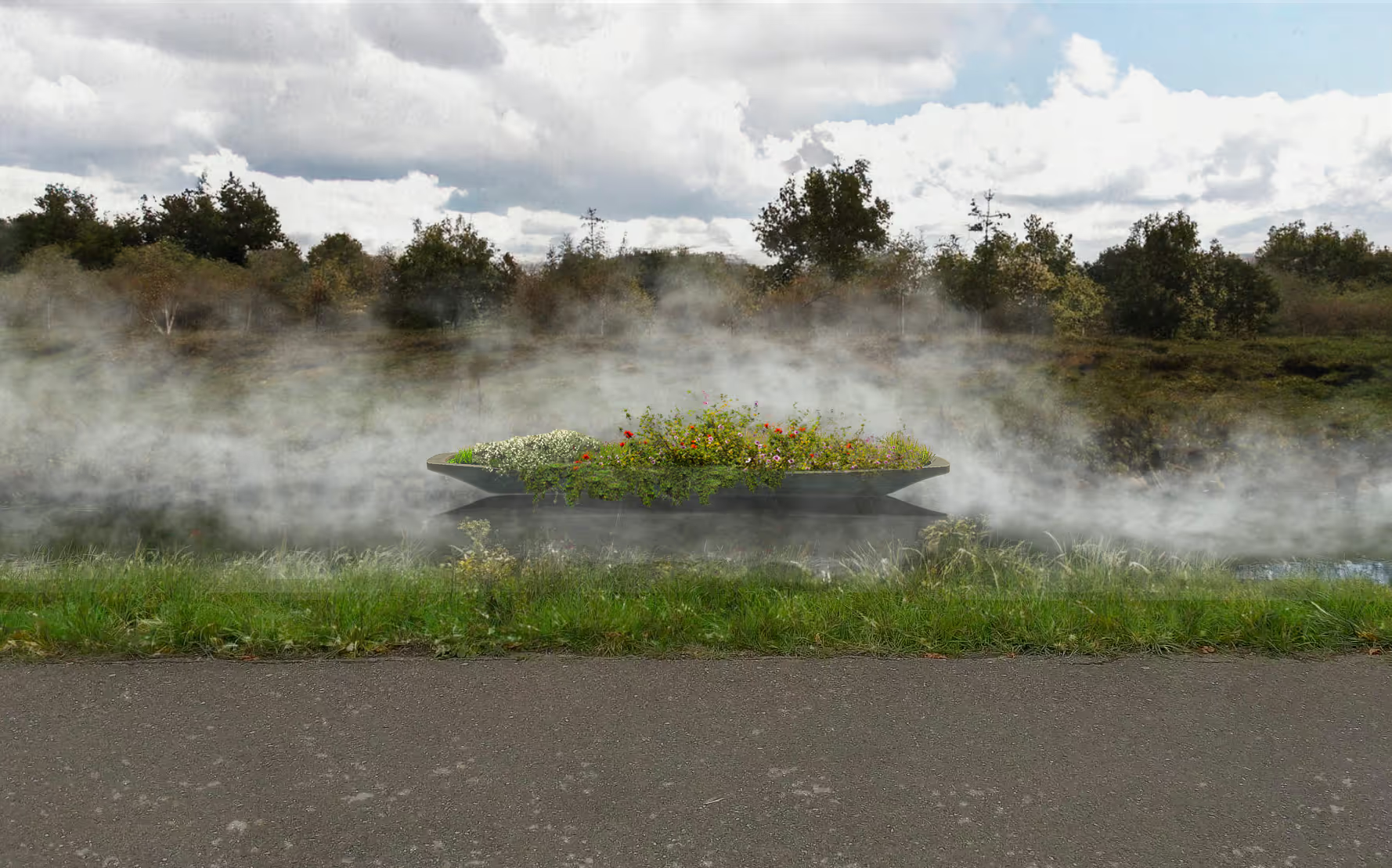
In our newly designed space by Eline Dewit we are opening them up, holding them in common, and moving them forward collectively.
Across five sessions the Rain Room is reimagined as a space for exchange. Panelists sit in the round, dissolving the distance between speaker and listener, while audiences are invited to actively shape each conversation. Questions, reflections and frictions are not reserved for the end, but woven throughout.
This year’s programme traces key conversations shaping contemporary culture today: from authorship, value and structural inequality in Black Art and White Money, to the realities of building and sustaining local scenes; from the pressures of independency in an increasingly financialised landscape, to multidisciplinary practices that move fluidly across performance, art and music; and the role cultural organisations can play in addressing gender imbalance.
Each talk brings together practitioners working across different contexts, artists, organisers, curators, broadcasters, whose practices are rooted in the same ecosystems that Horst both reflects and contributes to.
Thursday, 14 May

15:30 - 18:00
Kitchen Table Talk is a new project by FOR ALL QUEENS!, supported by sociaal-cultureel volwassenenwerk. We’re excited to welcome the first pilot edition to Horst Festival. With a strong lineup of artists and thinkers from our generation, we gather around the statement:
BLACK ART IS WHITE MONEY
(inspired by the work of Black Tag)
Kitchen Table Talk moves beyond representation and visibility, and away from trauma-consumptive formats. Instead, it centers the kinds of conversations that usually happen behind closed doors — at the kitchen table. A space to reflect, to challenge, and to hold each other accountable.
This conversation is carried by a lineup of thinkers and artists who work directly within these dynamics. Lynnée Denise (archival research and sonic storytelling), Mayowa Lynette (art and critical practice), and cultural theorist Madison Moore draw from their respective fields to map the tensions between visibility and compensation. Guided by Olave Basabose
Friday, 15 May

15h30 - 16h30
Scenes don’t appear, they are built, held and sustained over time.
Across different cities and contexts, Jeff Van Hoek (Operator Radio, Rotterdam), Kamaal (The Lot / Silence Space, NYC) and Ariana Van Tongerloo (waltur / Burenhinder) have each been involved in shaping platforms that extend beyond programming into community infrastructure.
From radio as a public space to grassroots parties and hybrid cultural initiatives, their work reflects different ways of building ecosystems that are both locally rooted and globally connected. The conversation traces how scenes take form through continuity, care and shared ownership and what it takes to maintain that energy as they grow.
Together, they reflect on the conditions that allow communities to emerge, and how to sustain them without losing what made them vital in the first place.
17.00 - 18.00
In an age of radical helplessness towards a constant exposure to death, how can the ritualistic assembly of bodies serve as a reminder of our autonomy? To collectively mourn and remember is to resist the normalisation of loss, the disposability of bodies, and the invisibilisation of people and communities whose deaths are rendered ungrievable. How can all of this play out in a context of celebration, ecstasy and escapism such as a music festival?
This conversation zooms in on two artistic commissions developed for Horst Festival 2026.
In The Rise, Paul Maheke translated his research at Villa Medici (Rome) on funeral rites, post-mortem violence, and the representation of marginalised bodies in death, into a multi sensorial installation. A place of remembrance, of memory and spectral presence. Fallon Mayanja developed Hymn, a performative adaptation of Julius Eastman’s The Holy Presence of Joan d’Arc (1981), by bringing together nine bodies and voices in a collective ritual of presence, remembrance, and resistance. Mayanja's project was developed within the framework of The Constant Now, a nomadic non-profit that empowers artists of colour, run by curator Magali Elali.
Saturday, 16 May

15h30 - 16h30
Moderated by PAF (Platform for Architecture & Feminism), the session reflects on how cultural organisations can actively contribute to more equitable ecosystems and what it means to build those changes over time.
Alongside Aliki Loizidis (l’ÉQUIPE), speakers Emma Cogné, Jaume Mayol (TEd’A) and Pia Sirén bring perspectives rooted in architecture, curation and cultural production, fields where questions of access and representation remain deeply embedded.
Drawing from their respective practices, the conversation moves beyond gender balance as a statistic, towards the underlying conditions that shape participation: from organisational structures and working environments to networks of visibility and support.
17.00 - 18.00
What does it mean to remain independent in a landscape increasingly shaped by scale, investment and return?
As financial pressure mounts across the cultural sector, the space for autonomy is continuously being renegotiated. Rising costs, shifting audience expectations and the growing presence of venture capital are realities that shape how festivals, clubs and platforms operate day to day.
Drawing on experiences across different parts of the ecosystem, Arni Atta (Arni.wav) reflects on independent artistic practice within a rapidly evolving scene, while Elisa Luengo brings insight from her work shaping programmes at Dekmantel and De School. From the perspective of large-scale, community-driven models, Karoline Lucks (Fusion Festival / Mensch Meier) considers alternative organisational structures, as Marc Steens (LiveDMA / Clubcircuit) situates these questions within a broader European network of venues and cultural policy.
Together, and guided by Chal Ravens (No Tags), the conversation moves between lived experience and structural analysis, opening up the realities behind the scenes: what forms of resistance, adaptation or reinvention are possible?
{{slider-1}}
All photos are from Horst Festival 2025


%203.jpeg)