

captured by those that build it.




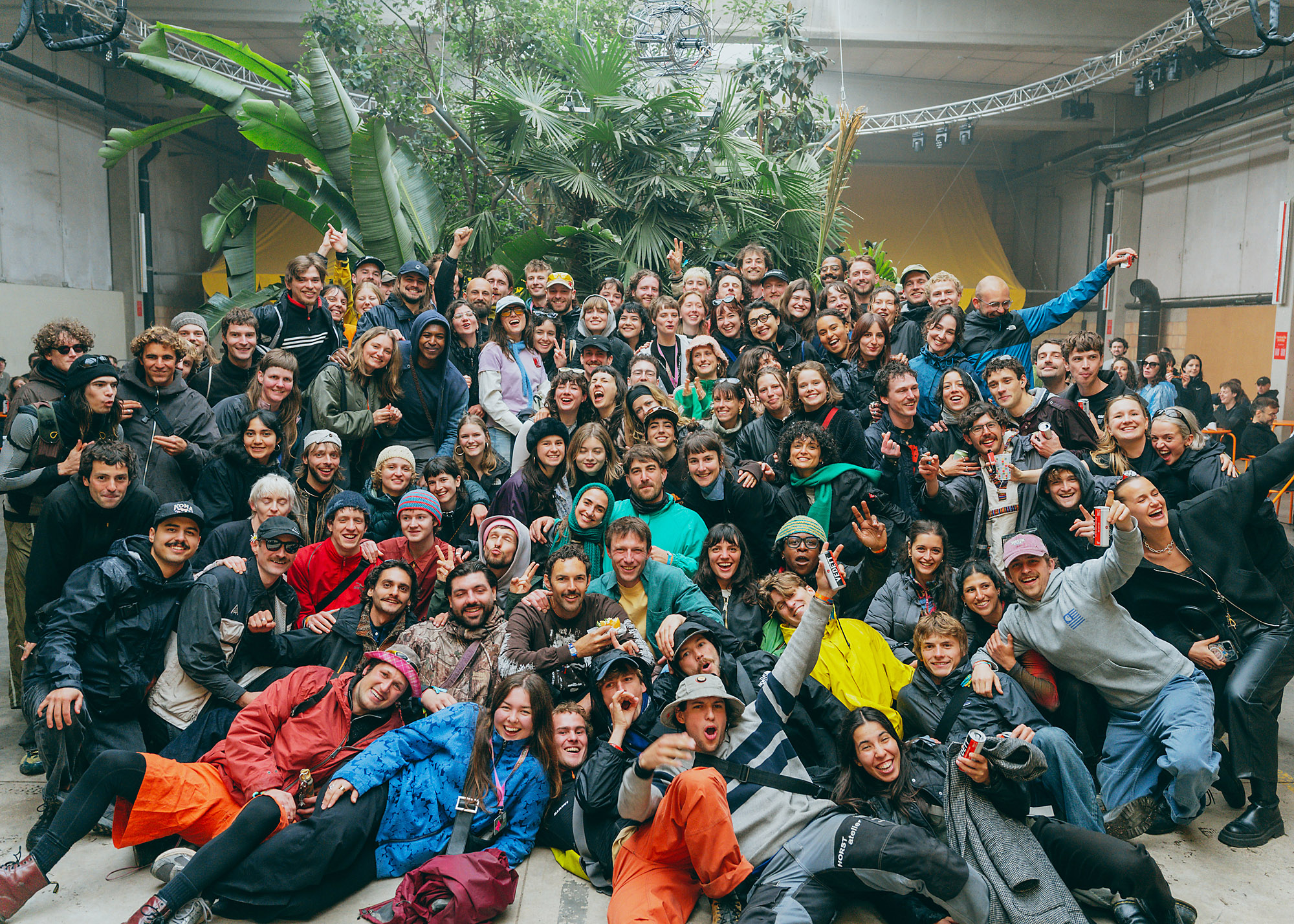
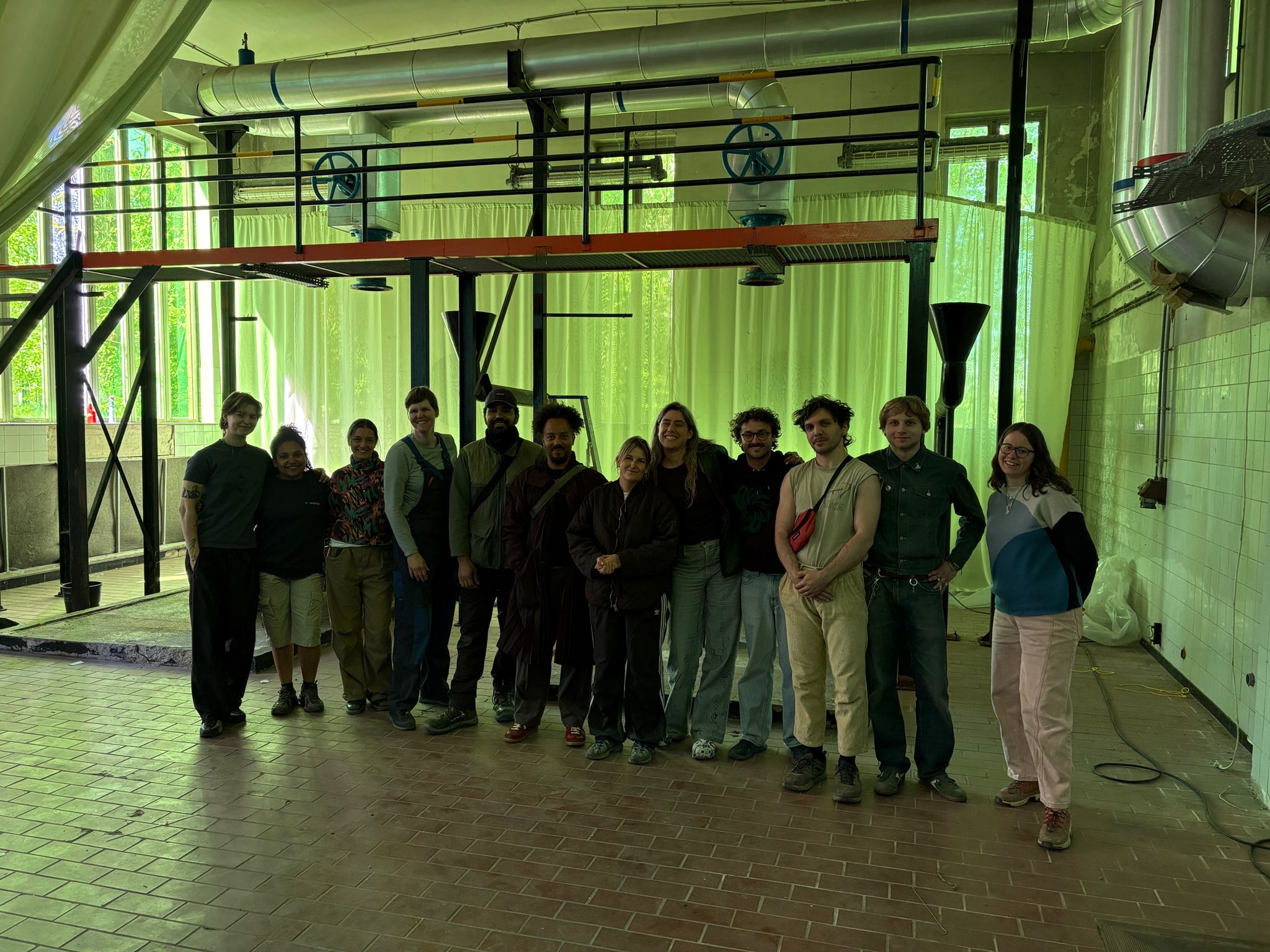
They say many hands make light work. But looking back on the last four weeks of the atelier, it’s more true to say that many hands make meaningful work at Horst.
These are hands that held the atelier as a warm home, made it their own; these are the people who, in one moment, created an ecosystem that will continue grow from the nourishment of meeting one another.
What was built here was more than a festival alone.
These were hands that found each other. Strangers who slowly became familiar. People who made space for one another, learned from each other, and became friends for life.

In every bolt that was tightened. In every piece of wood that had to be cut to size and fixed in place. In every piece of fabric that was cut or woven. In every plant placed in just the right spot. In every stone set with the necessary precision. In every fence, every bench, every structure that took shape there was care. There was dedication. There was the sparkling commitment of people wanting to build together towards something greater than themselves.
We look back on these weeks with warmth, and with deep pride towards all the atelier participants. Towards how they gave themselves to this project, to each other, to the community that quietly came into being here.
Because perhaps that is the true power of the atelier: not merely the end result of impressive towers and artworks enjoyed by thousands for a weekend, but rather that it brings people together in a truly remarkable way – a way that shapes us for the rest of our lives, which we will look back on long after the work is done.
These are the hands of the volunteers behind Horst Atelier. Hands that built, got dirty, listened and connected. Hands that turned an atelier, just for a moment, into a warm home.
Every challenge thrown was caught with strength and perseverance.
Over the past weeks, we witnessed a remarkable collective effort – people coming together from different places and backgrounds to build, create, support, and share. What emerged went far beyond the physical structures on site. A community took shape through all the conversations, meals, challenges, long days, and shared moments that made this Atelier so special.
Thank you for shaping this edition of the Horst Atelier, for building something that goes far beyond the physical, and for holding the spirit of Horst so dearly <3
We want to say a heartfelt thank you to each and every one of you for the lifelong handprints these weeks with you have created.
Big love, Maria and Korneel x
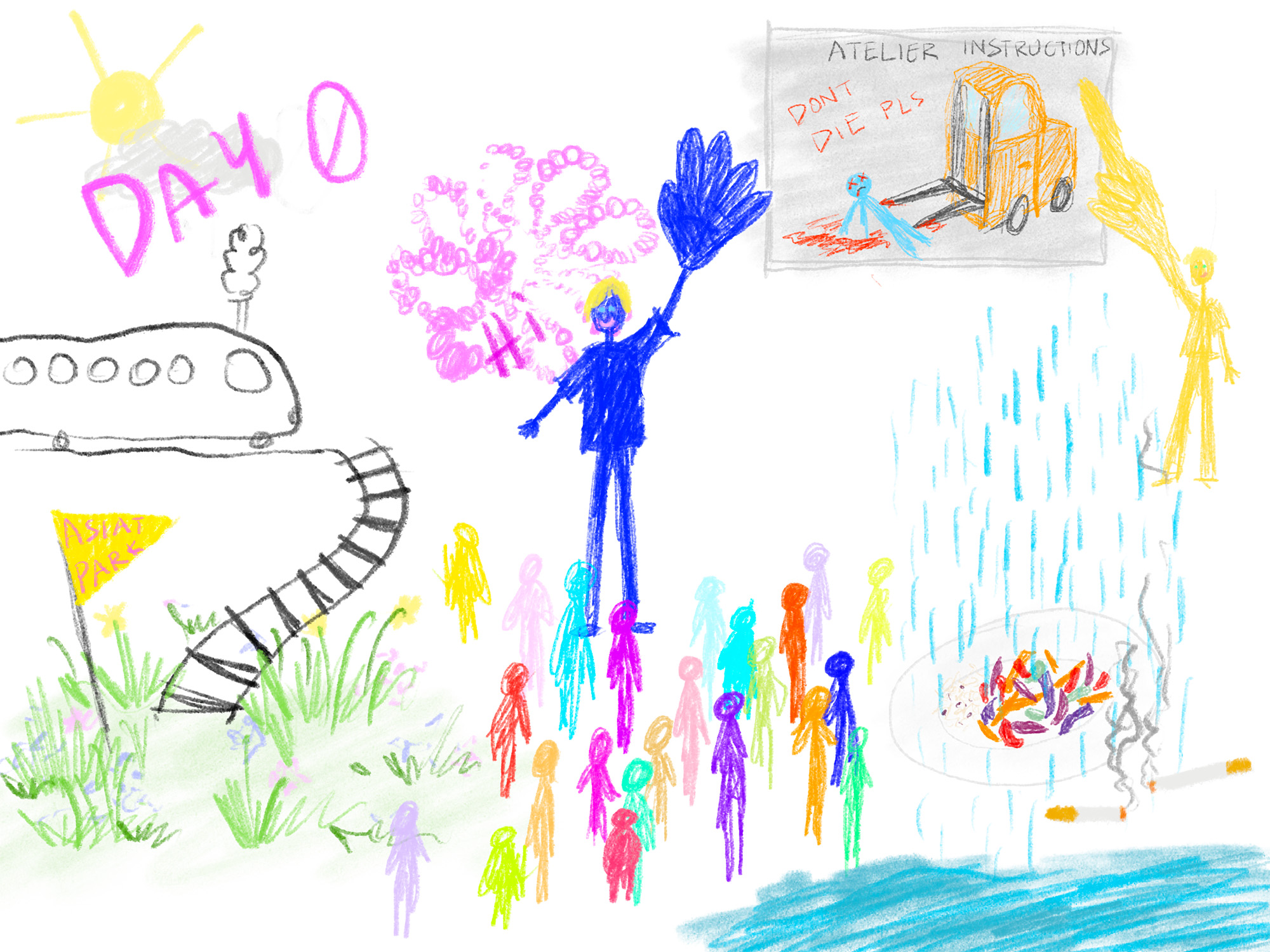
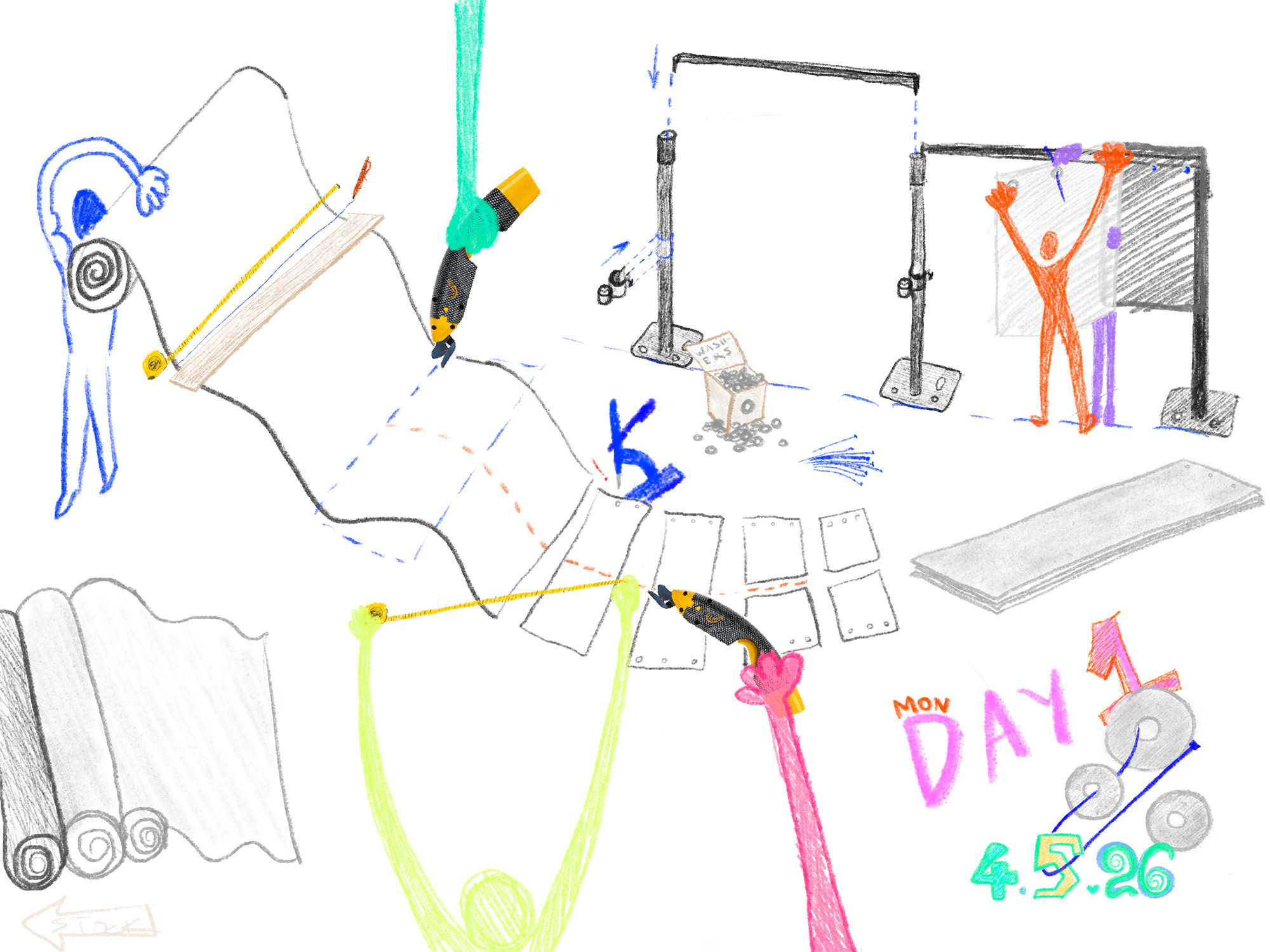
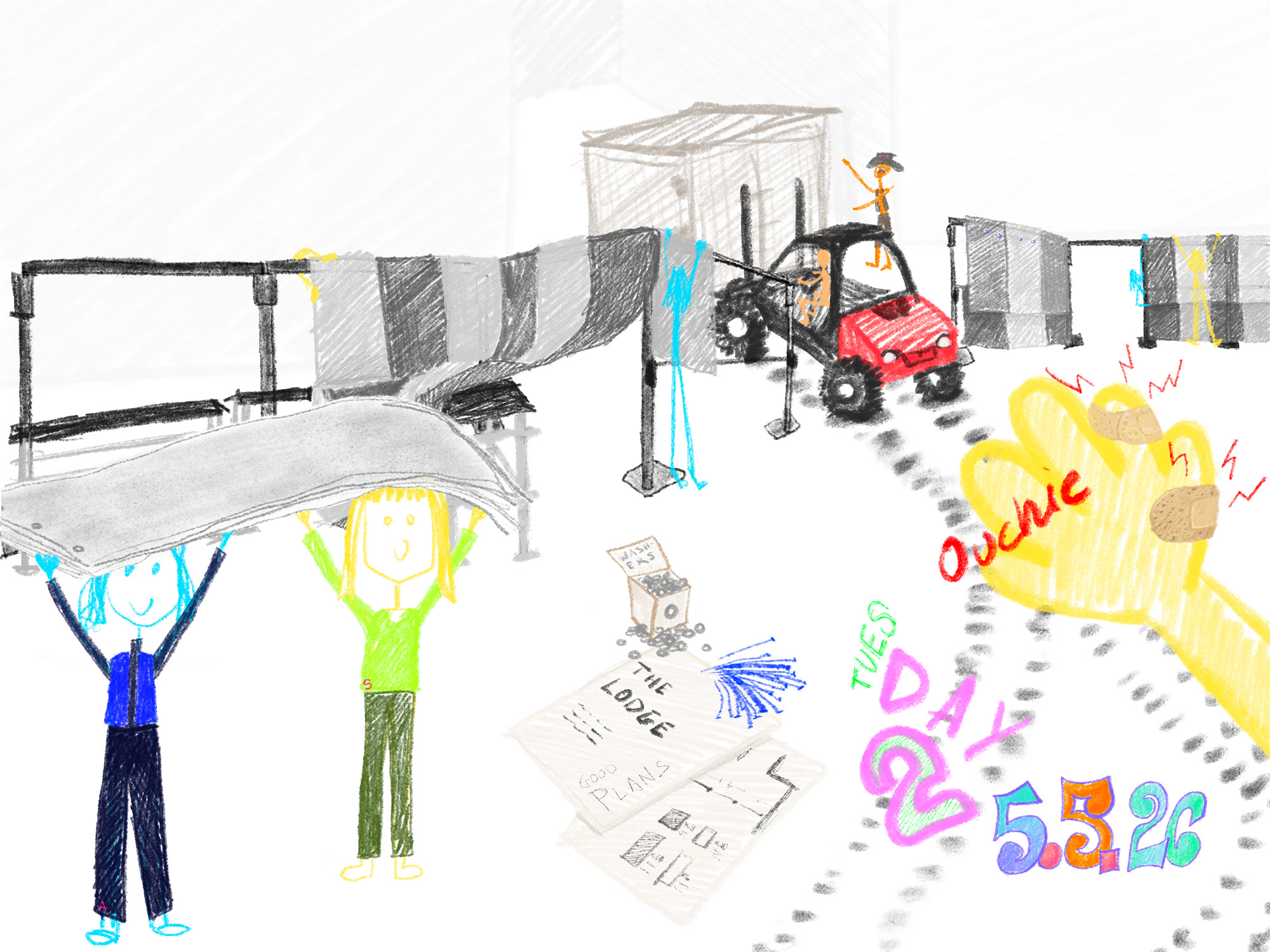
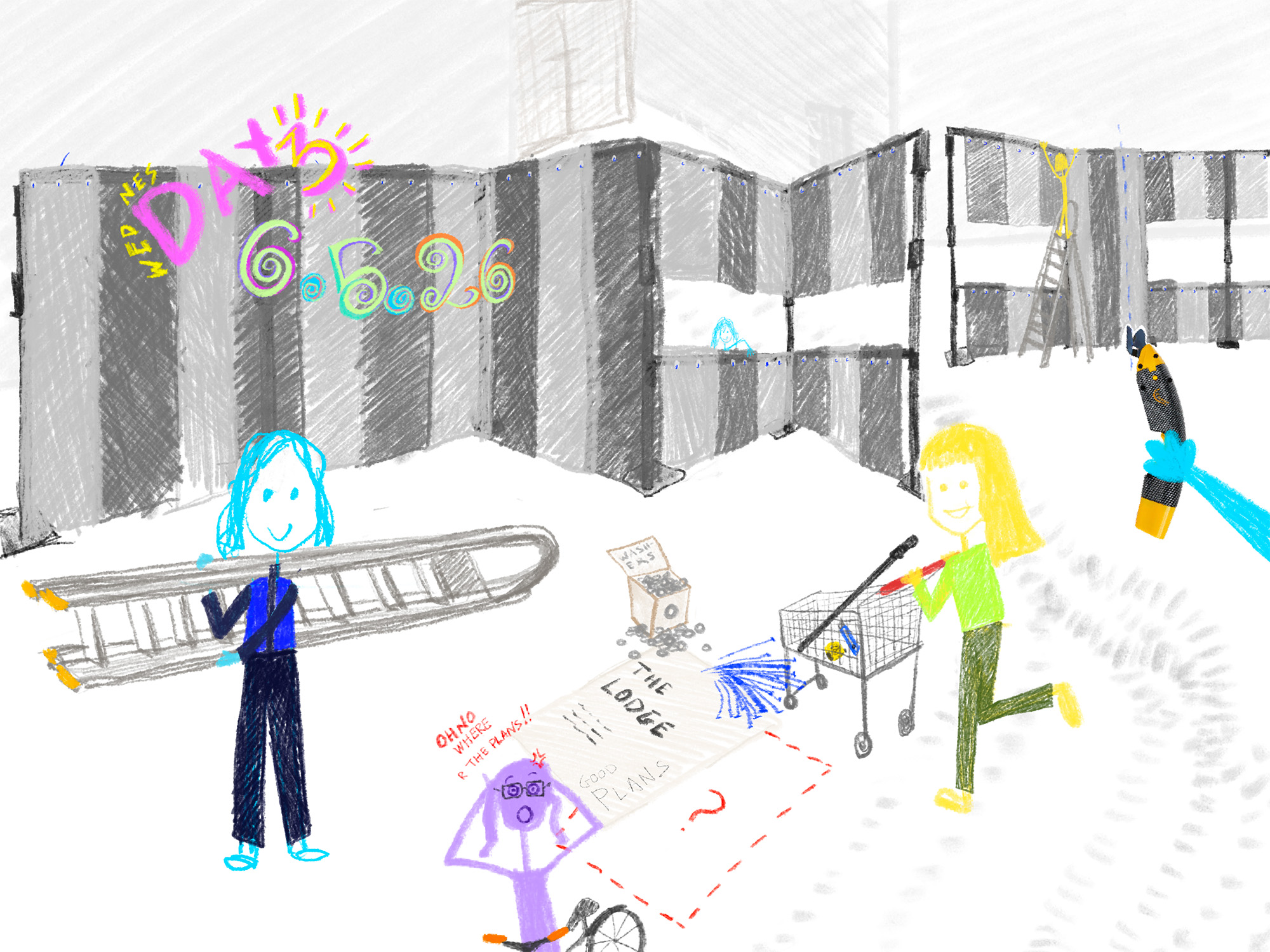
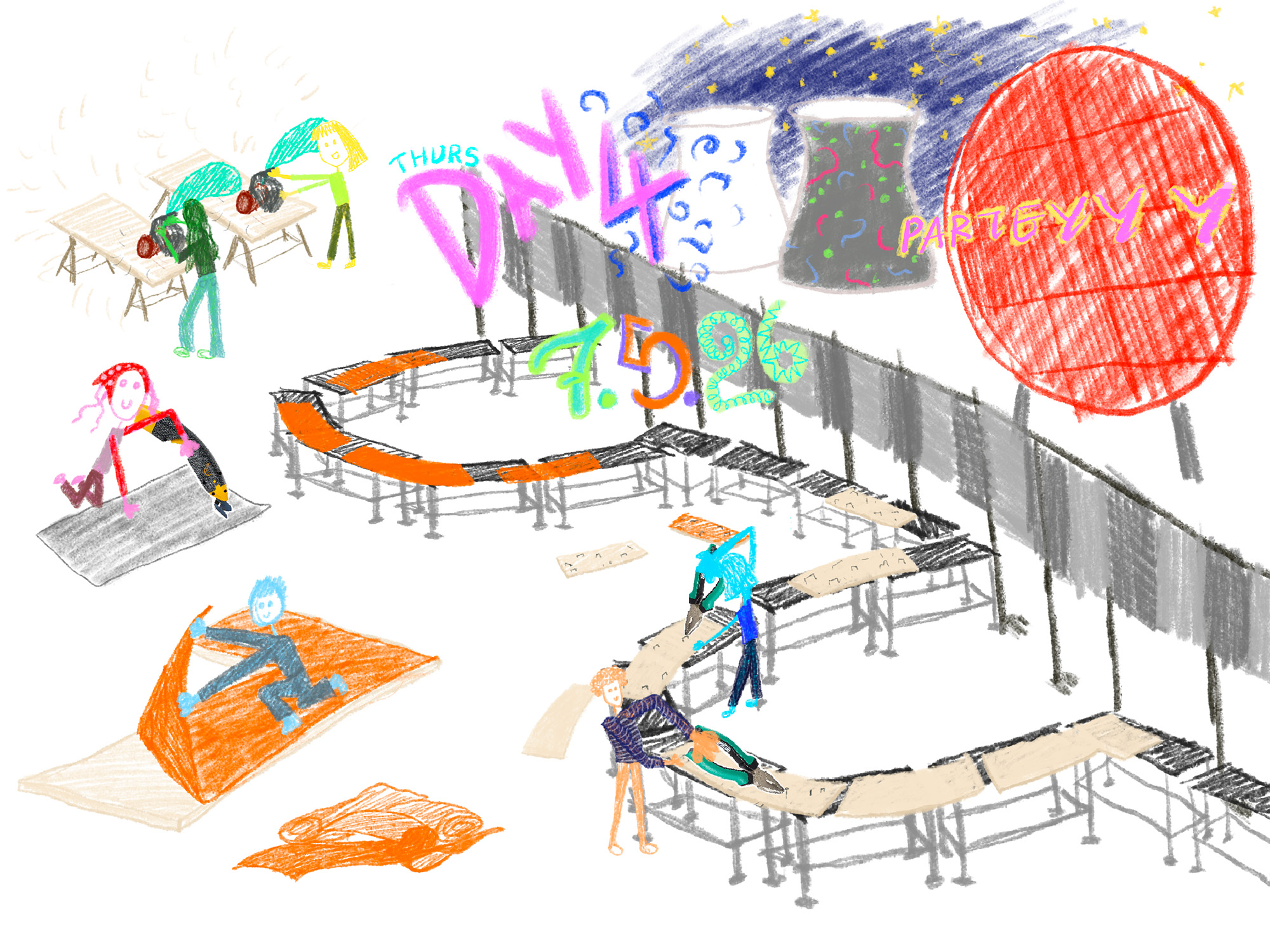
Looking back at the most intense build-up week of Horst, through Aglaia's charming drawings that capture her time in the Scenography atelier.
Worn their way. We asked the people joining Horst Ateliers to show us what they wear.

The final week of installation of Building Biosphers – the intricate garden installation by Bureau Bas Smets that now calls Rain Room its new home – captured by Suli Thijs.

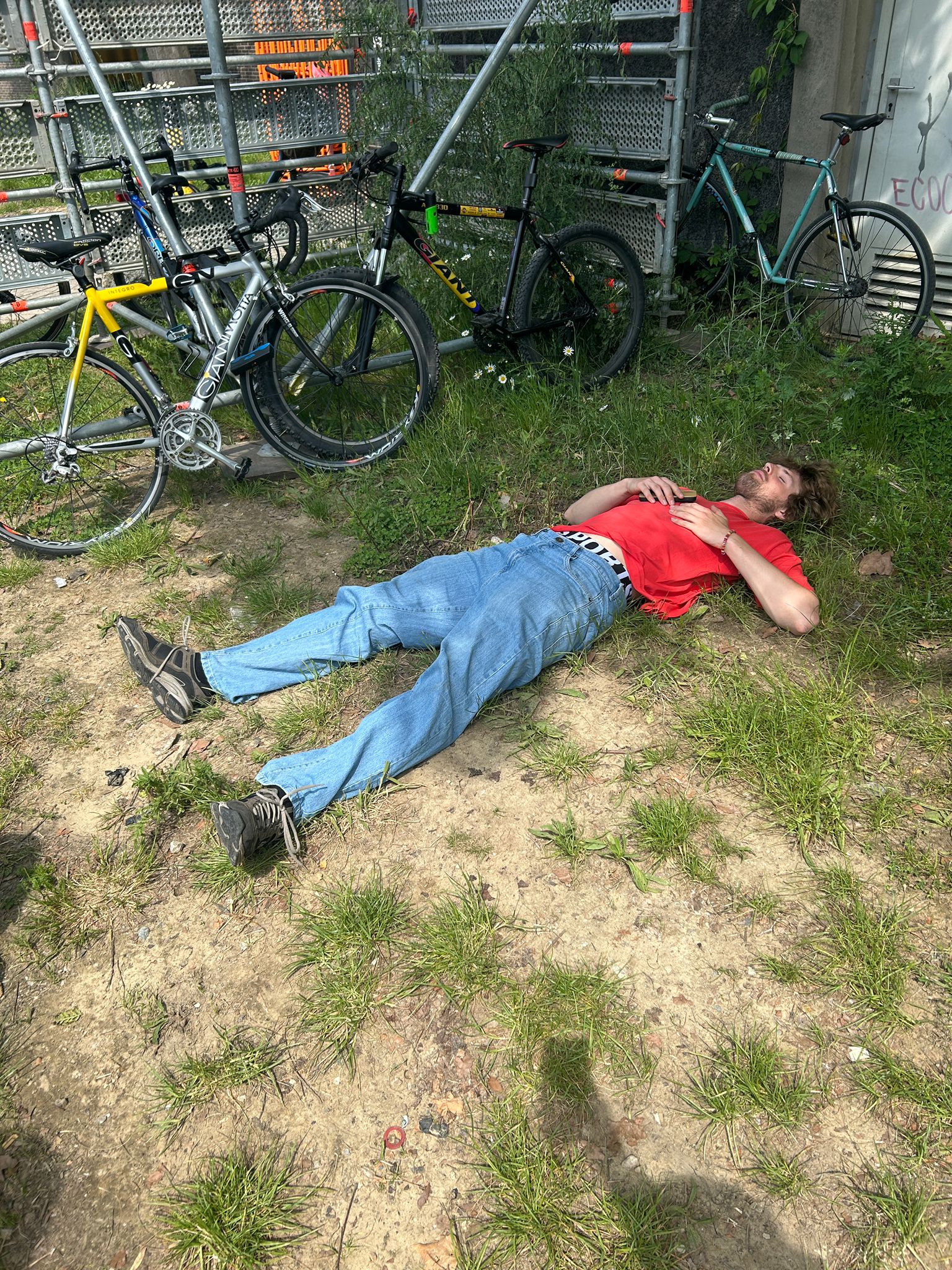


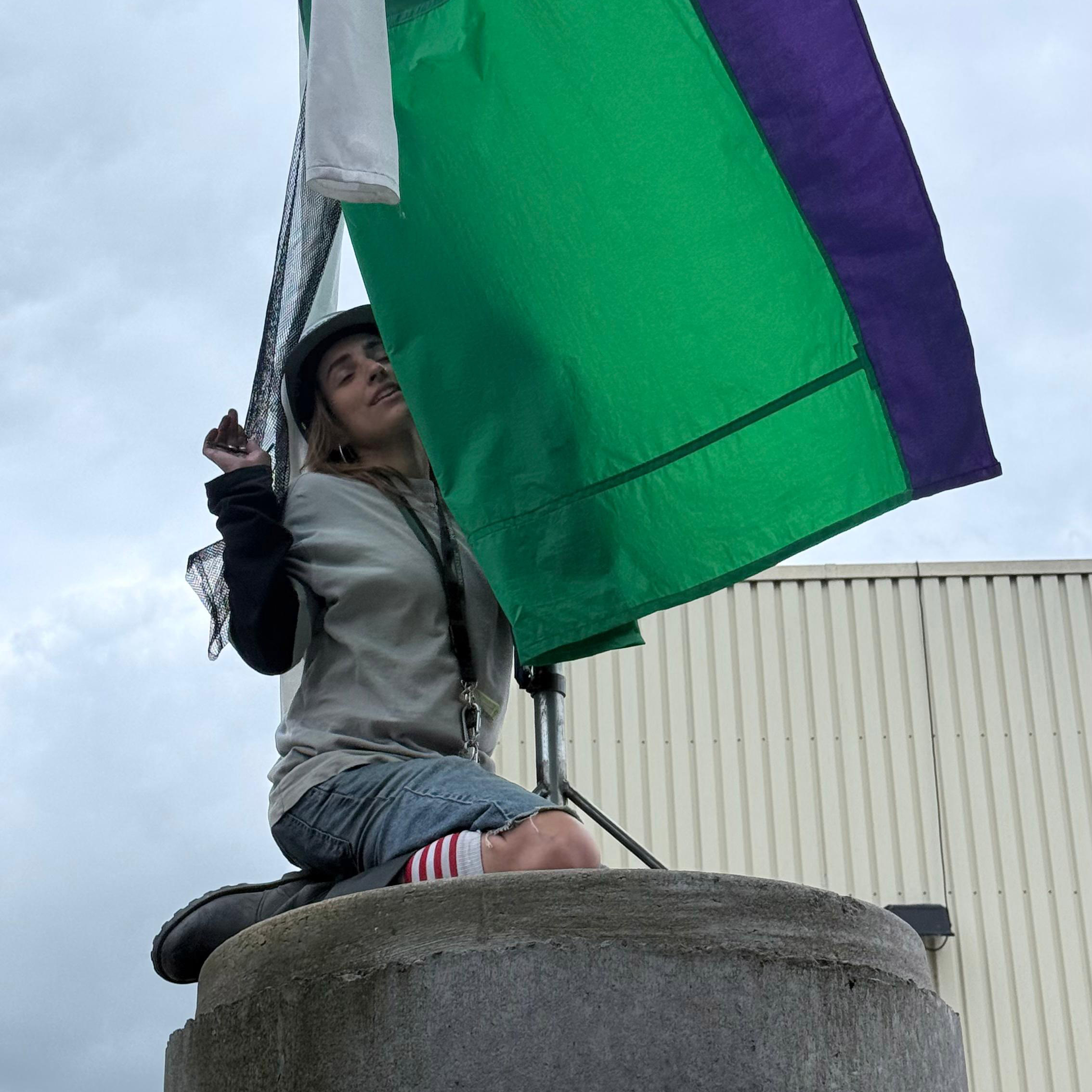
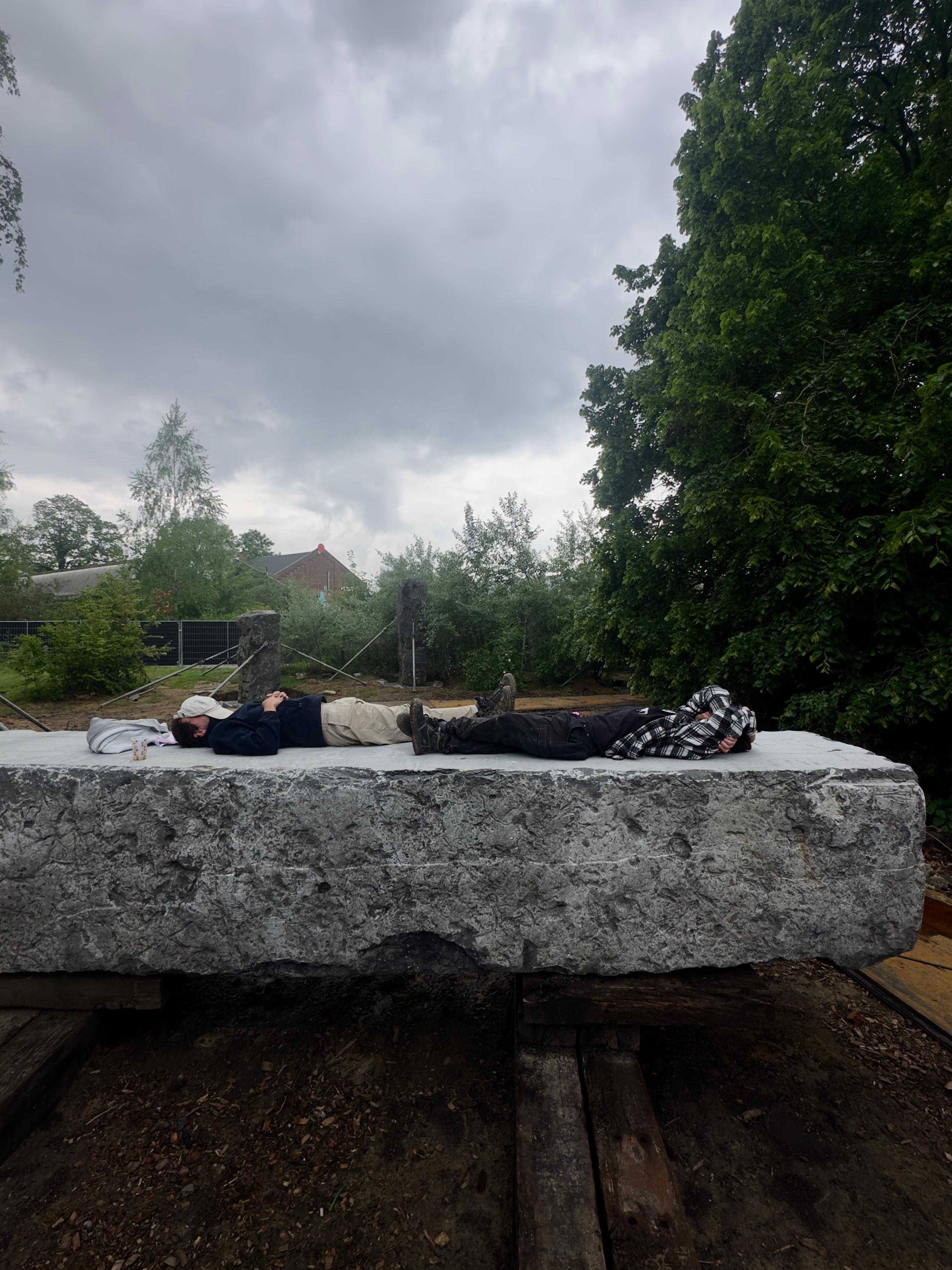
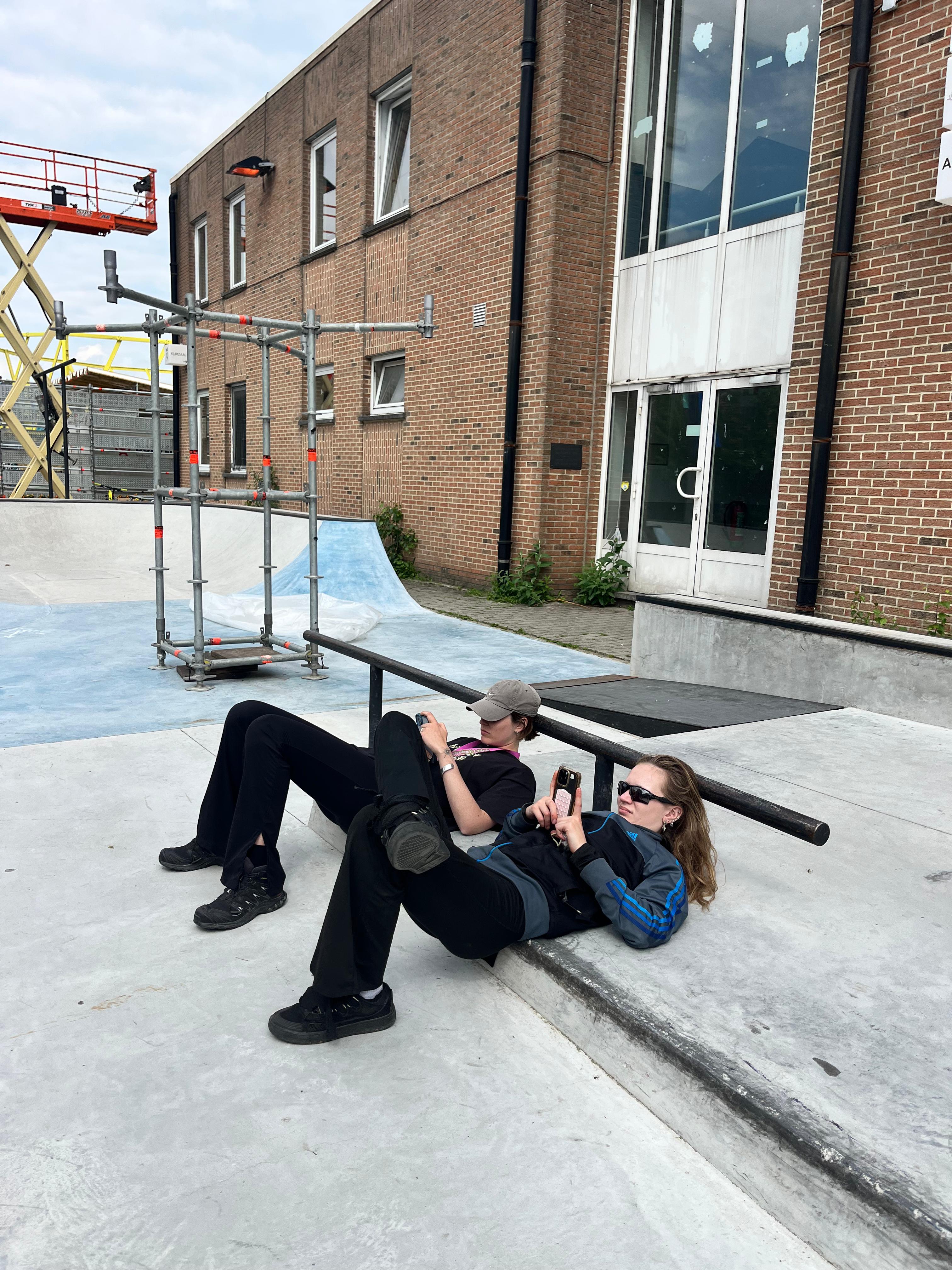
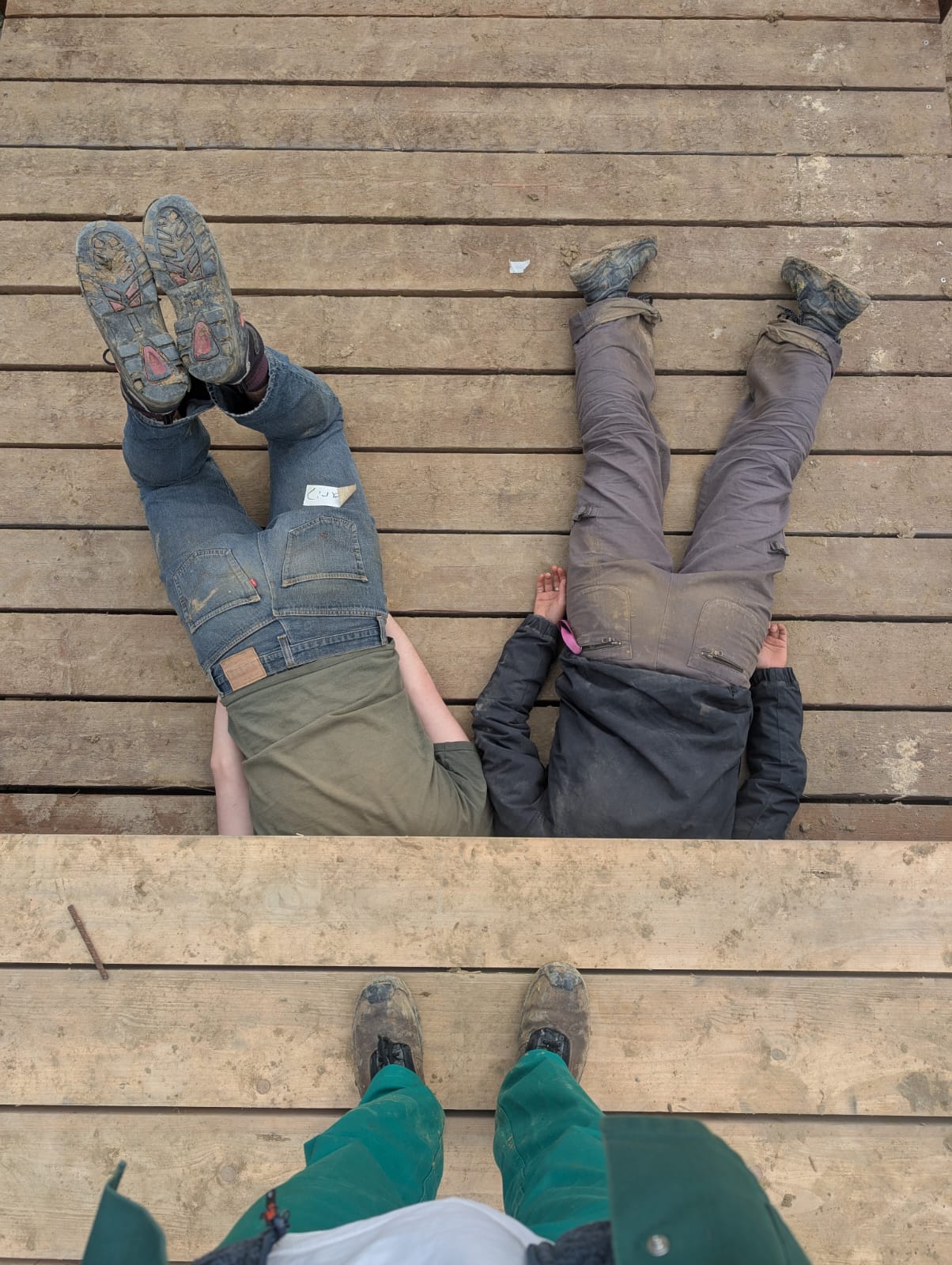
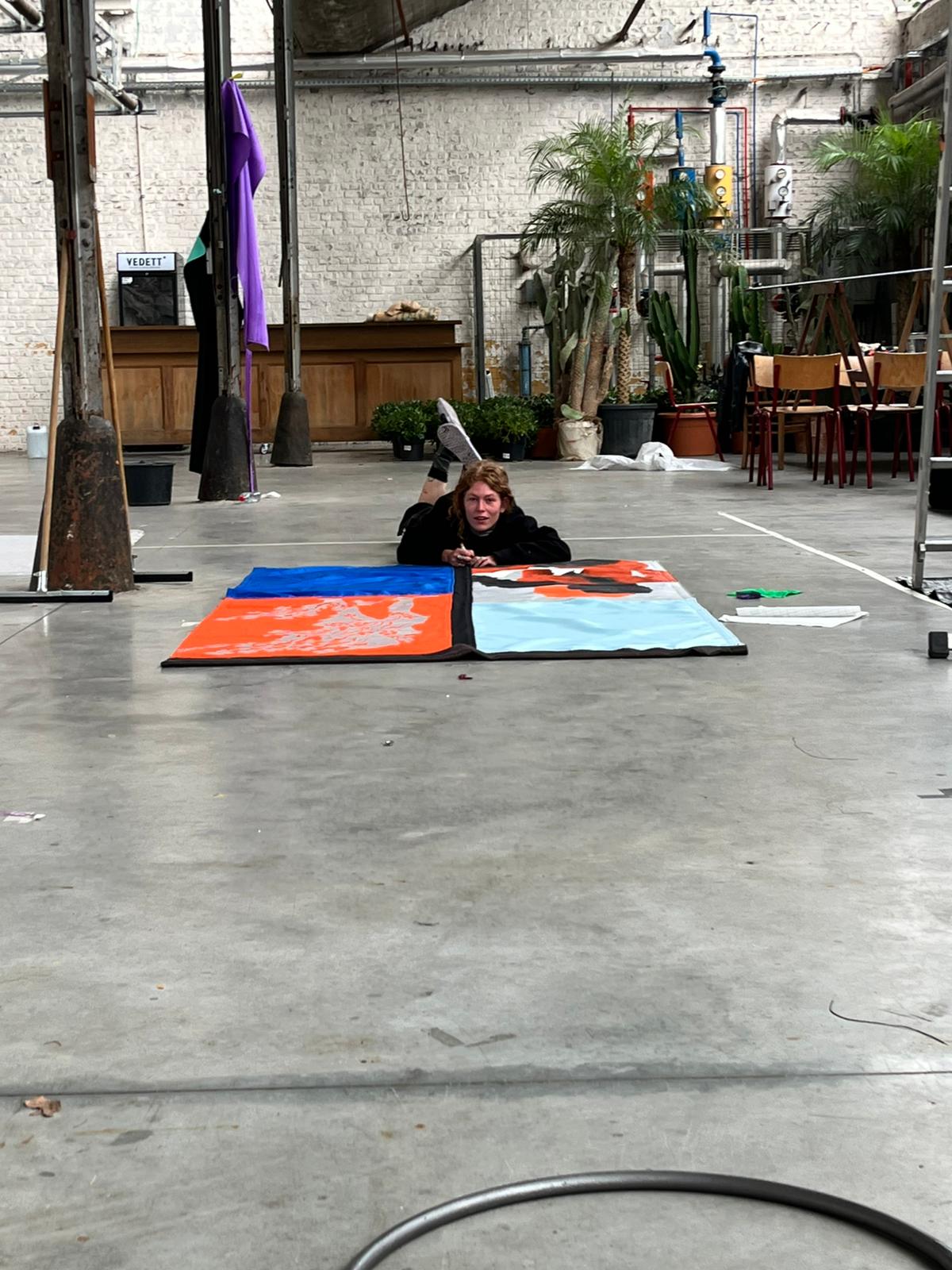

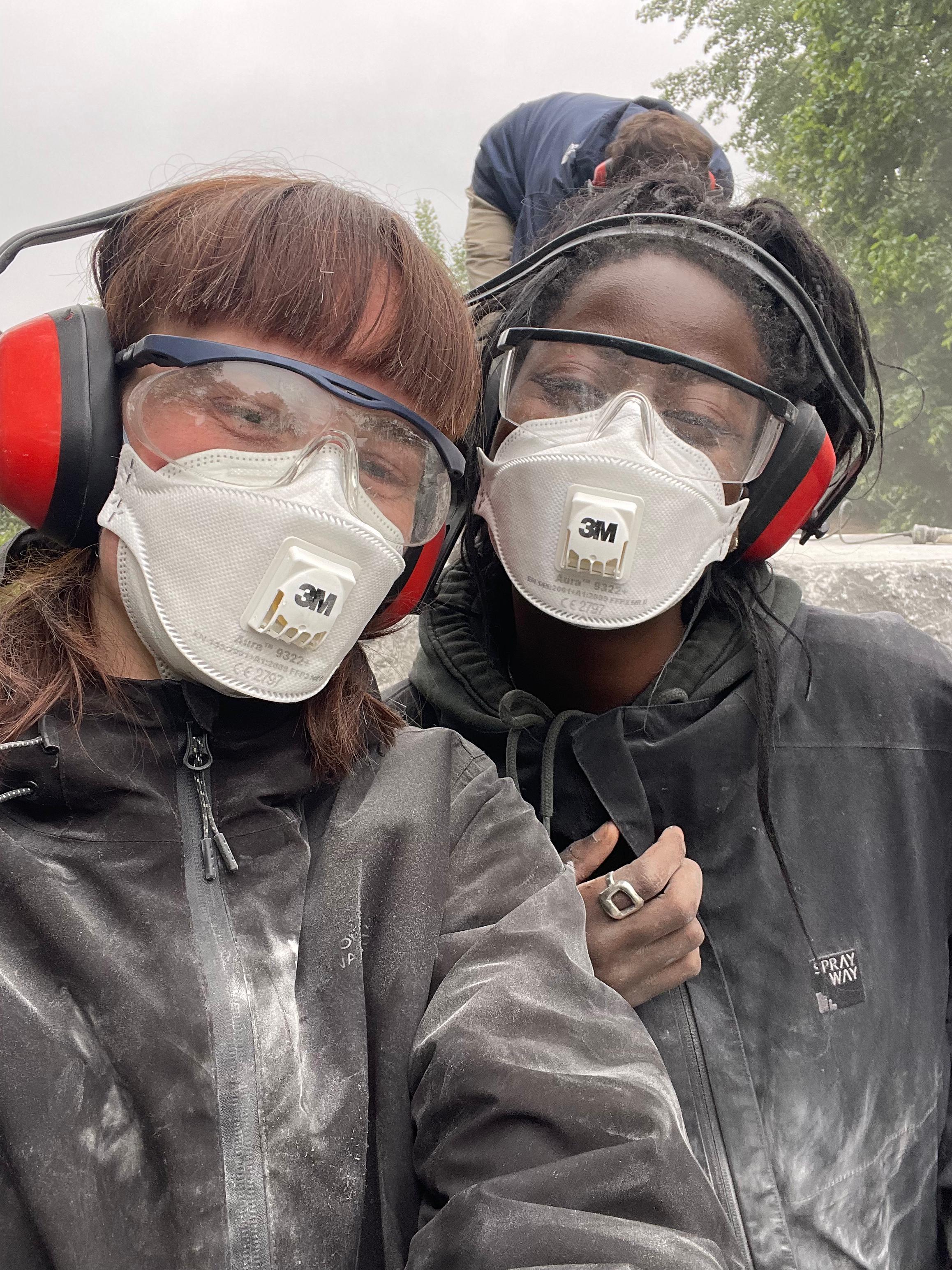
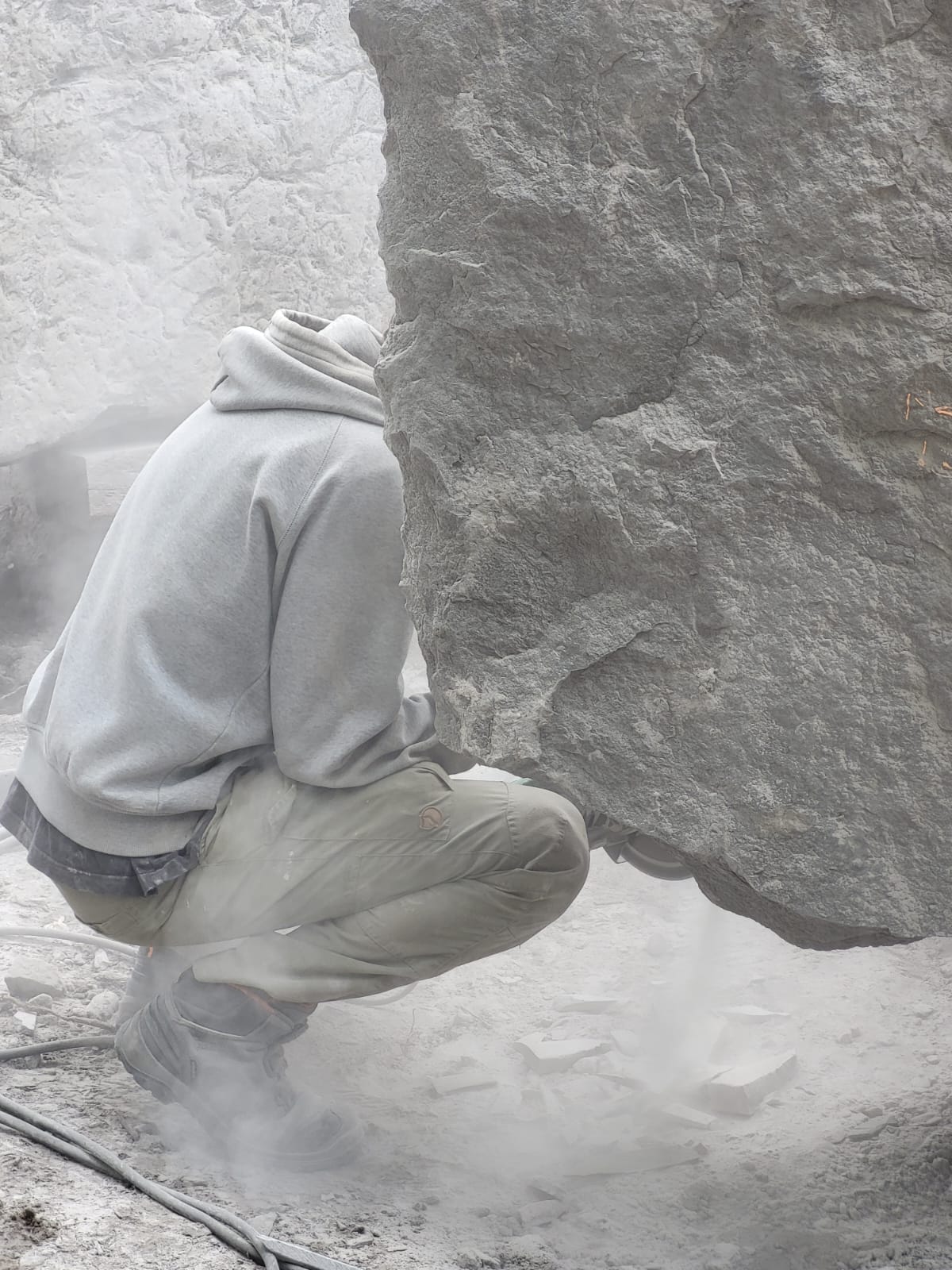
Drilling, sawing, chiselling, sculpting. No stone was left unturned during what could have been one of the dustiest weeks of Horst Atelier – the week #3 of New Moon Ra.
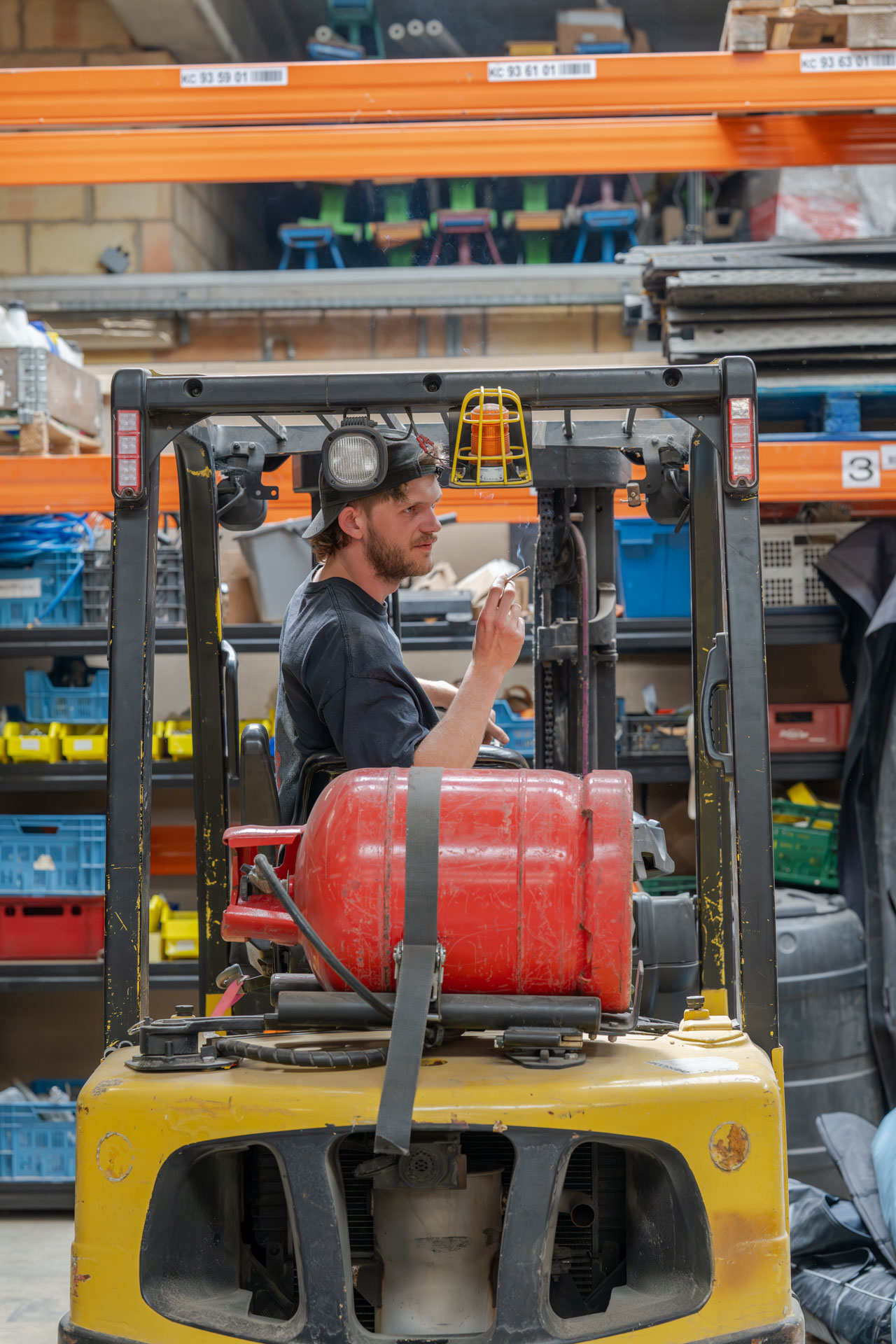
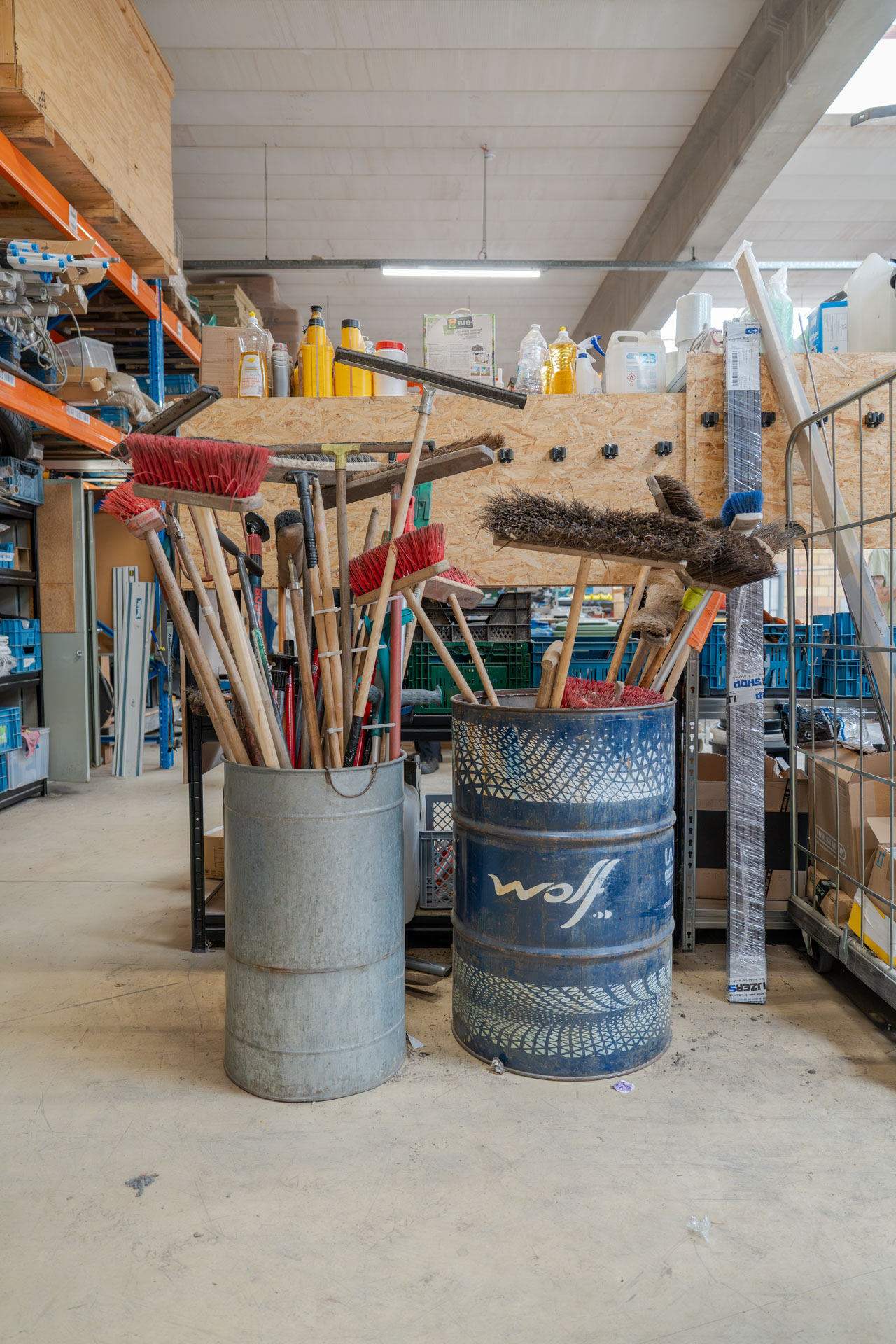
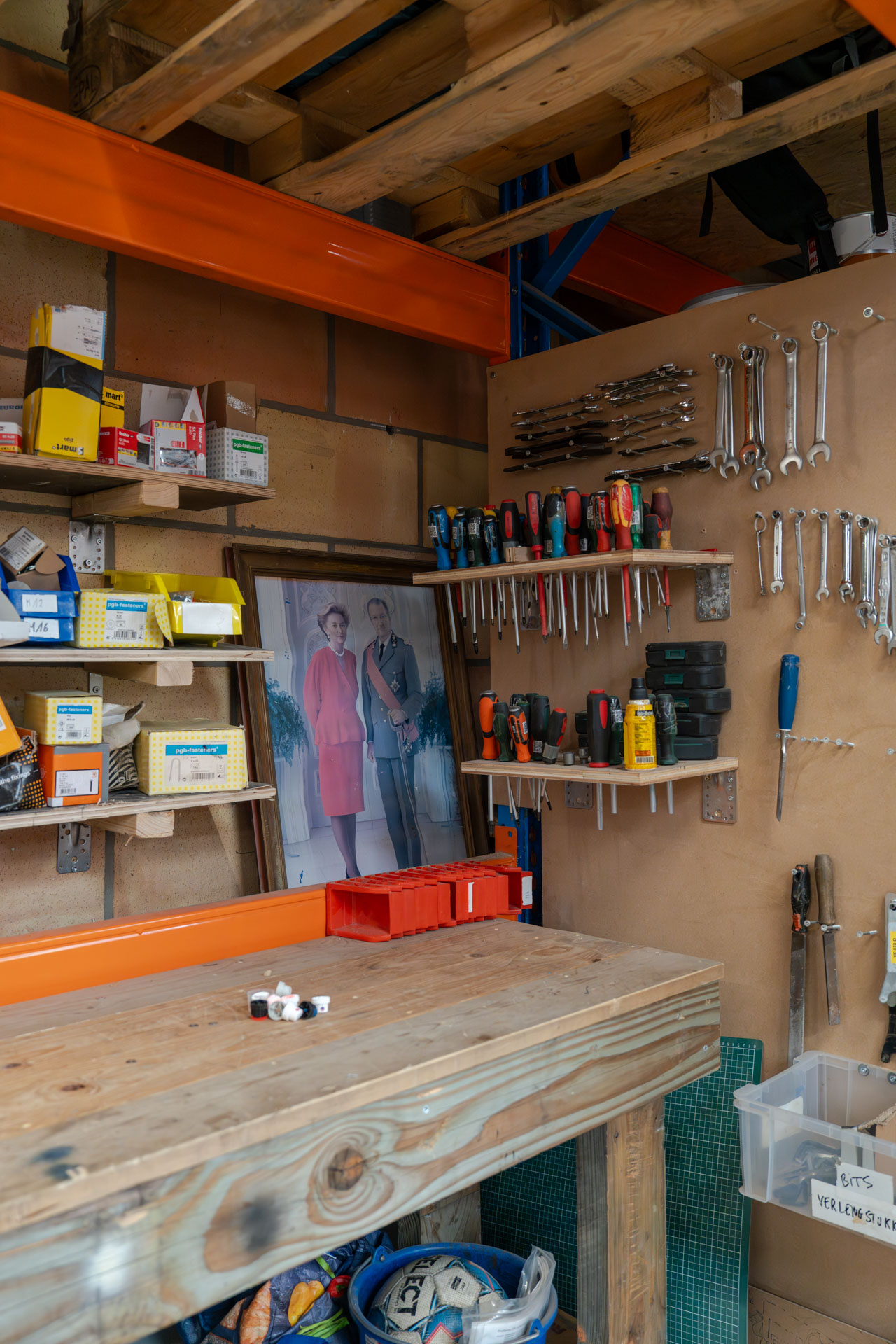
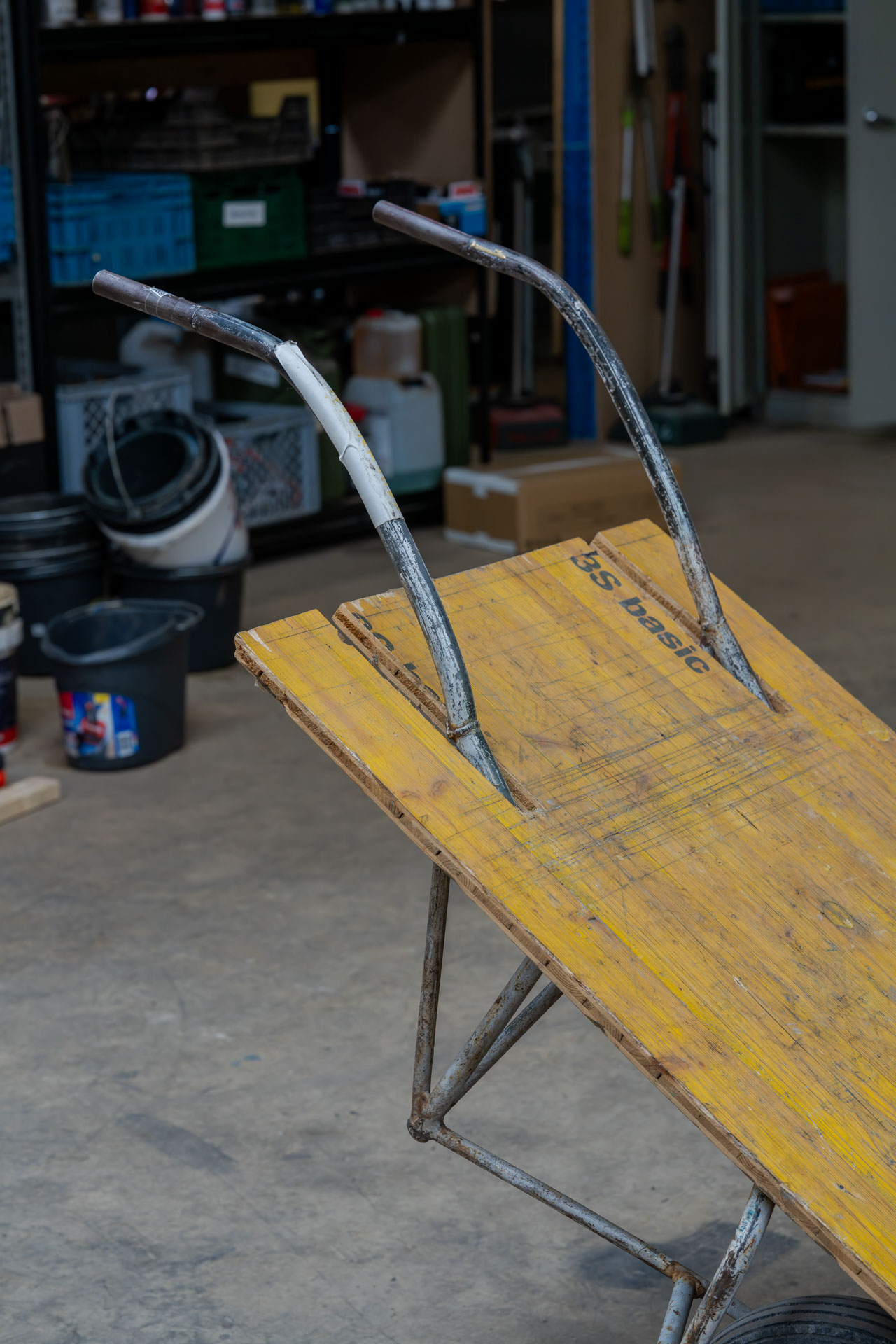
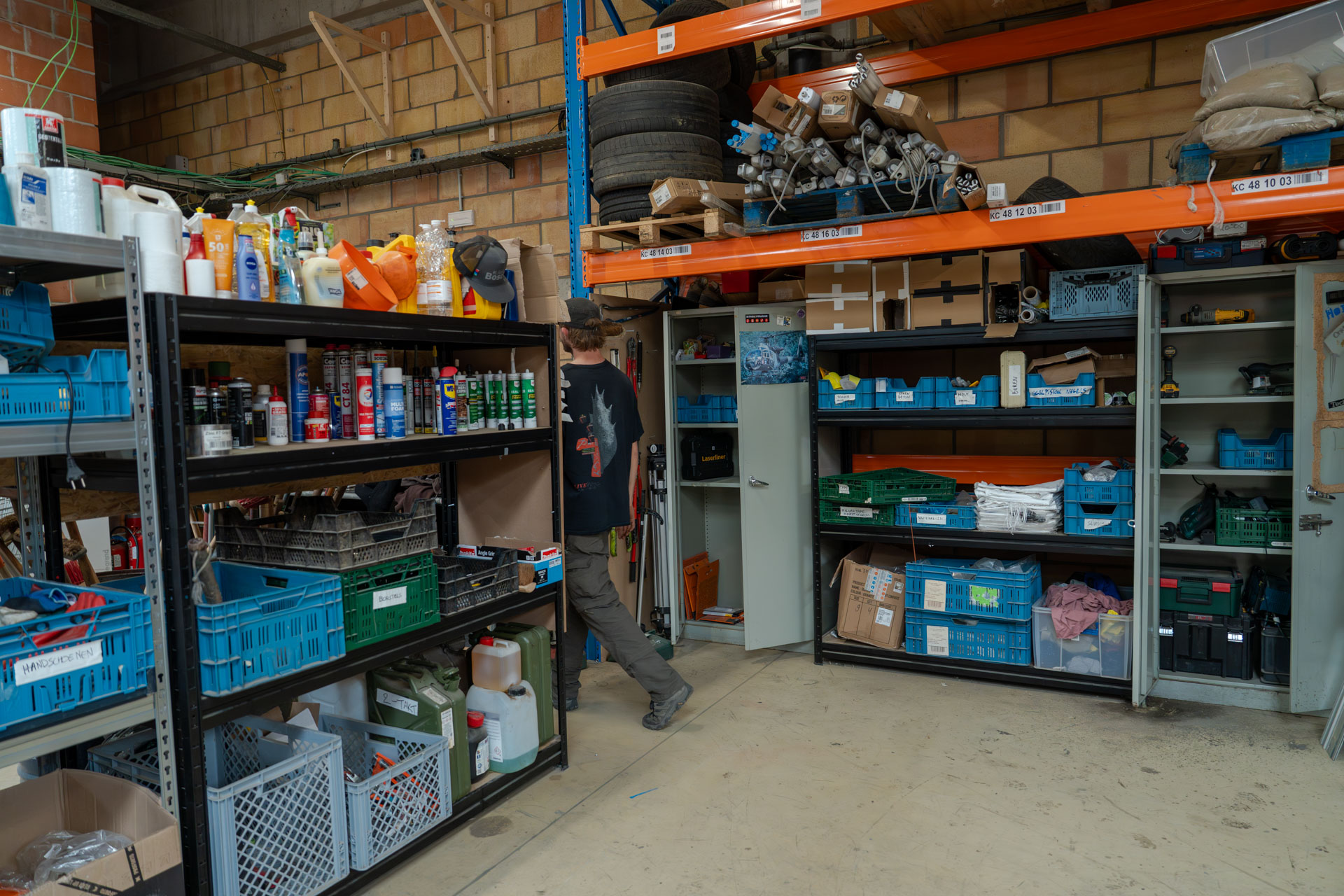
Maxime Jacobs, the Warden of the Stock — the gear & tools arsenal that powers all Ateliers — gave our photographer a little tour.


Day 1: A lot of grinding on the menu. I am preparing the poles of Succession [atelier] for the welding.
Day 2: I grinded my finger. I'm good.
Day 3: The welder came. We are moving so fast! Baby grind on meee! We are done with the grinding and the ceilings.
Day 4: I welded at Horst!!
Day 5: Last day at Horst Atelier. I felt nostalgic yesterday. Today I am in denial. We are the best team ever <3

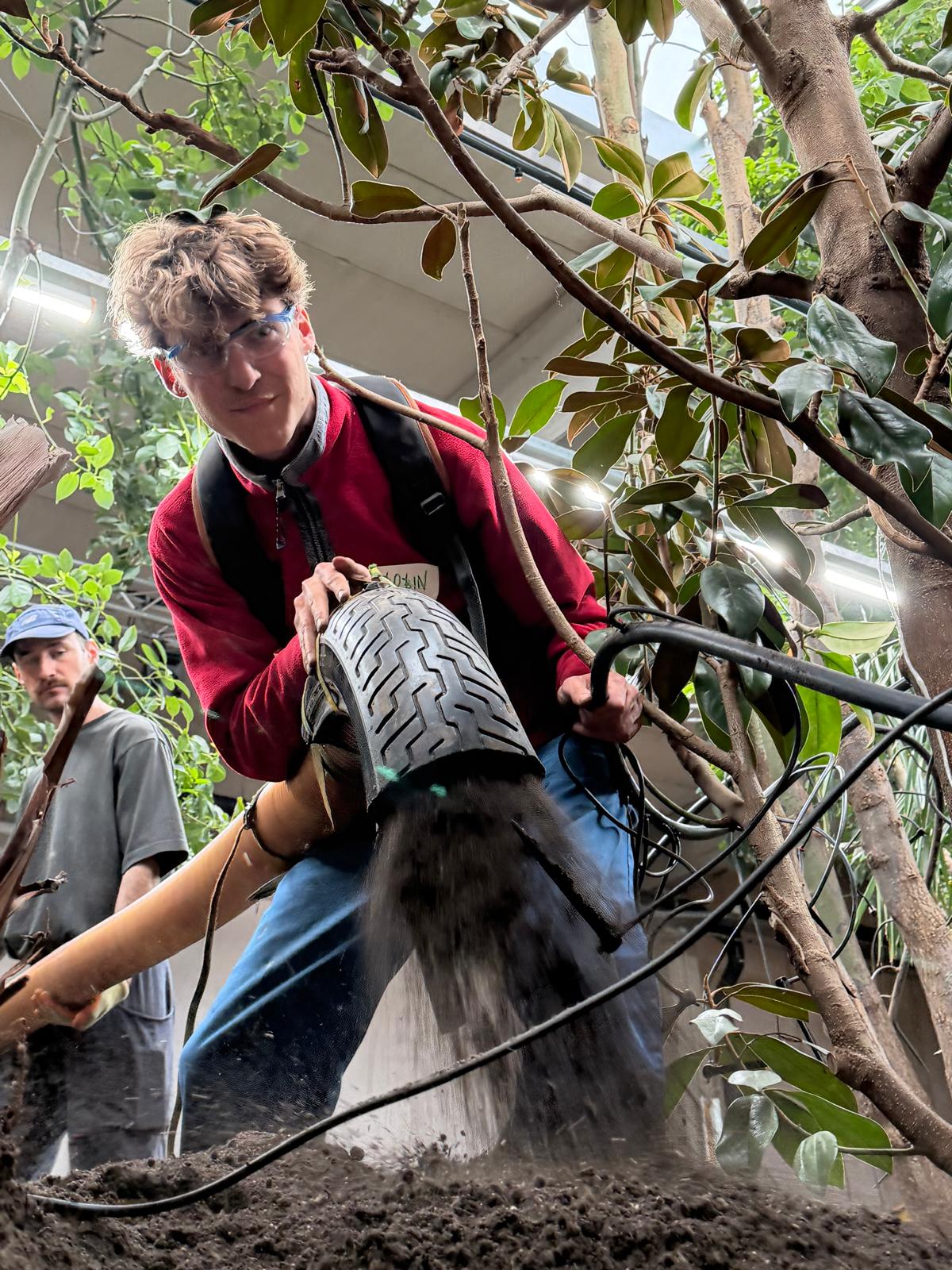
What's in my atelier? Robin gives us a peek into Rain Room's green transformation – through the tools that rarely get the credit.
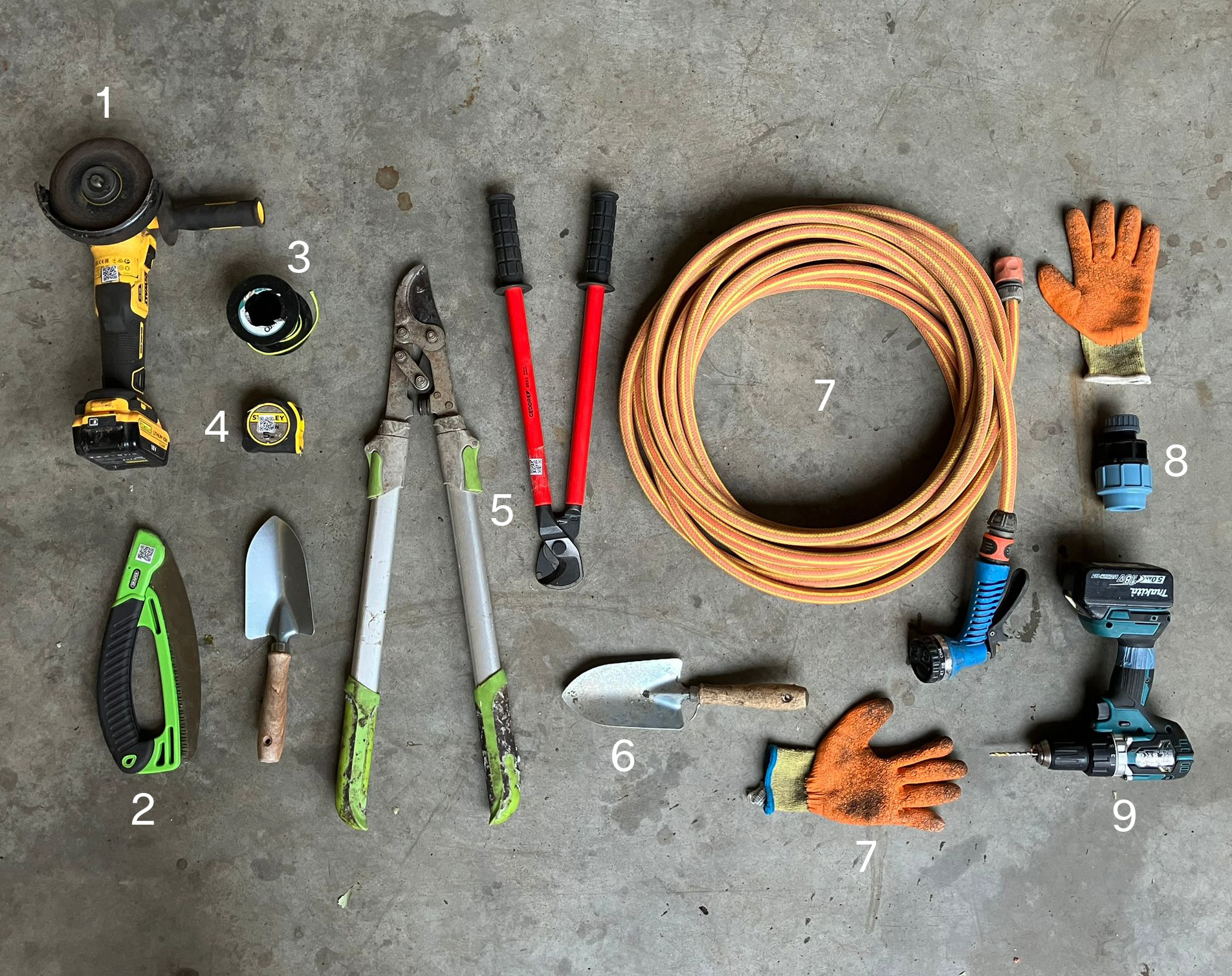
1 Angle grinder: used to cut open massive pots and release the plants after more than a year of imprisonment.
2 Snoeizaag: we never used that one. The tiny one worked better on the plants.
3 Yellow cord: used as a mirror when we had to take all the plants out of the bak again (did that several times).
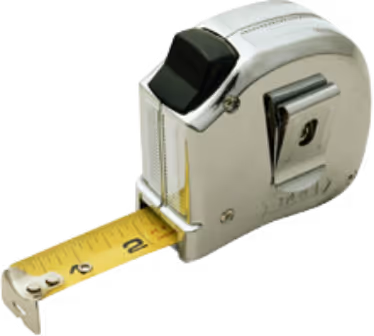
4 Tape measure: for the exact placements of the plants in their collective pot. Never seen such a thoroughly planned garden landscape before.
5 Pruning shears: to cut off all the broken leaves that didn’t survive their long trip from Venice.
6 Small shovels: our euphoric tools; meant for finally putting our babies into the soil.
7 Water hose: to give the plants their first rain shower (might have leaked from every side).
8 Gardening gloves: to avoid gettin dirt under your finger nails (handy!).
9 Connection piece: to connect the leaky partsss.
10 Screw driver: screw you! (just kidding)

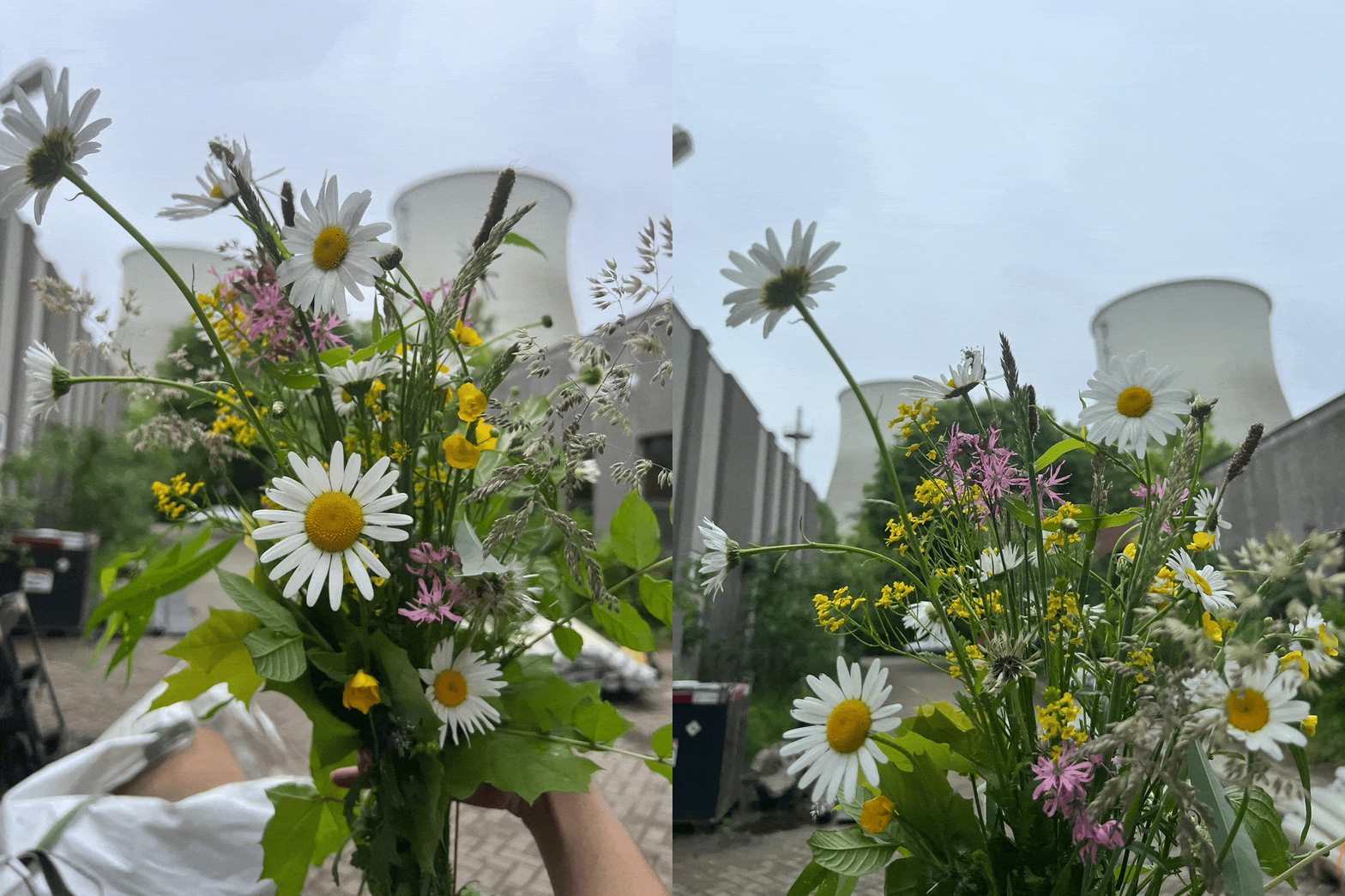
Sofía sent us a pic of bouquet she made from Asiat Park flora ❤️
What's in your atelier? Vasilisa shows us the essential tools used during the How to Raise a Park Atelier. Run by Nel Maertens and Marilou Dejans, the Atelier explores how multiple voices – from park users and festival visitors to local residents, citizens, and the park itself – can actively shape the future of Asiat Park.
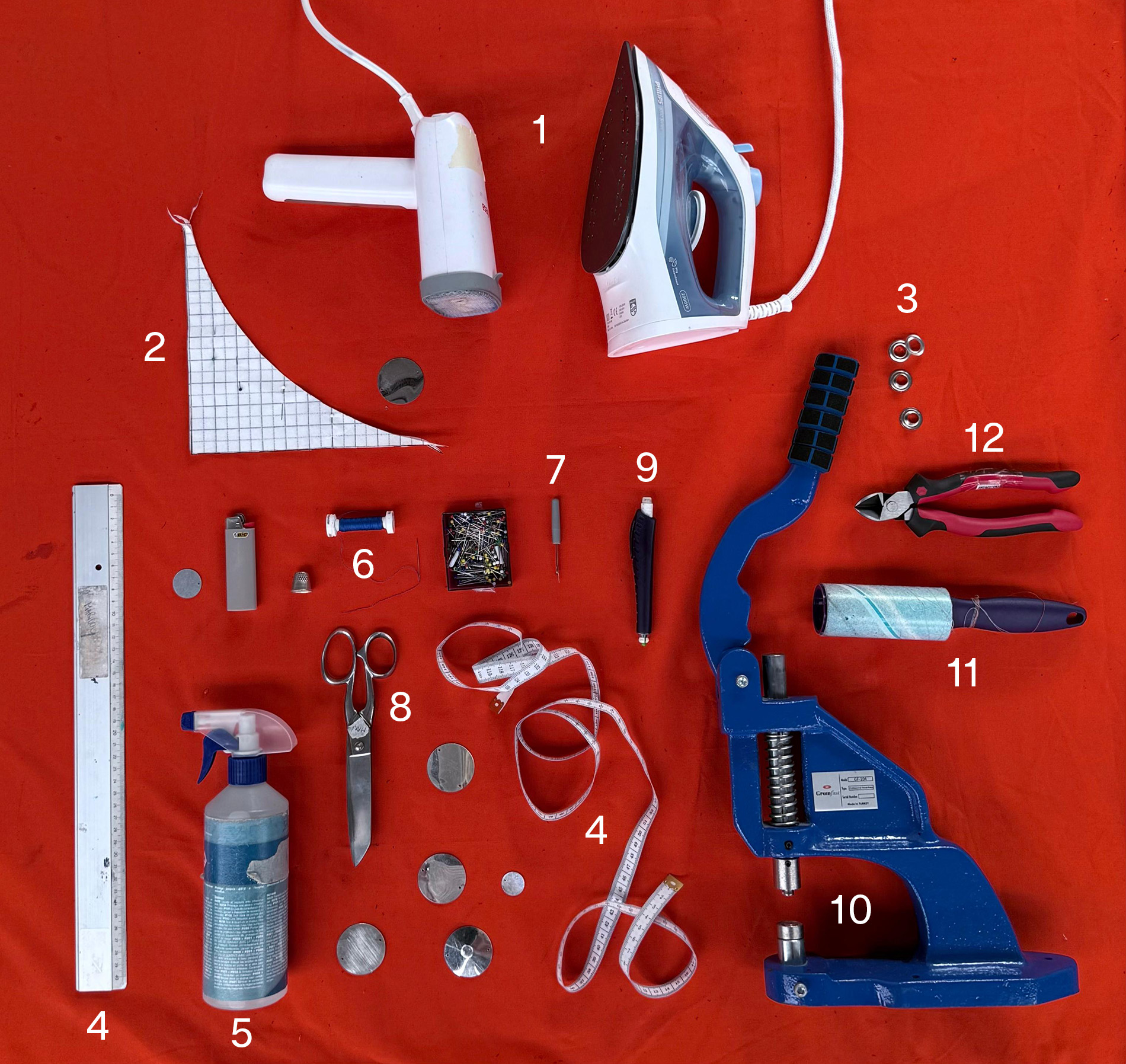
1 Steamer and iron: the iron is in constant circulation as we pin, iron, see pin, and iron again, put the flags on the floor and then back to ironing table to iron.
2 A piece of pattern: I used it to cut out a perfect cirlce. It actually turned out perfect. Just girl maths.
3 Eyelets: for the holes, very important.
4 Ruler and measuring tape: to keep everything precise. My grandma always said measure it seven times before you cut it, because that you can only do once.
5 Waterproofing liquid: turned out to also be fireproof. It’s checked and documented with a lighter. Truly a wondrous potion. Now everything in the atelier is waterproof after the treatment.
6 Thimble, needle and thread: for finishing touches and ripping fingertips to shreds. We made it work.
7 Seam reaper: perhaps the most important tool we have. Undoes any mistakes and allows us to do better next time.
8 Fabric scissors: used only on fabric and nothing else!
9 Chalk pen: for drawing on fabric. Allegedly should be erasable but in practice wasn’t quite the case. Doesn’t come out as easily as advertised.
10 Eyelet press: with thick fabric one has to put in their full body weight to make it work.
11 Clothing roller: in constant rotation between ironing sessions.
12 Pliers: for hand embroidery because we build everything to last. The embroidered sequins are sewn on with fishing wire and they’re not coming off without a fight, if ever.
In a brief exchange Paul Maheke unpacks The Rise, a site-sensitive installation now inhabiting the Engine Room.
The installation of The Rise is done. What was the most challenging part of putting it together – both conceptually and practically? Did the space push back?
Paul: The Rise has been conceived in response to the space. When I start working on the project, most of my thinking goes into how the space could hold the work and vice versa. In that sense, my work is very much site-sensitive. The biggest challenge for me was probably to translate research that looks into spaces of communal mourning and grief, in the context of a music and art festival. So I drew deeply on the history of techno and how electronic music served as a space for grief for marginalised communities.
The piece seems to invite reflection, humble curiosity, solitude even. There is this contrast, between the artwork's connotations of death and mourning, and the music festival as a time of collective joy. How do you imagine the festival goers should approach experiencing it?
Paul: The installations I produce are often crafted as a hosting body. So, The Rise might become a repository for many emotions and types of energy. It is for sure meant to be heavily charged. In times of global turmoil, and with the ongoing genocides and wars, I do believe that it is necessary to rethink what joy means, and that it can exist within its complex entanglement with grief.
Have you ever cried during a music event?
Paul: Yes, absolutely—there is a specific kind of release on the dancefloor that brings tears; for me, that boundary often dissolves when the sound hits a certain frequency.
What is your experience with presenting artworks in such a context? Where do you see the value of art & music events like Horst?
Paul: I like the idea that my art can be experienced outside of the confined walls of museums and galleries. Horst grants my work the possibility to encounter a different audience, with a different set of expectations. The Rise is a meditative pocket within a massive celebration constellation, and I love that it can entertain a dialogue with many other universes within it.
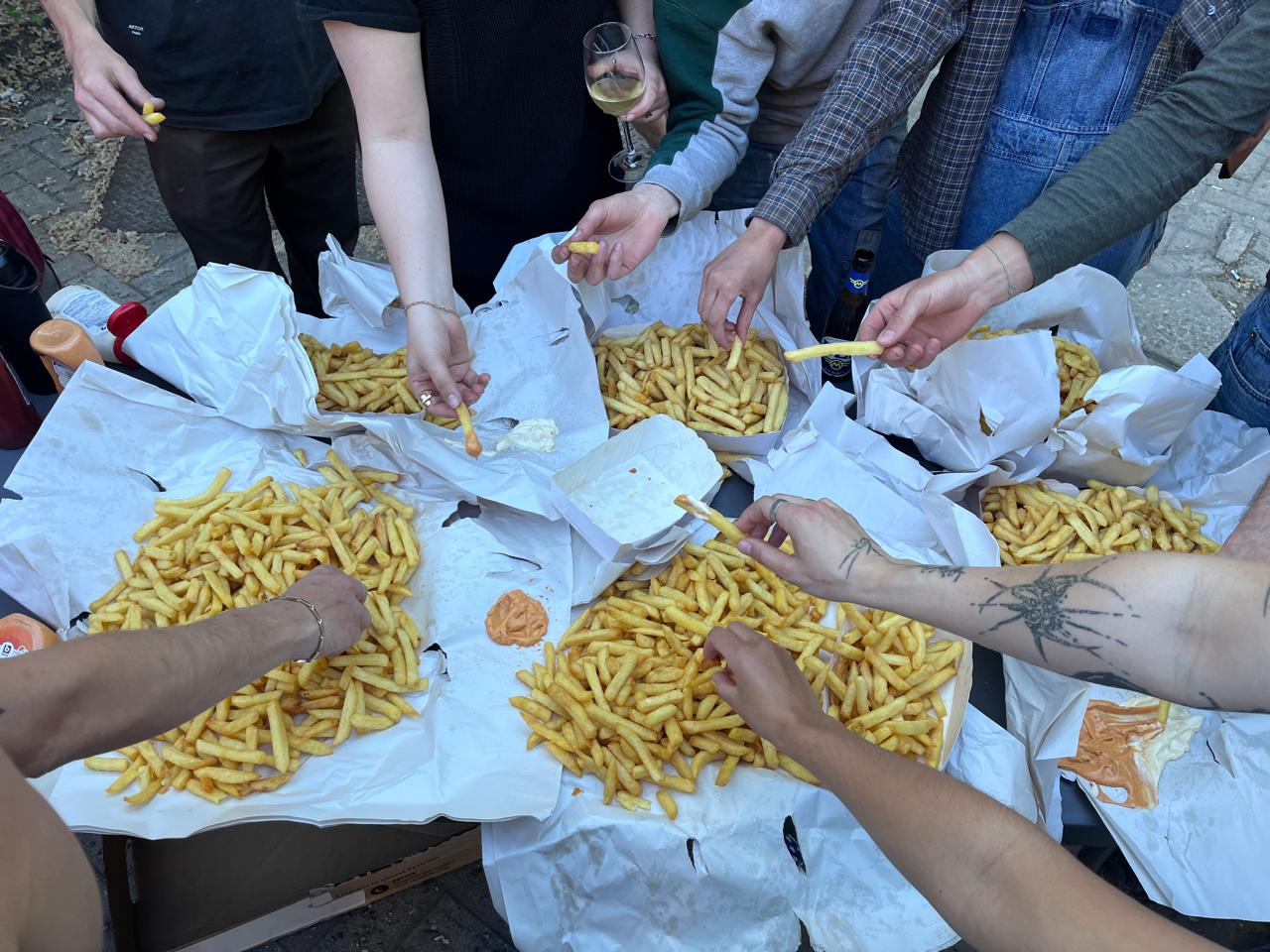
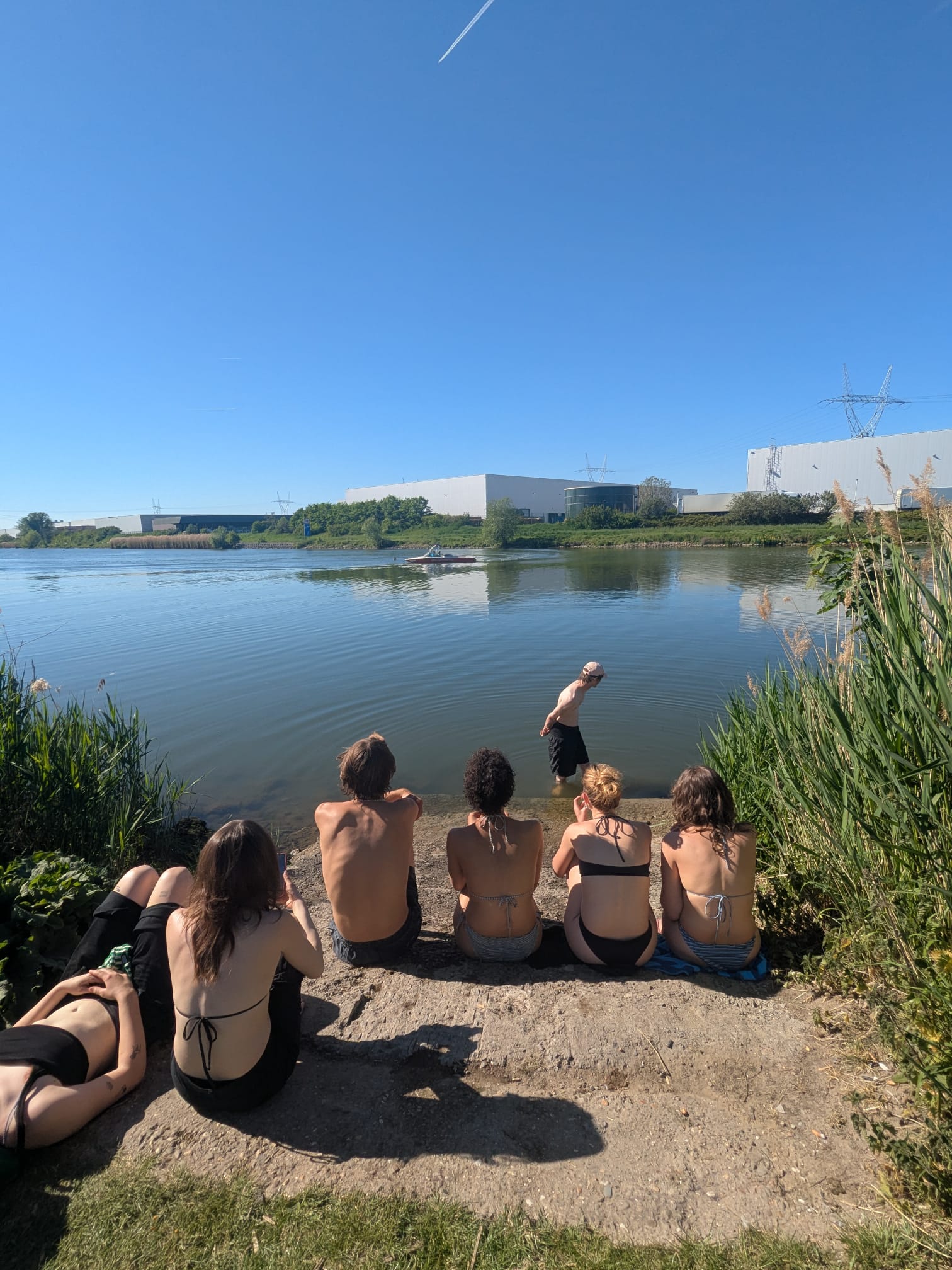
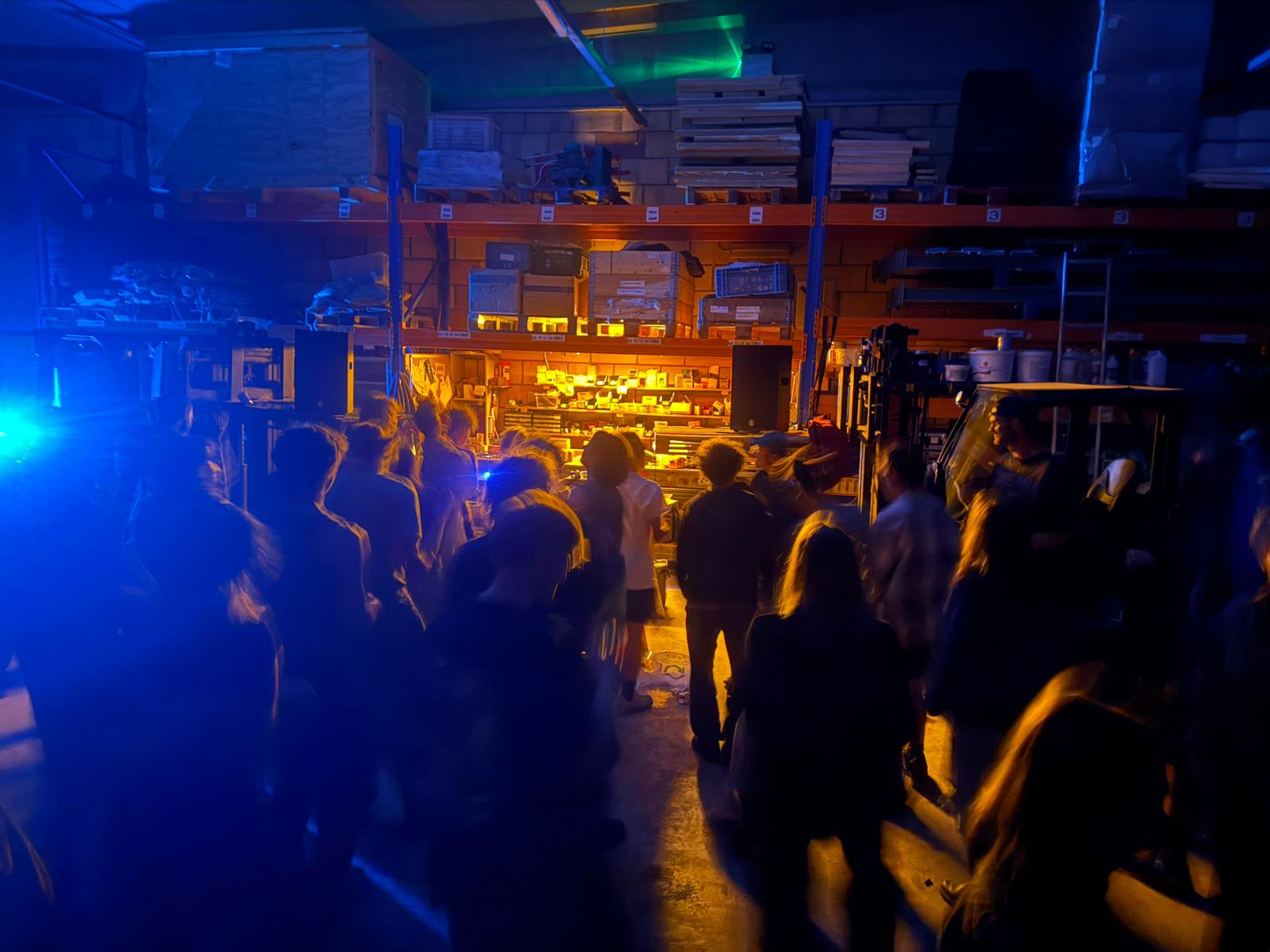
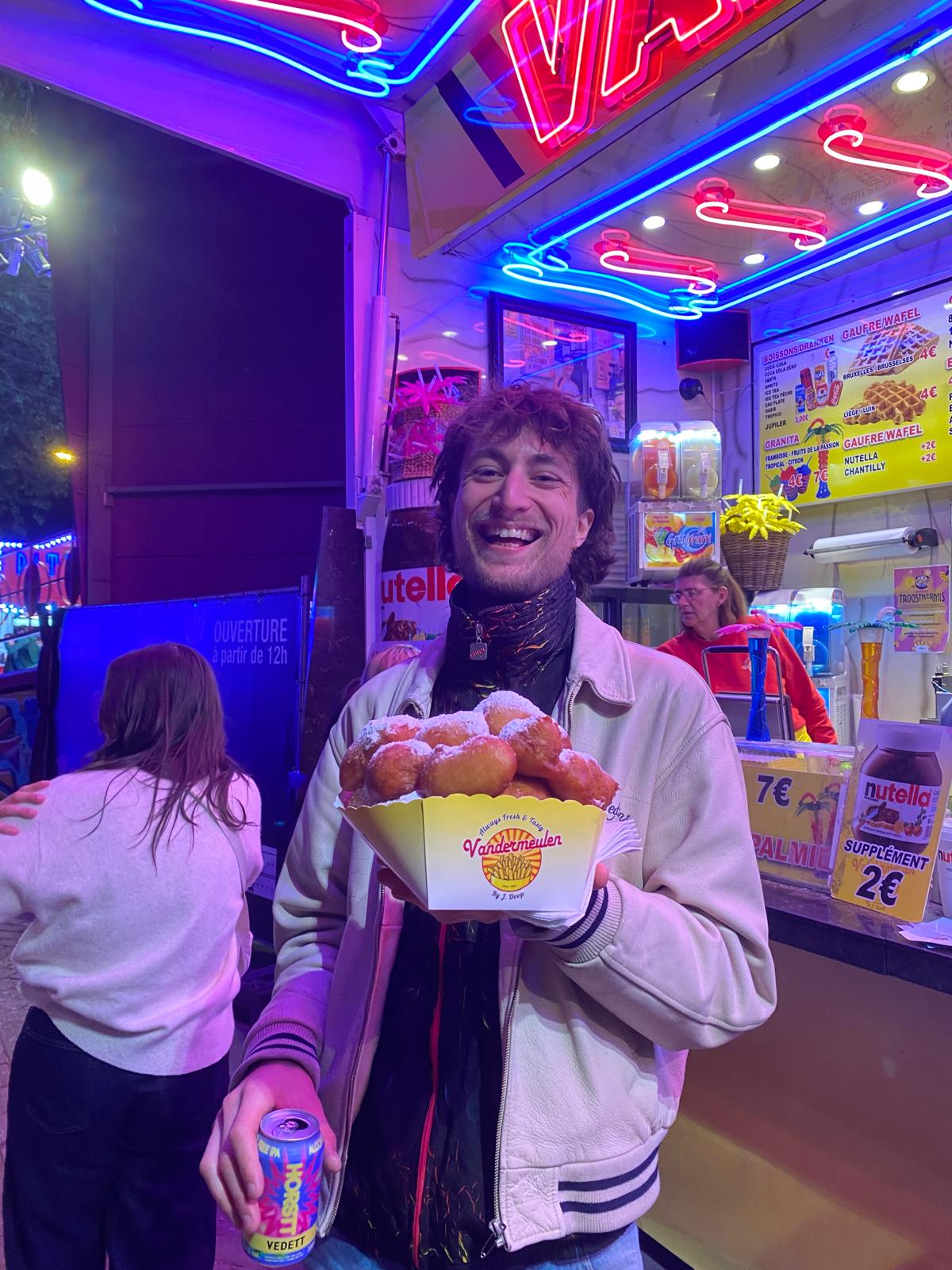
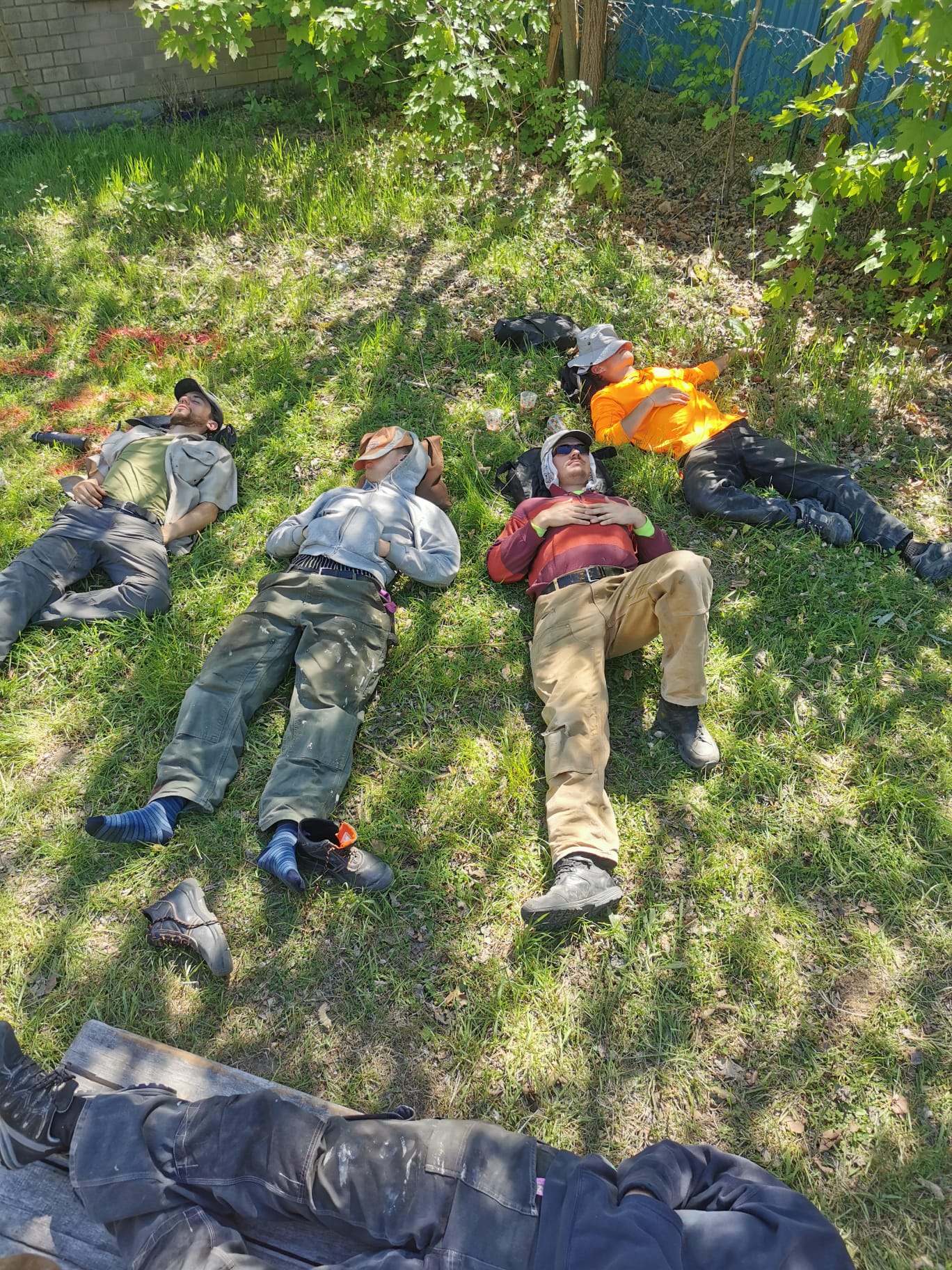
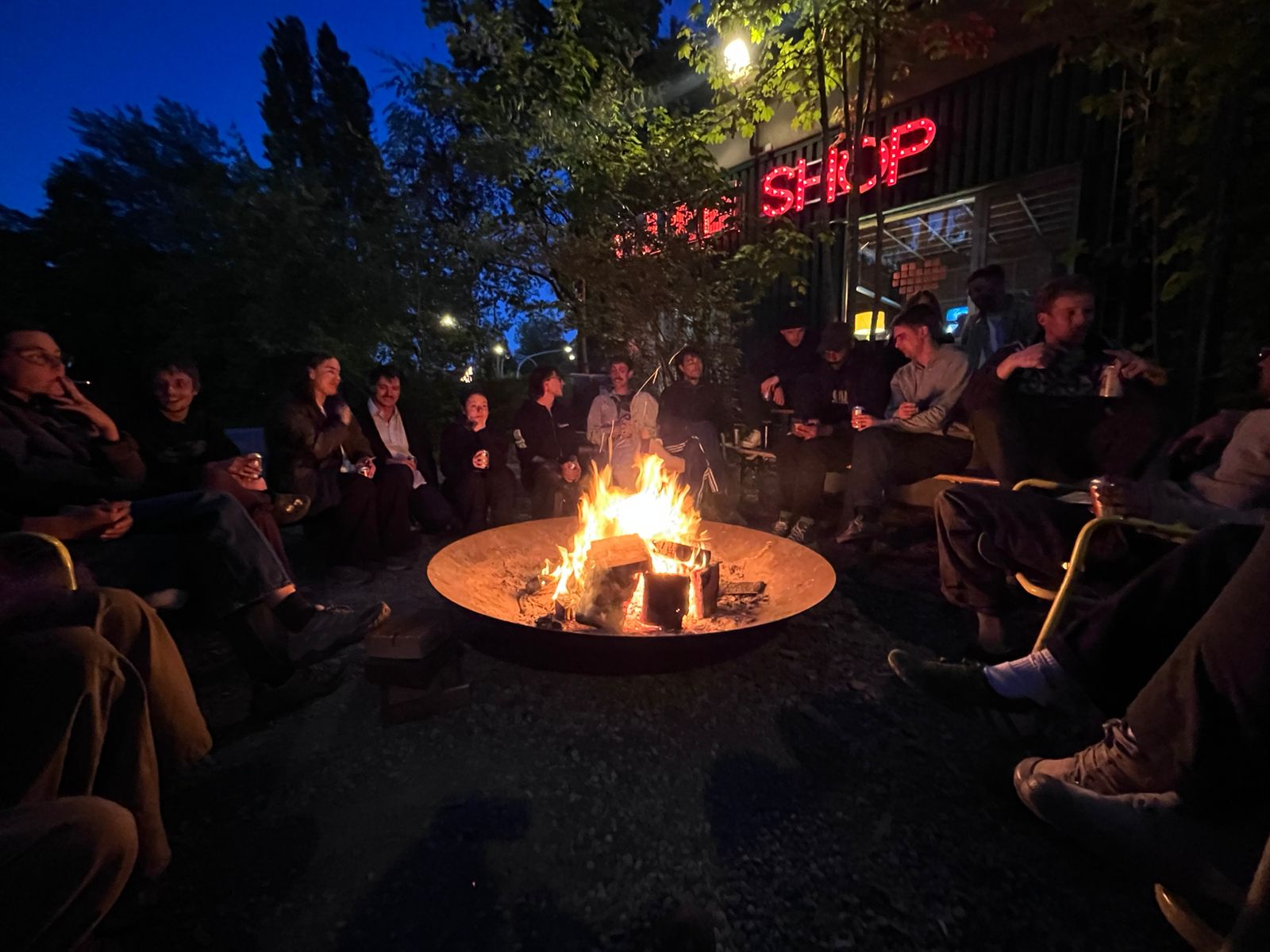
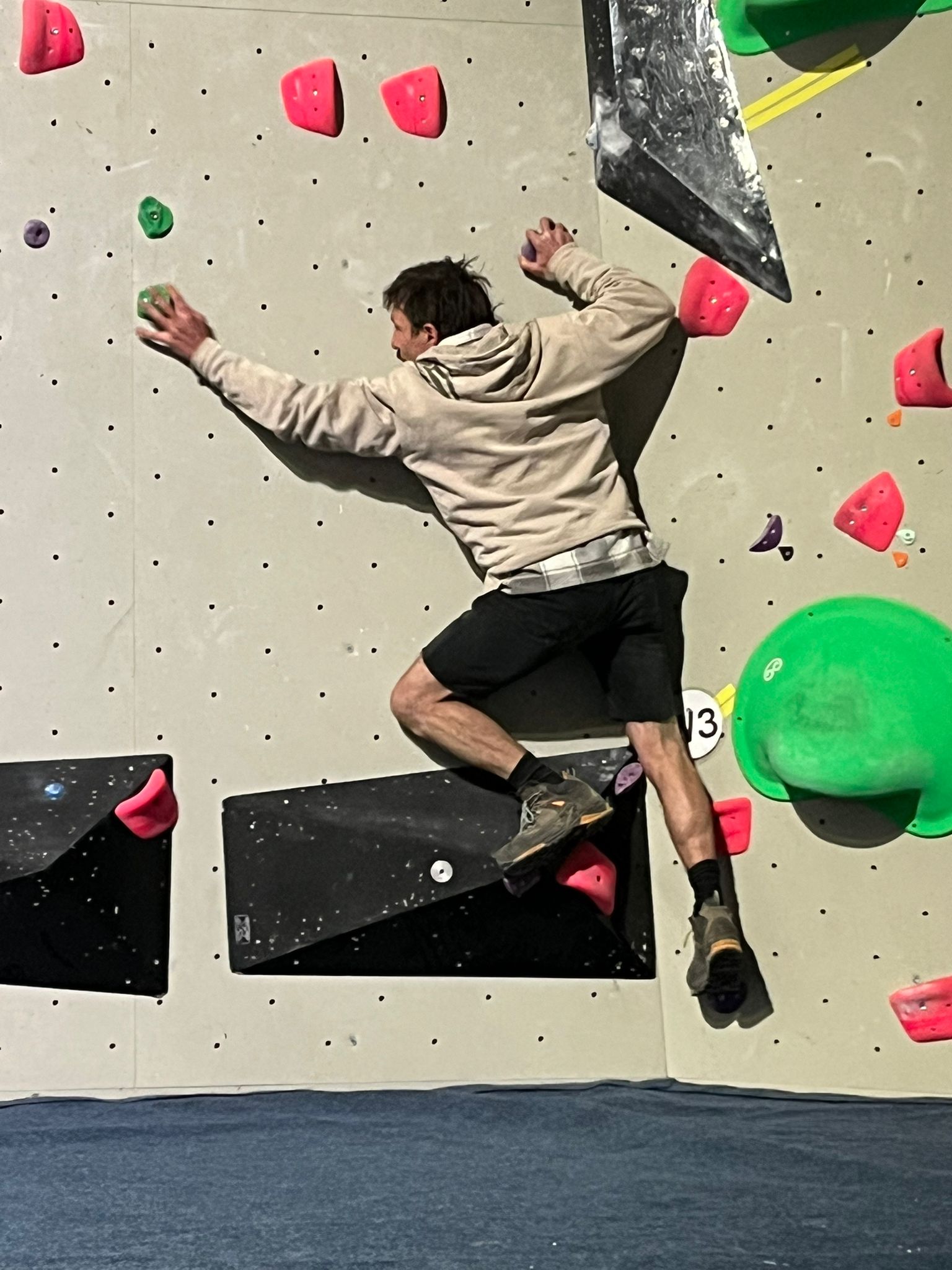
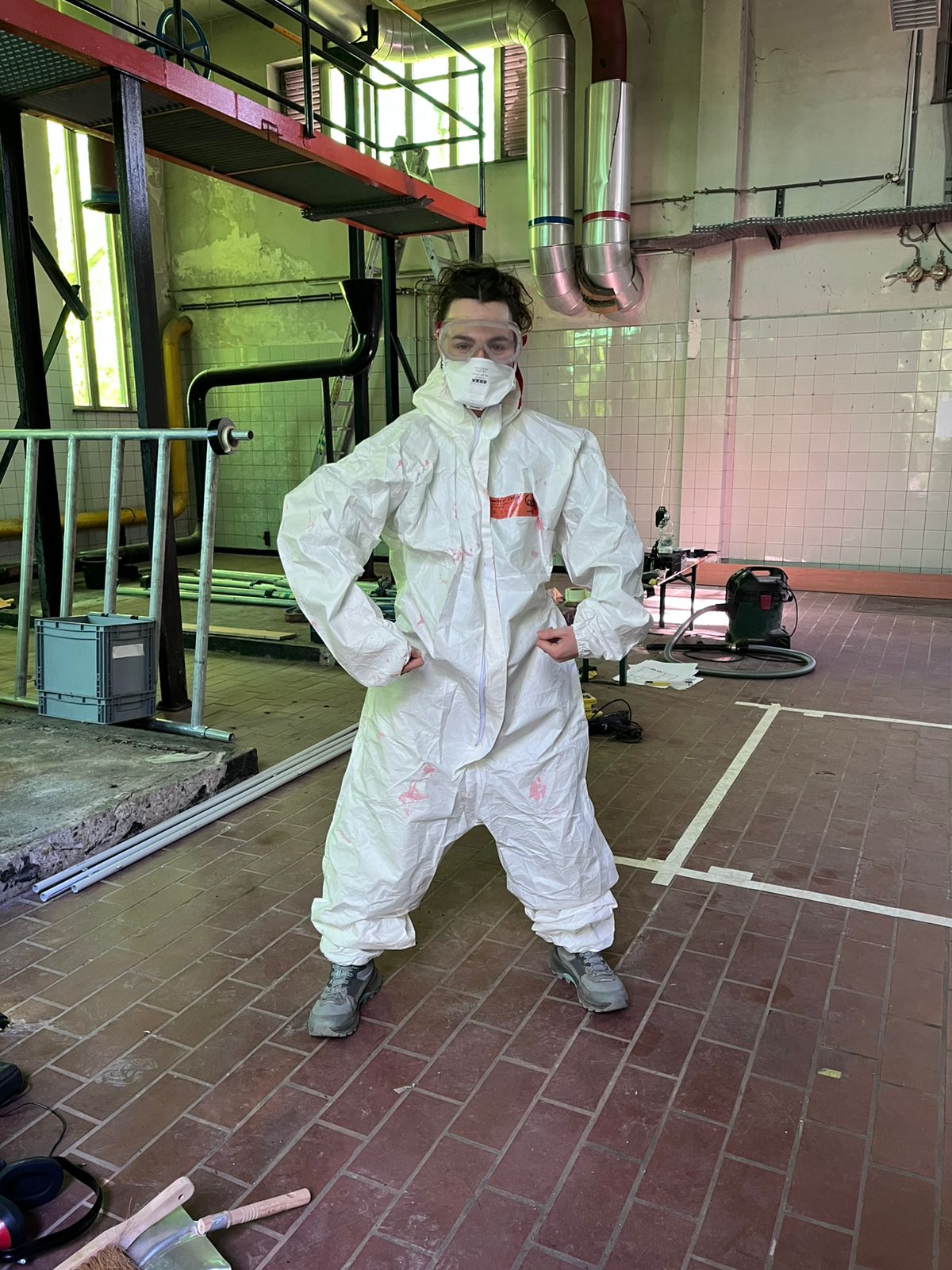
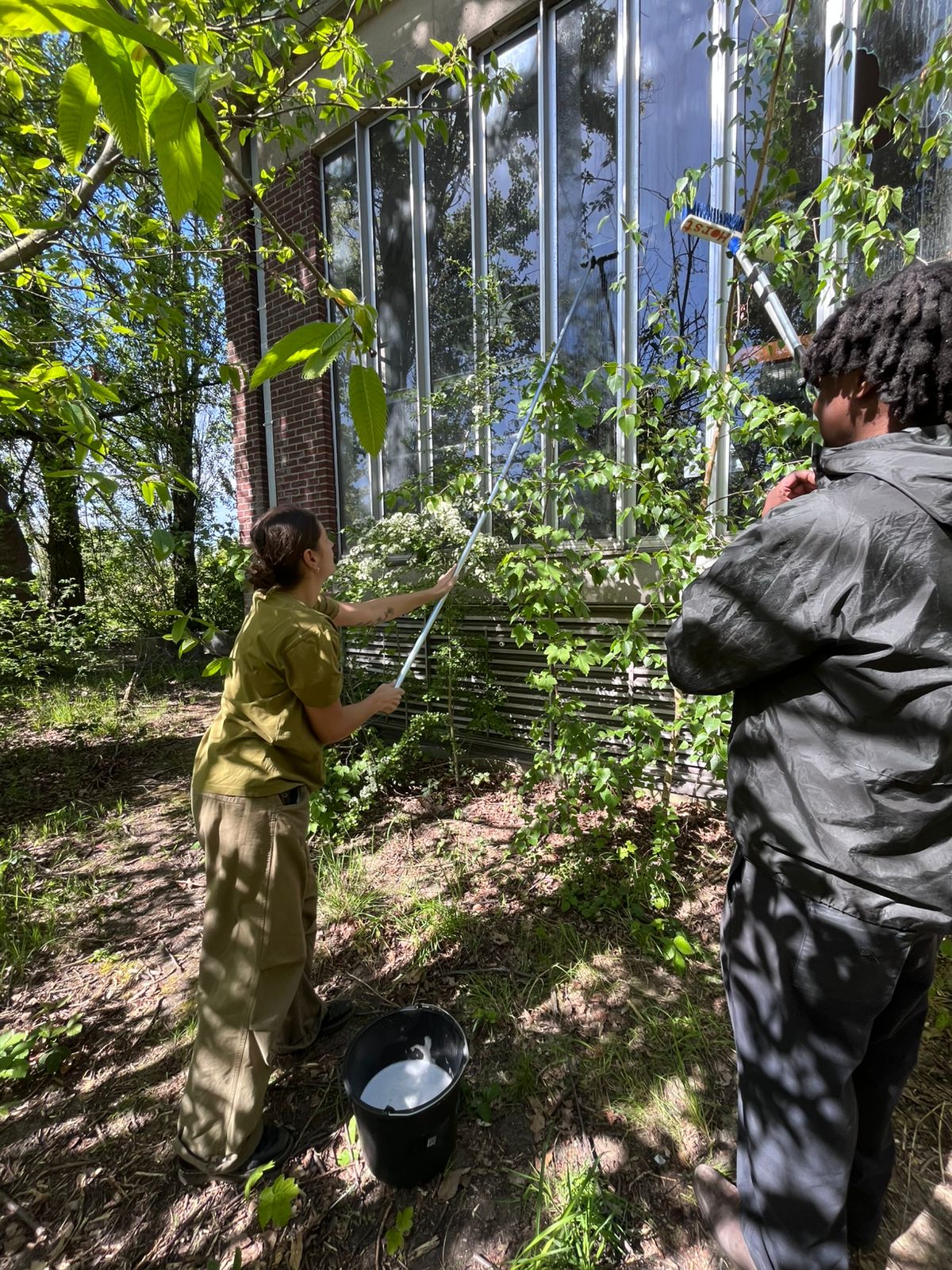
Participants of the second Atelier week share some off-work moments. They worked hard, but had fun even harder.
.jpeg)

What you'll need for +/- 175 chocolate chip cookies:
• 1250 g room temperature butter
• 1 kg sugar
• 1 kg brown sugar
• 10 eggs
• 1875 g self-raising flour
• 1500 g chocolate chunks (750 g milk, 750 g dark)
• sea salt
Step by step:
1. cream butter and sugar together
2. add the eggs one by one, beat until the mixture forms intoa creamy batter
3. add flour and salt to the butter mixture
4. fold in the chocolate chunks
5. cover and chill the dough for at least 2 hours
6. preheat the oven to 190°C
7. weigh out balls of 37 grams each and place them onto a baking sheet
8. bake for about 12 minutes
9. sprinkle some sea salt on top of the cookies as soon as you take them out of the oven
10. enjoy!
.jpeg)
.jpeg)
.jpeg)
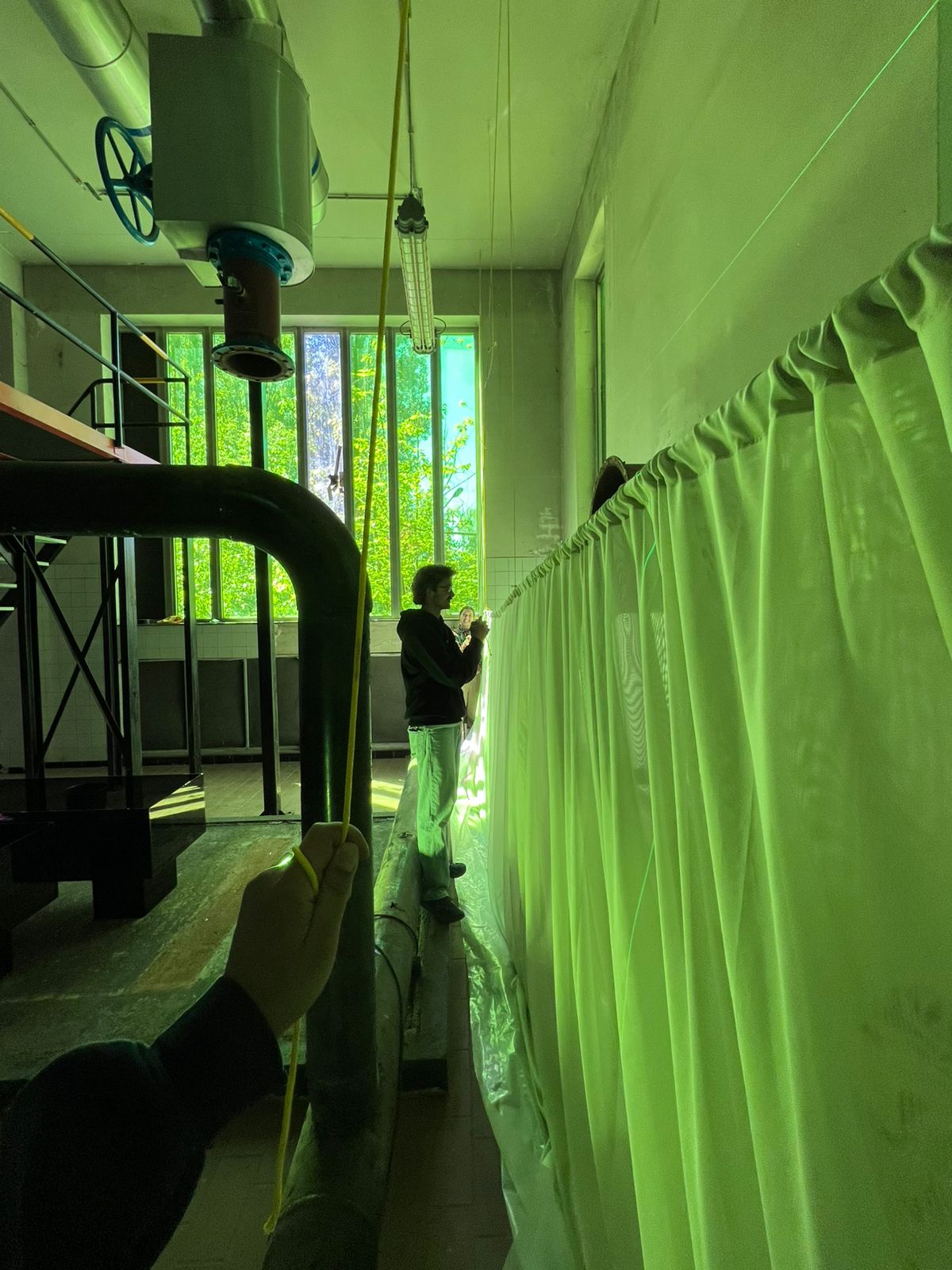
The heaviest Atelier week ever.
.jpeg)
Sketch by Cormac Adams, timelapse videos below by Nathan Schulte, who were both part of the New Moon Ra atelier this past week.

Lobna spent a week weaving fragments of Delphine Dénéréaz's imagination into a canopy of dreams.
.jpeg)
Lobna, tell us a bit about yourself. Who you are and what do you do?
L: My name is Lobna, I moved to Belgium to study and after that, I ended up doing bits of different things. I started to work in arts and culture here and found so much joy in that, especially here in Brussels. I lived in different cities before moving here but I am from Cairo, so I try to spend my time here and there. I love to play with yarn, photos, collage, to write, and I am always open to combine different forms of art.
Why did you join the Atelier?
L: I heard about the atelier a few years ago, but never actually got the chance to apply for it. I had only been to the festival, which is my favorite festival in Belgium so far. I always liked how it creates room for art and architecture to be admired amidst a weekend of dancing and music. This year I could finally apply. I am quite interested in textile art and when I read about the Canopy atelier and Delphine Dénéréaz’s work, I knew it was something I would love to join.
.jpeg)
.jpeg)
What were you doing specifically?
L: Our atelier built an installation of several of Delphine’s artworks, under Alexander Marinus’s guidance. We used fabric to weave her creations into metal grids that we measured and cut. The works are now installed at one of the entrances of Asiat Park. Every day, we sat in a lovely, bright room with big windows and wove; it was quite relaxing and colourful. However, the work is quite detailed, so it taught me a bit about patience and embracing the process.
I really like that it feels like fragments of Delphine’s imagination, it reminded me of dreams. I really love getting inspiration from things we see in our dreams, I feel like there’s another reality there that we forget to pay attention to. I also love that the installation has a playful aspect about it that invites us to look up for a moment.
How did you like it?
L: I really enjoyed it, it was a lot of physical work at times but that always just makes you feel alive and fulfilled. Especially when it’s with a group of people who are passionate and there to help each other. I especially loved meeting people with all kinds of different practices and learning about what they do.
Who did you meet?
L: I shared the work space with a group of lovely weavers, I really liked working with Delphine and Alexander. I also enjoyed eating and spending time with people from other ateliers. I didn’t have a mattress and lucky for me I made a lovely friend from another group that let me borrow one of hers. On the first day I missed breakfast, and some of the first people I met from my group immediately pointed me to some snacks and food. Some shared their wonderful taste in music with me, and others made me laugh so much. I think one of the best moments was by the end of the week, when we were all tired, just sat in the sun and weaved with scraps and laughed so much.
When Renaud gives you footage, make lemonade. The fritz-kolab firepit is quickly taking shape and luckily, Renaud captured its first week on his handycam.

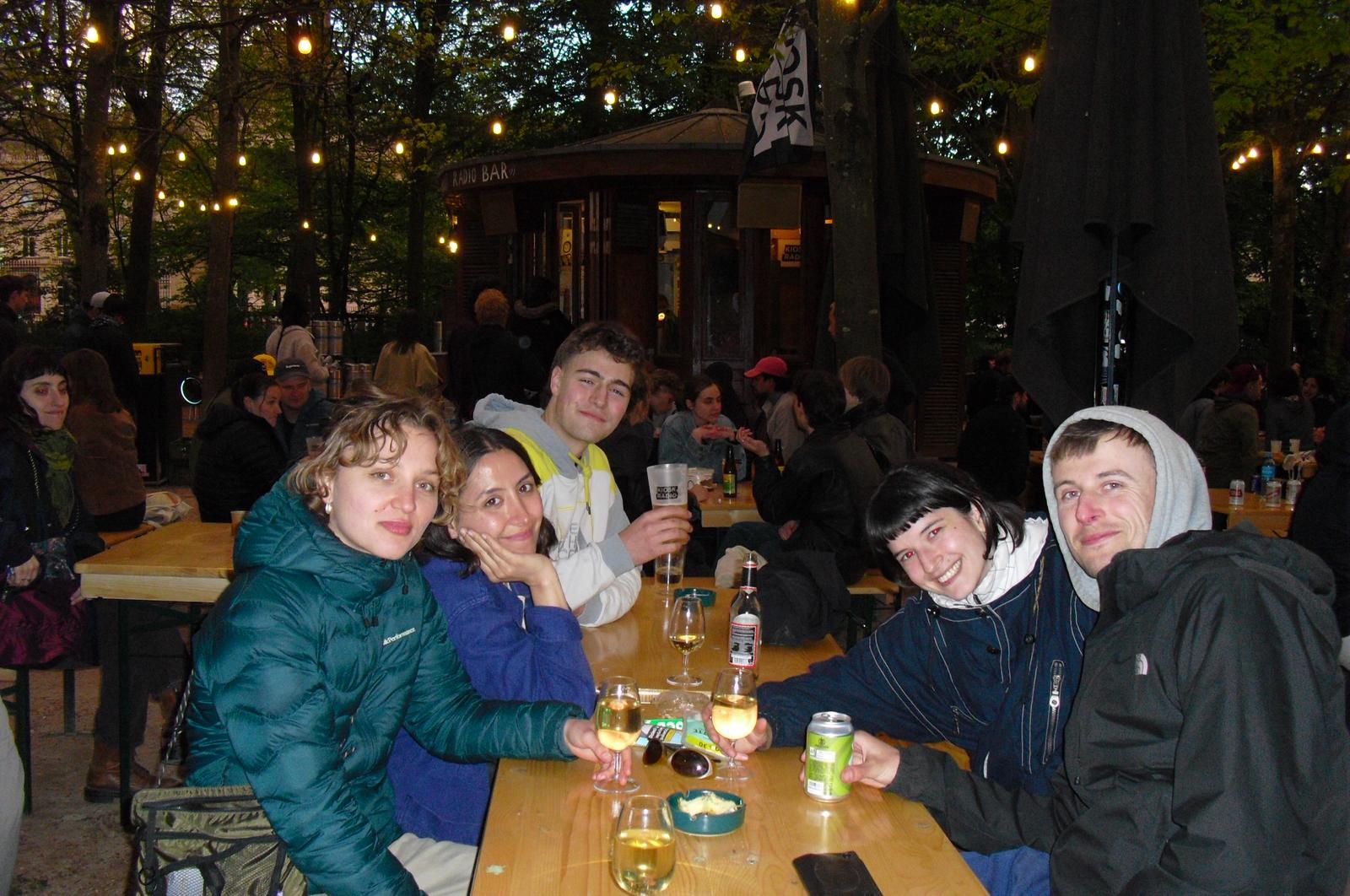
Hanna brought her old Casio digi cam and kept snapping pictures throughout the Atelier week. Check the slideshow for some instant nostalgia, or read on to find out if Hanna is coming back to the festival.

Hanna, please tell us a bit about yourself.
H: I am from Poland and currently based in Warsaw, where I graduated with a BSc in architecture. At the moment, I’m taking a break from my academic path and focusing on what truly brings me joy: writing, designing, and working with different techniques and smaller scale.
Was this your first here?
H: It was my first time hearing about both the Horst Festival and the Horst Atelier, and also my very first visit to Belgium. So before arriving to Asiat Park, I felt a bit jittery.
I decided to apply to Into the Warehouse by TAKK Studio because I like their out of box approach, as well as I’m a big fan of craftsmanship, wood, and getting my hands dirty. I also enjoy medium-scale design, so assembling a pavilion or installation piece felt just right.
So, how did it go?
H: It was very special to create and complete a final outcome within only five days, something that doesn’t happen often in architecture. The work felt very balanced. We were all highly focused and frequently switched tasks, so everyone had the chance to try something new and learn. At the same time, there was no peer pressure, and we got to know each other well, whether during group breaks lying in the sun or grabbing lunch together.
Anything special you'd like to share?
H: I got to meet great people, truly I mean it. Shoutout to the friends who made me feel at home within just a couple of days, and who applauded me during karaoke night, even when I was completely off key. I was initially leaving my decision to attend the festival open, depending on whether I'd connect with anyone during the workshops. And now I'm just about to book plane tickets to come back in two weeks. So see you soon!
.jpeg)
.jpeg)
.jpeg)
.jpeg)
.jpeg)

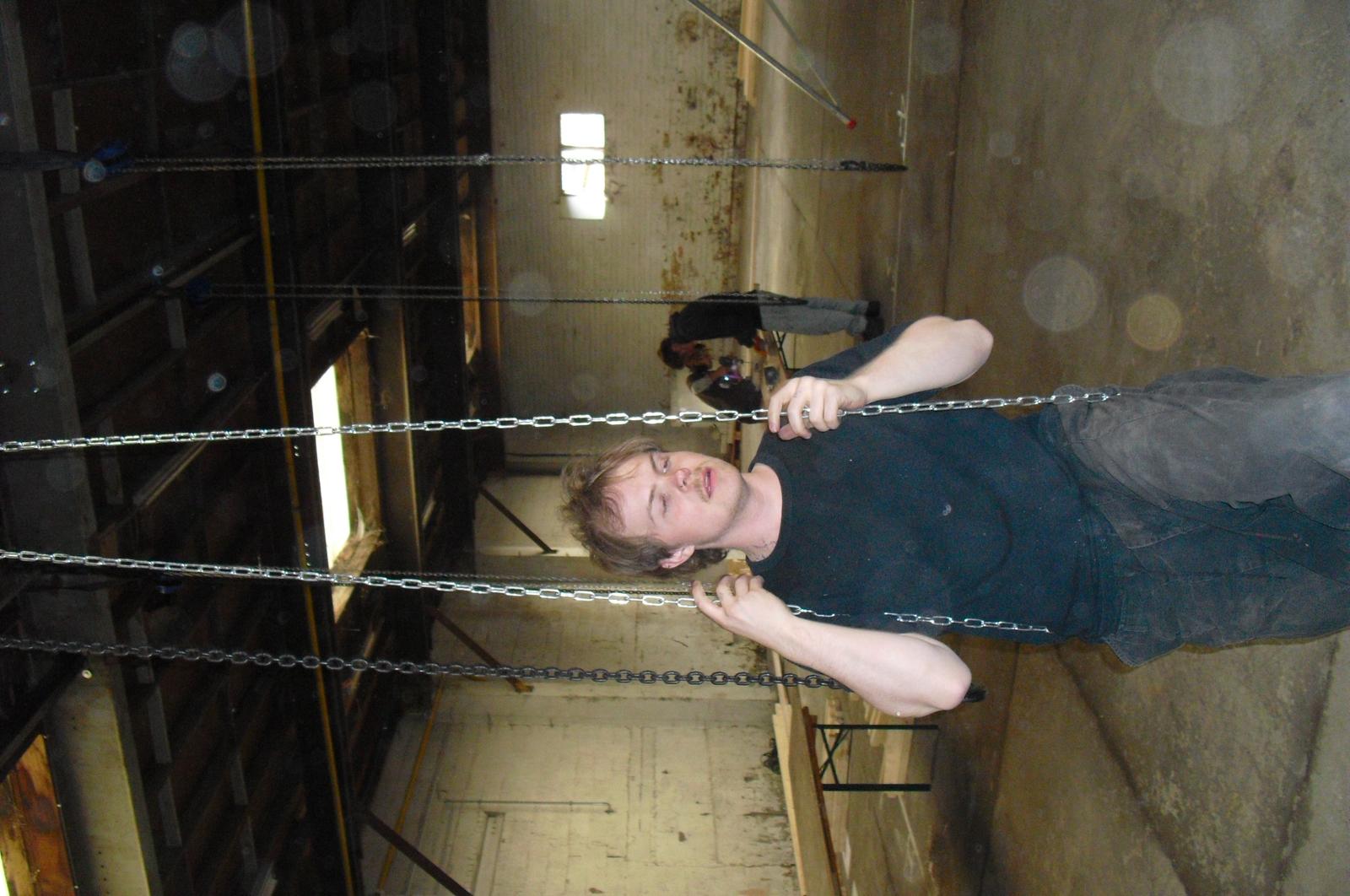
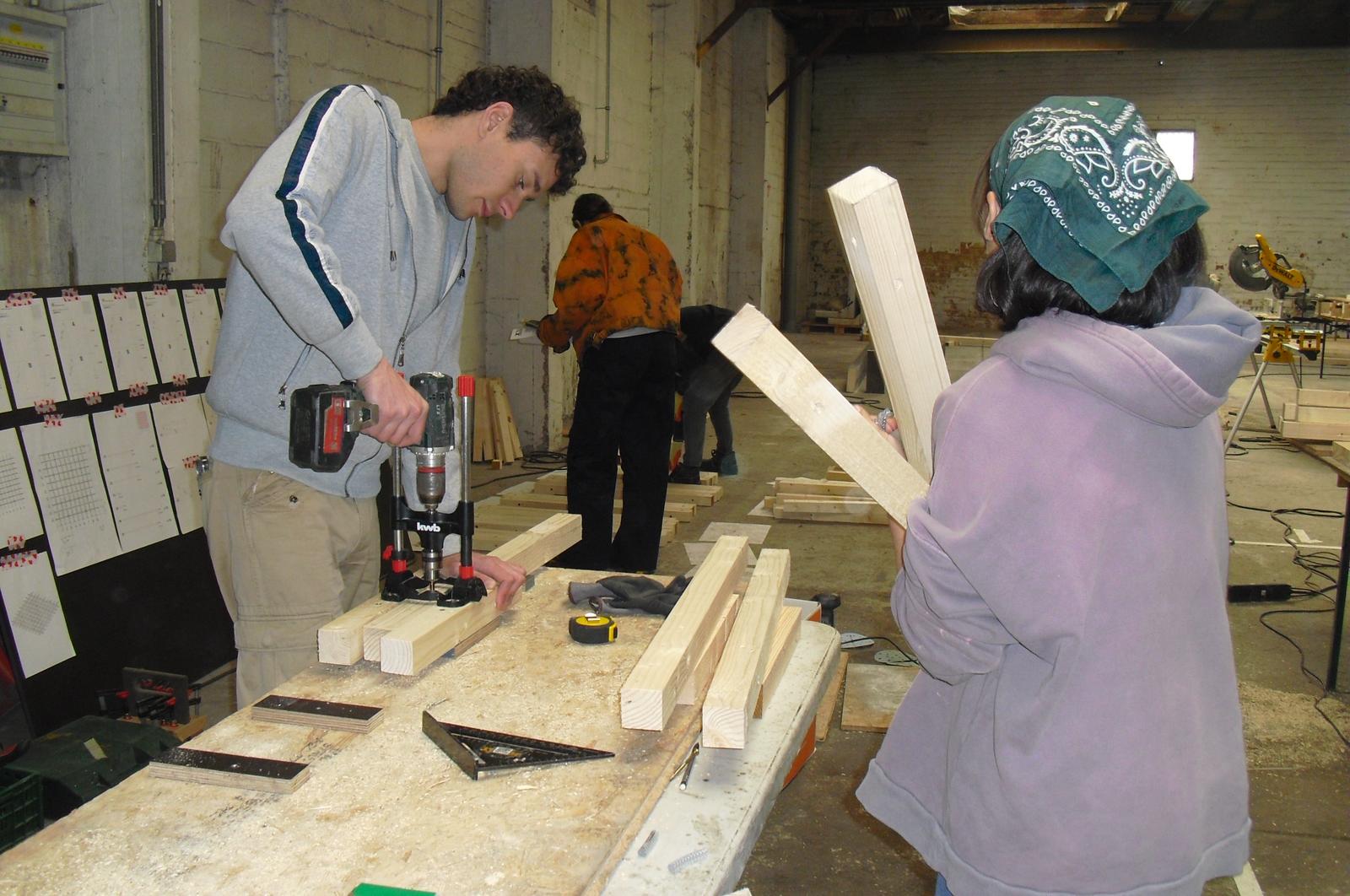
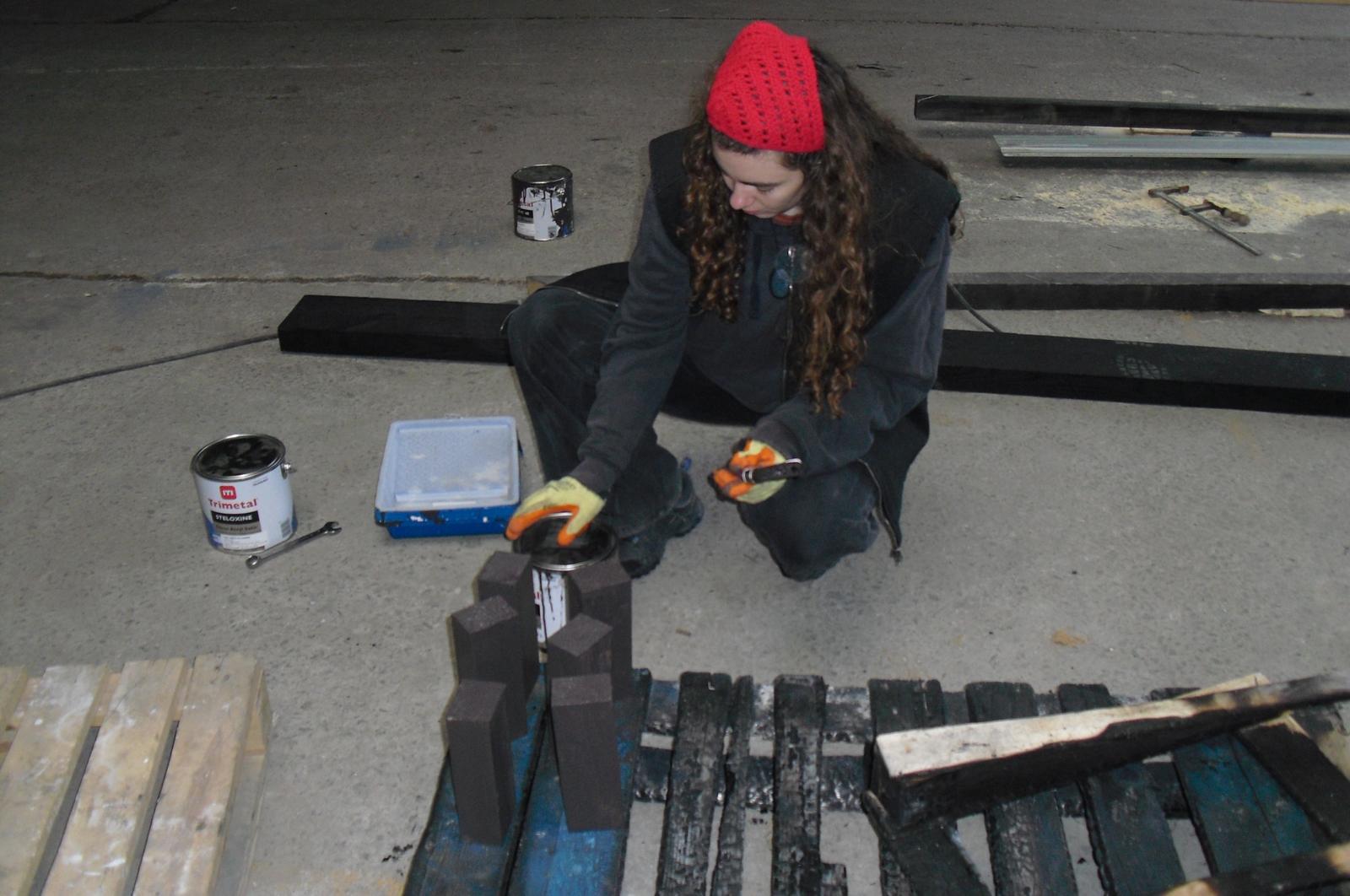
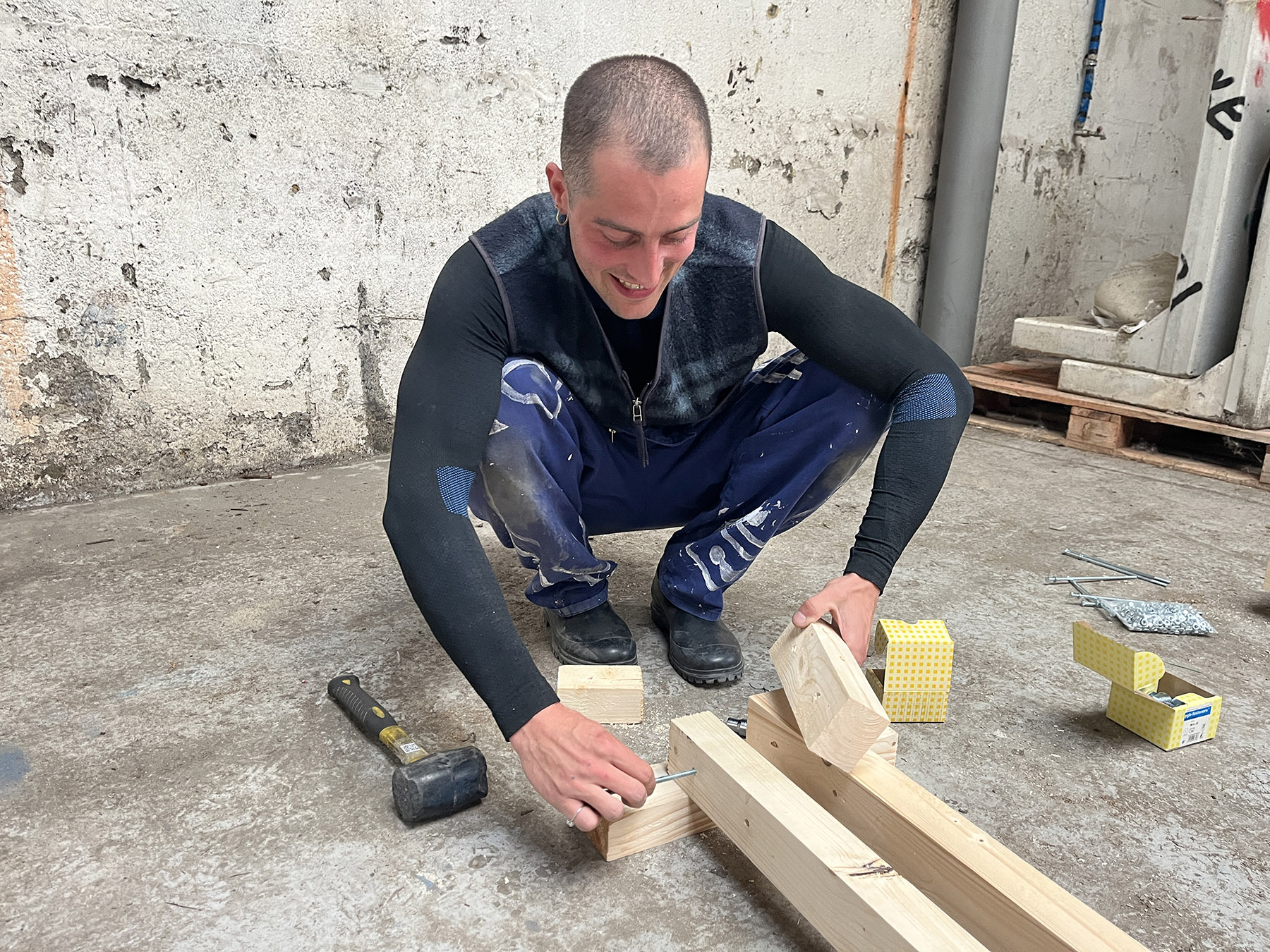
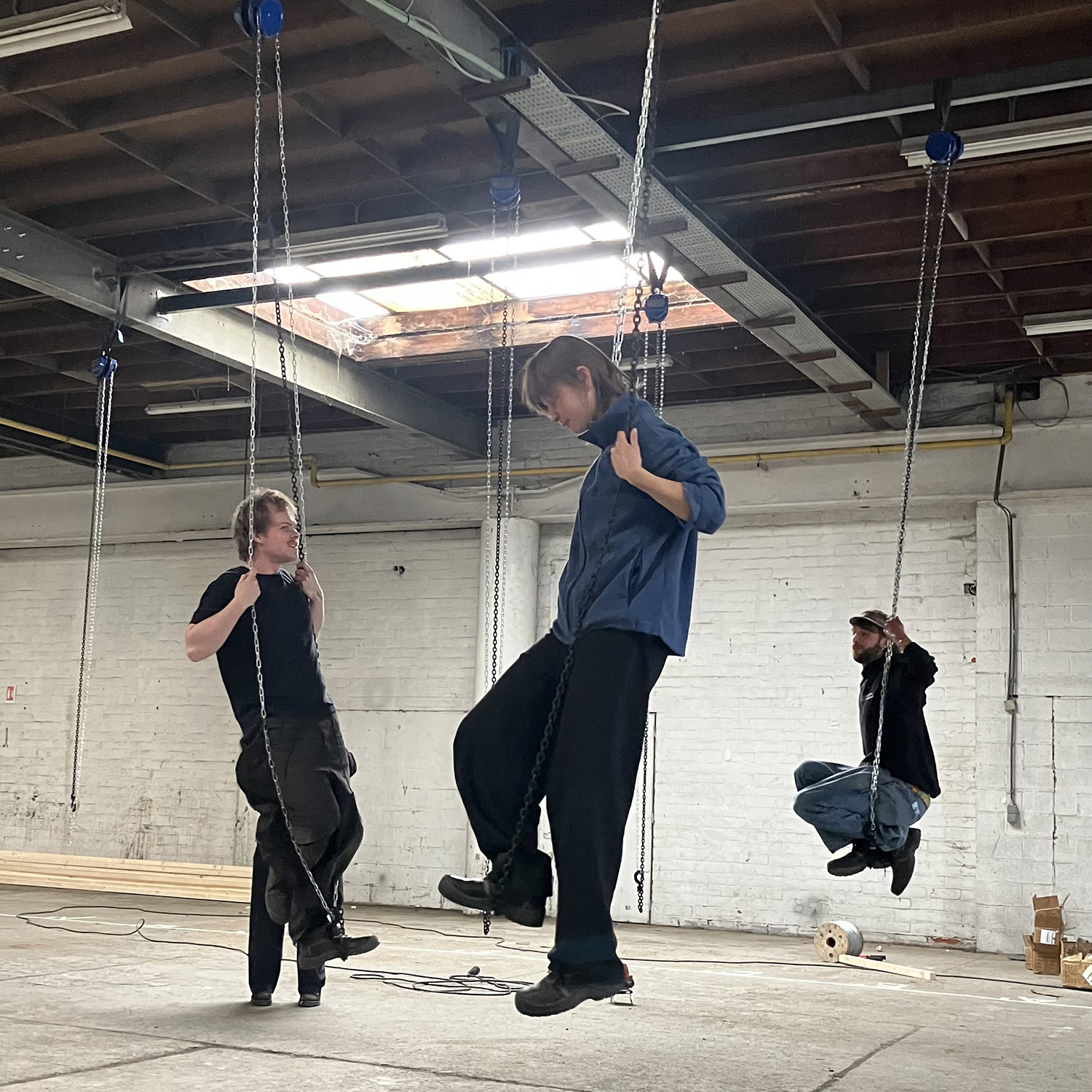
"Measuring, cutting, drilling, bolting, cutting, pinching, ... and lifting." That's all we can say for now.
A ninth dancefloor is taking shape in a raw warehouse that wasn't accessible before. Built to come apart just as it comes together, temporary by design. More soon.
crop.jpg)
Head chef Lore Snauwaert shared a recipe for delicous miso soup she prepared with the kitchen team for Atelier participants this week.
What you'll need:
▢ 4 tbs of coriander seeds
▢ 300 g of ginger
▢ 15 cloves of garlic
▢ 10 onions, finely cut
▢ 30 zucchinis, cut in small pieces
▢ 6 packages of Enoki mushroom
▢ seperated 6 packages of brown mushrooms, cut in 4
▢ 1400 g of brown miso
▢ 20 spring onions, finely sliced
▢ a lot of fresh cilantro, roughly cut
▢ dried seaweed
List of firsts:
▢ First tour of the park
▢ First drinks
▢ First campfire
▢ First time meeting the other Atelier members
▢ First time forgetting to brush our teeth
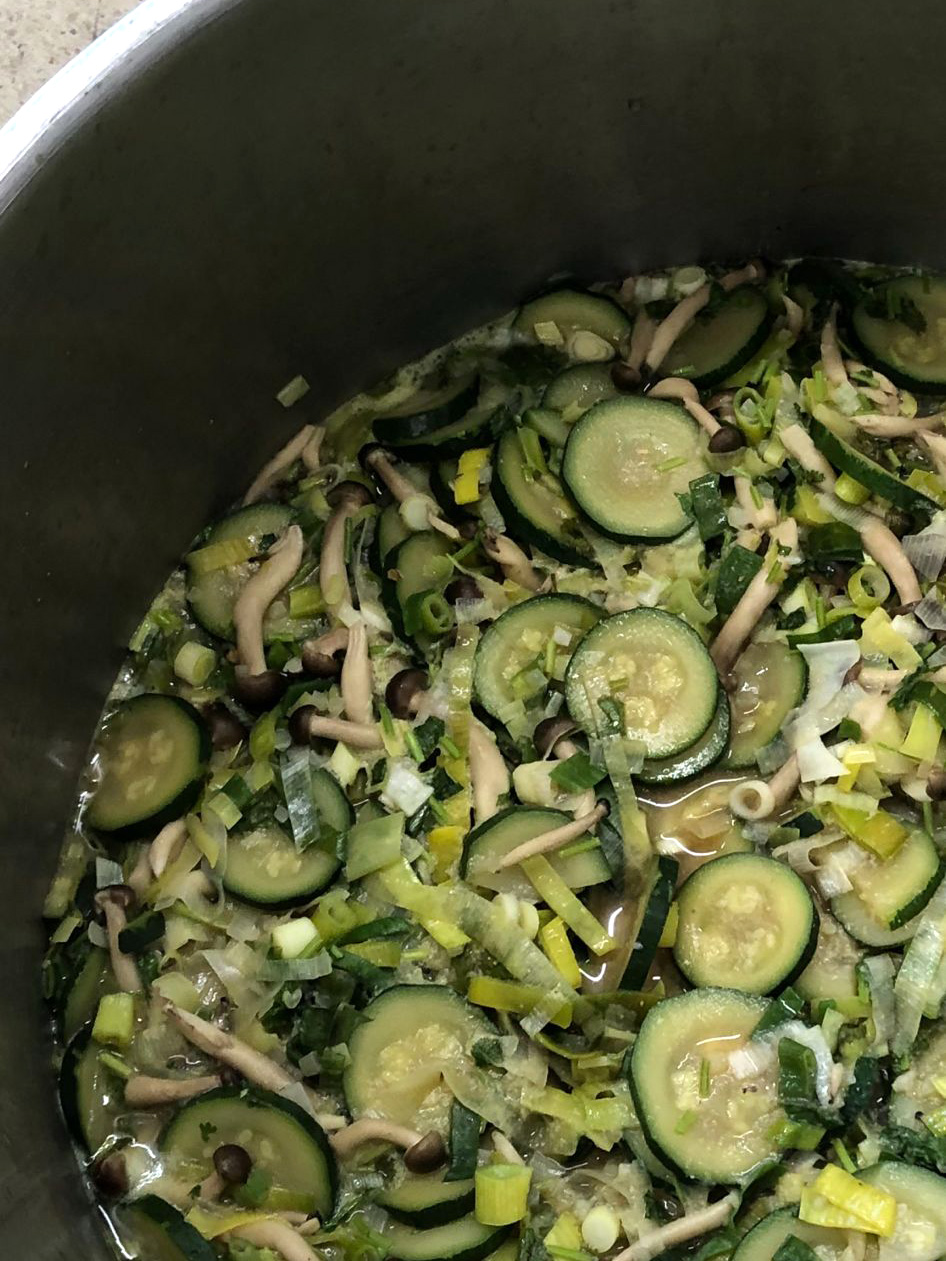
Step by step:
1. Cut up the ginger and the garlic in a blender.
2. Roast the coriander seeds in a dry pan. Cook some water in a small pot and put the garlic, ginger and roasted coriander seeds in the water. Boil this up to make some kind of “broth” with it.
3. Let it boil for a while, then turn the heat off and filter through a siff. Let it cool down a bit and dissolve the brown miso into liquid form.
4. Remove the stems of the enoki mushrooms, add them to the boiling pot.
5. Use a big pot (20 l), to fry the onions in oil. Don’t let them go brown.
6. Add 16 liters of water, then zucchinis, mushrooms, ⅔ of the spring onions and ⅔ of the cilantro.
7. Let it boil until desired tenderness. Then turn the heat down, add the miso-liquid and top off with the rest of the spring onions, cilantro and dried seaweed.
8. You can add a splash of sesame oil if desired.
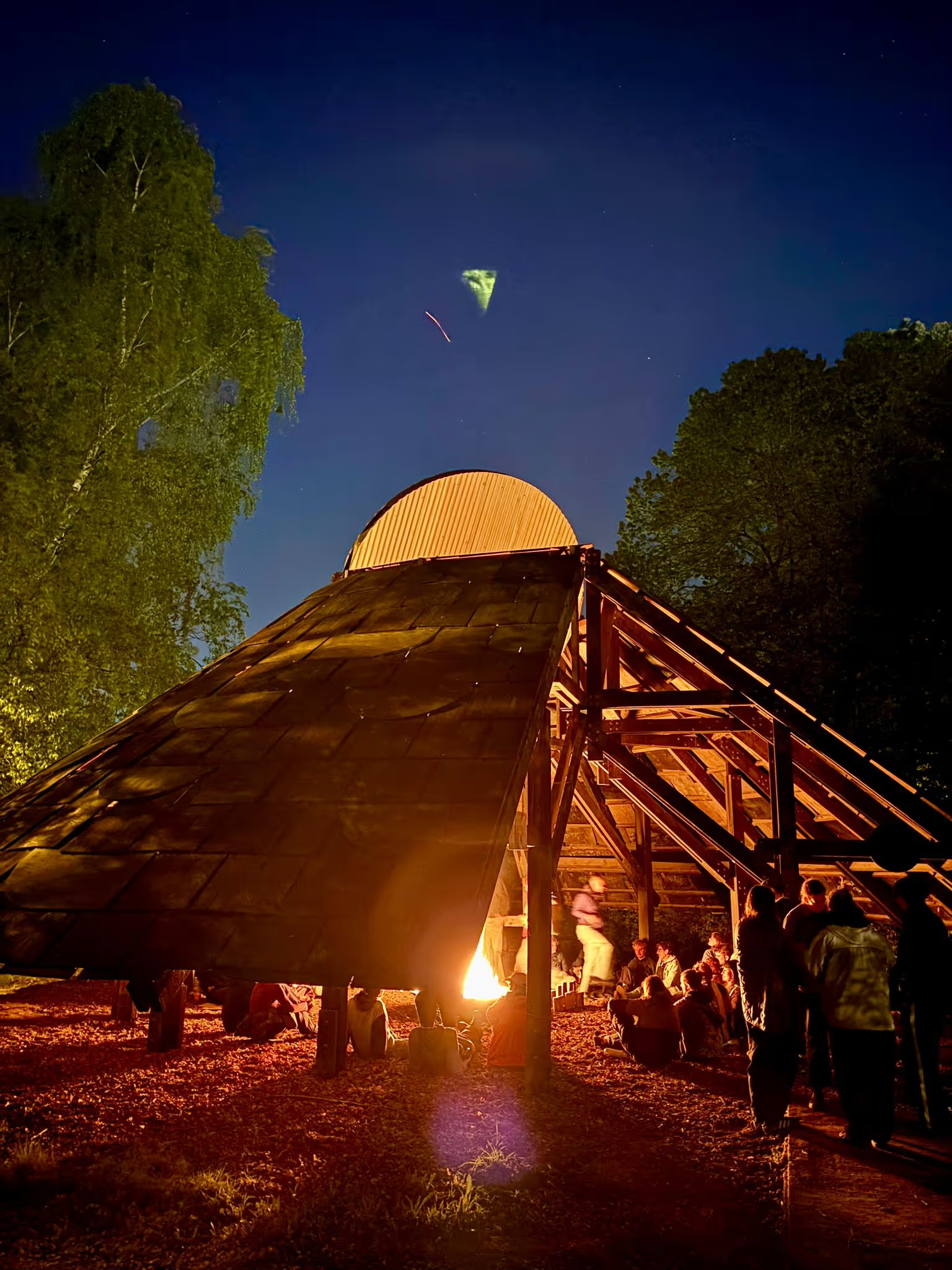
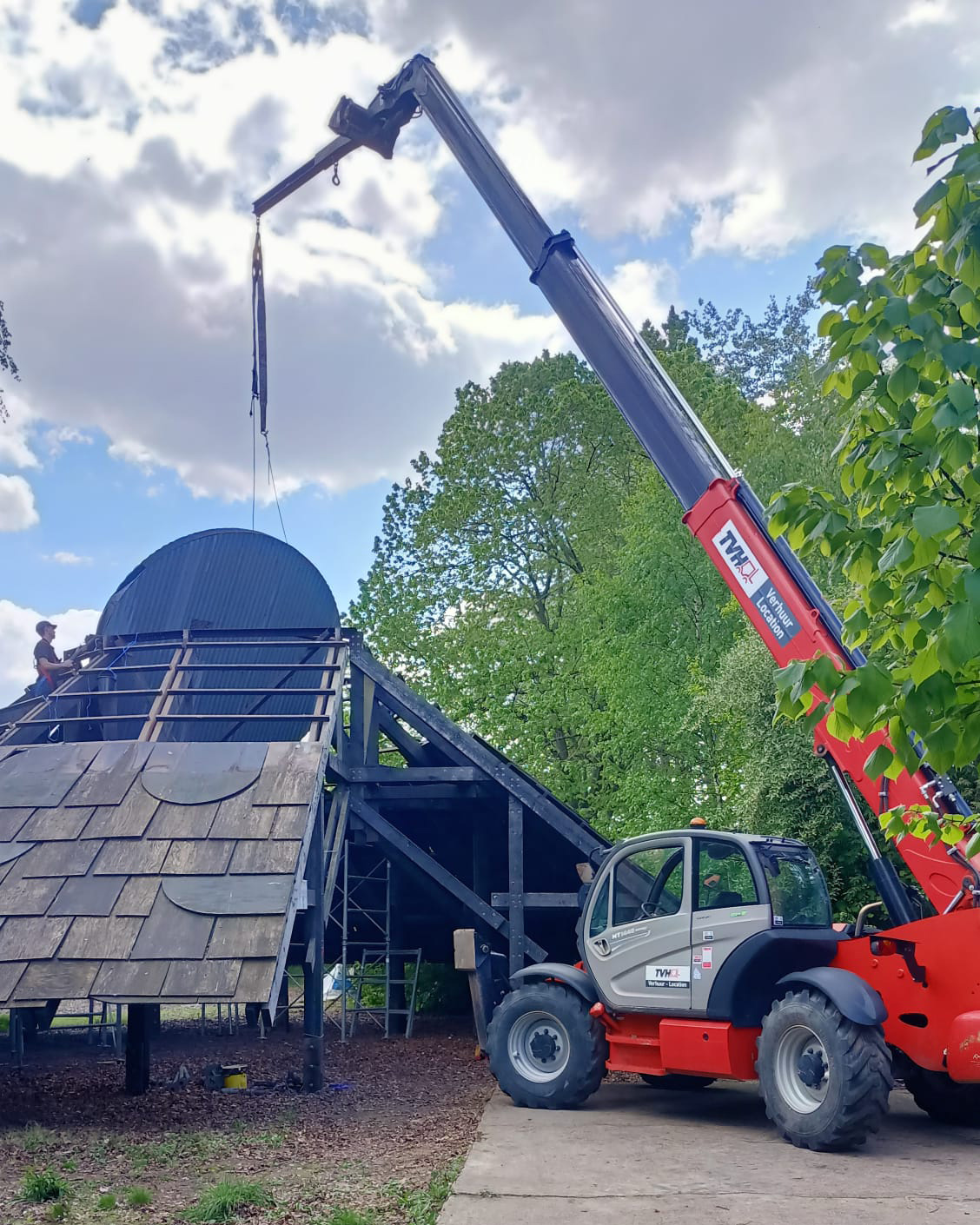
It's the hardest goodbye we've ever had to say. Leopold Banchini's iconic Moon Ra, "a vernacular structure built to dance around the fire" is being dismantled. Its famous circular roof has been embracing the festival goers and offering a "temporary shelter for unexpected and wild behavior" for 5 beatiful years.
Before the New Moon Ra team started doing so, the last ever campfire was lit under its roof and the stars on Sunday. Louise Goegebeur captured the occassion.
However, just when the team began uncovering the supporting structure, Moon Ra revealed one last secret: a hidden bird's nest cradling 10 tiny lives. It seems the shelter for unexpected and wild behavior had been doing exactly that, right up until the end.
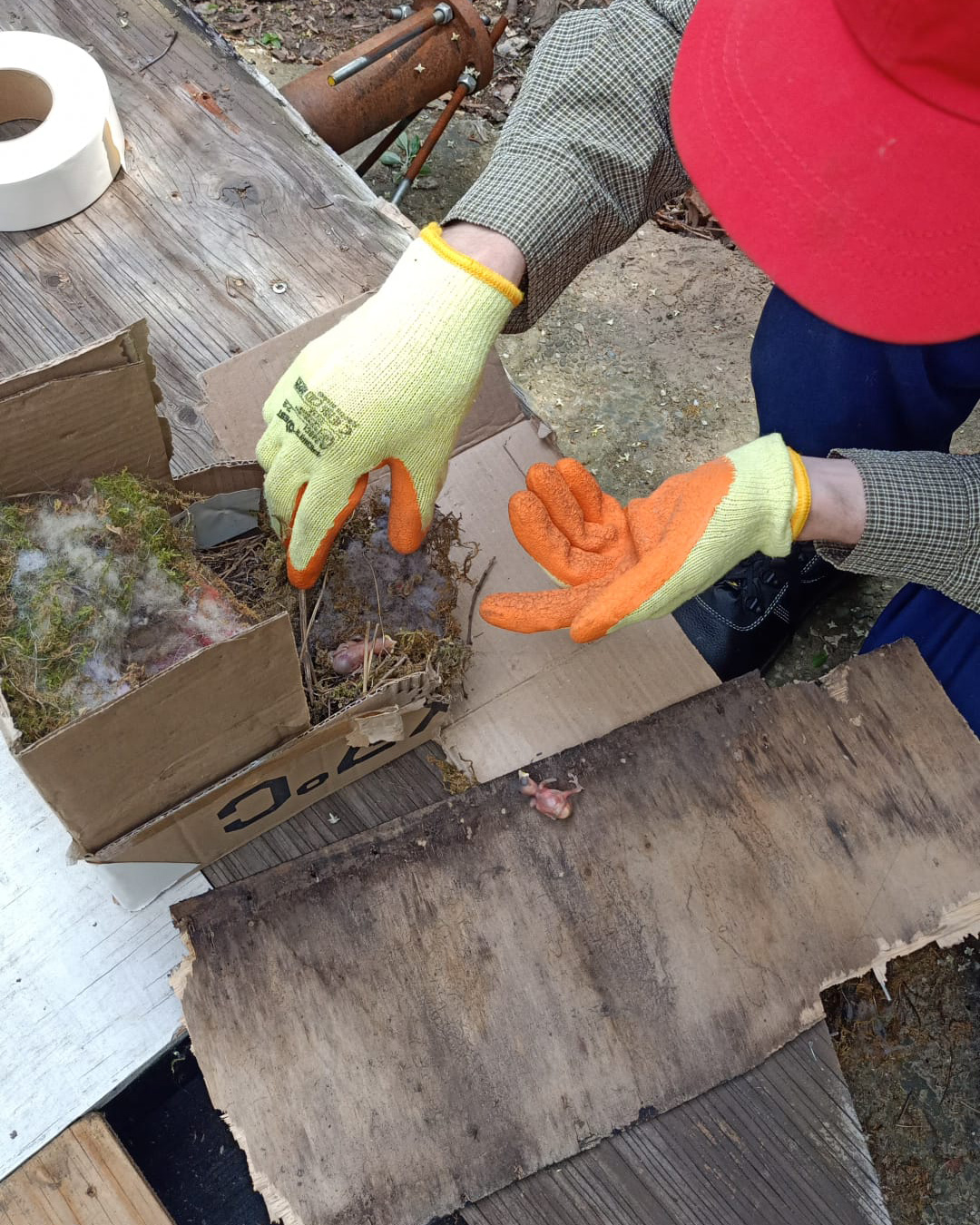
Bird's nest story
told by Leon
Introducing the Atelier Diary.
A home for everyone building and breathing the Horst site during these hands-on seasonal residencies. In the coming weeks, you’ll be able to read participants’ thoughts, experiments and dreams in this living archive called the Atelier Diary. With weekly uploads on our live blog, you’ll get the chance to peek behind the curtain of the new tweaks to the Park and the Horst home ground. You could call it an exclusive preview, through the eyes of Atelier members and the Horst team. All together.
What started yesterday, on Sunday night, has already turned into a first full-fledged working day. With, of course, loads of firsts, and many more to come. We compiled them into a short list.
List of firsts
▢ First presentation
▢ First time meeting the other Atelier participants
▢ First campfire
▢ First drinks at niteshop
▢ First time forgetting to brush my teeth
▢ First dinner together
▢ First caffeine overload, 6 a day seems too much
▢ First time getting lost in the park
▢ First time forgetting a name
▢ First list of firsts
List of firsts:
▢ First tour of the park
▢ First drinks
▢ First campfire
▢ First time meeting the other Atelier members
▢ First time forgetting to brush our teeth