ON
VIEW
VIEW
Arts 2026
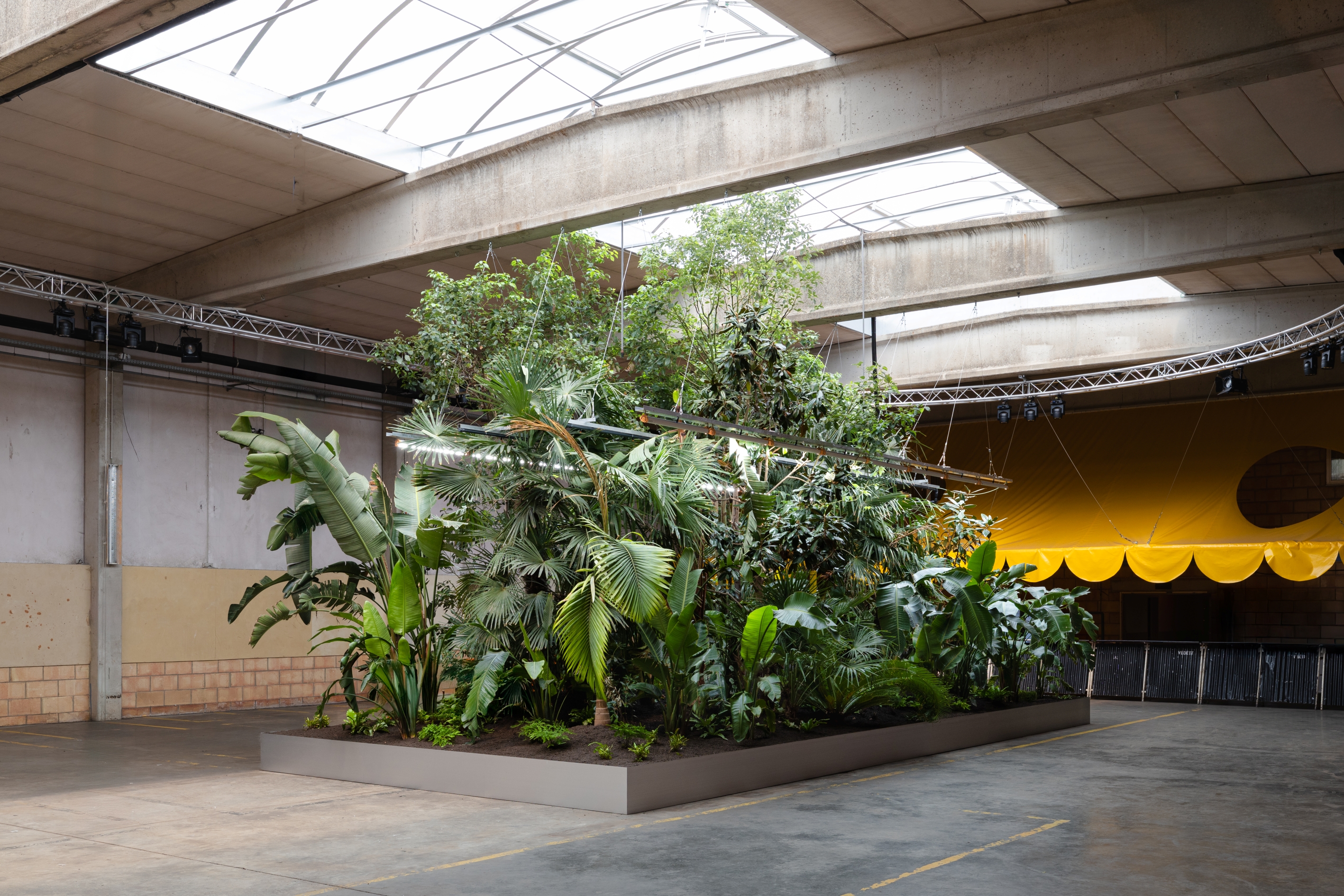
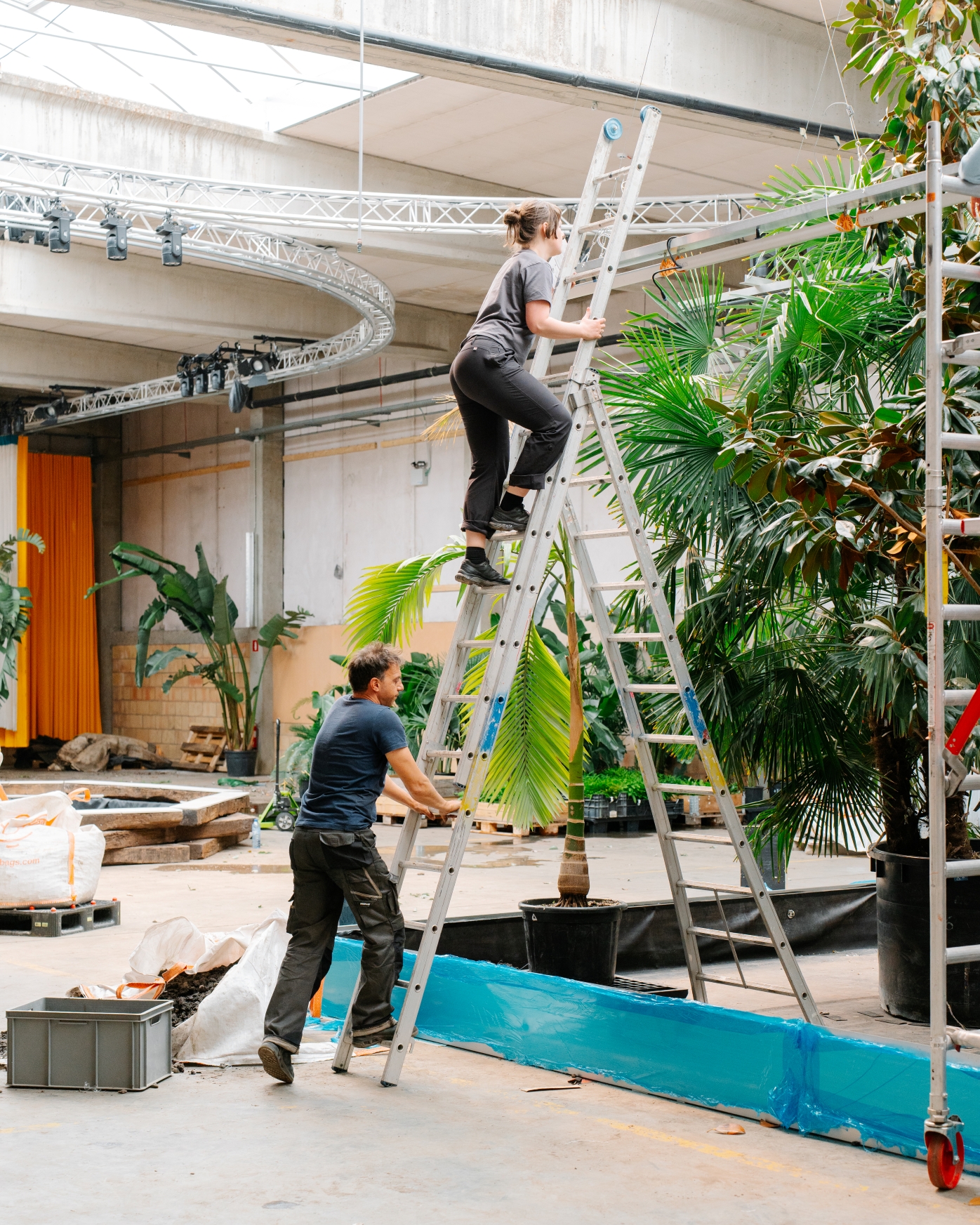
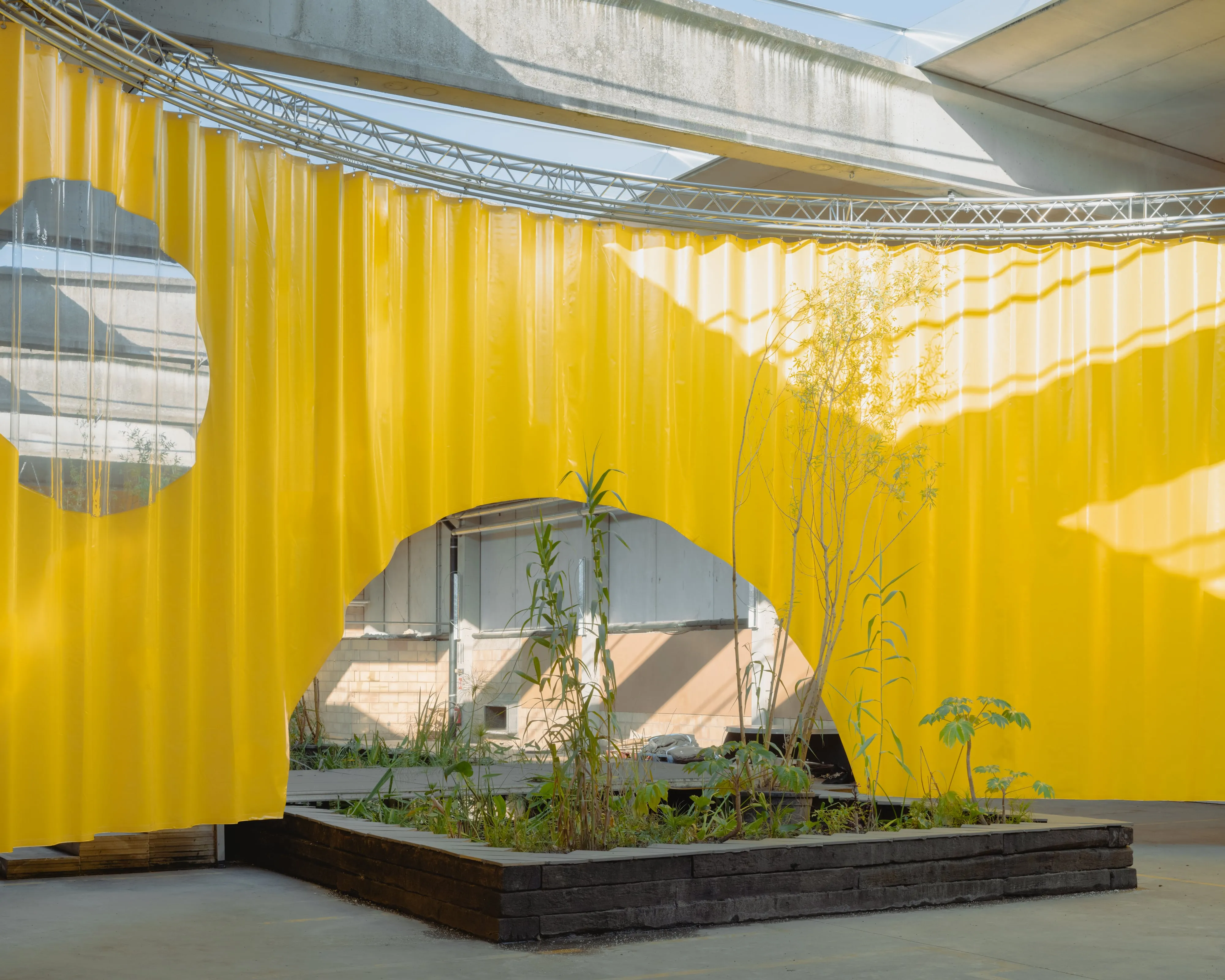
Installed here as its third iteration, the project extends a research process that began with initial testing in the greenhouses of Ghent University and continued through six months of experimentation inside the pavilion during the Biennale. In collaboration with students from the horticultural school in Vilvoorde, the plants were carefully reinstalled in the Rain Room, ensuring the continuity of the prototype for the festival and beyond.
Developed by landscape architect Bas Smets in collaboration with neurobiologist Stefano Mancuso, and commissioned by the Flanders Architecture Institute on behalf of the Flemish Ministry of Culture, the prototype investigates how a deeper understanding of plant intelligence can contribute to the generation of a stable indoor climate. Rather than isolating buildings from the biosphere, it explores how architecture can collaborate with living organisms to shape habitable environments.
Plants cannot move and must therefore transform their surroundings to survive. Through processes such as evapotranspiration, shading, and the regulation of atmospheric moisture, they actively modify environmental conditions and generate local microclimates. By assembling species originating from the understory of subtropical forests and observing their response to a similar, albeit artificial, indoor environment, the installation examines how vegetation can contribute to producing comfortable climatic conditions.
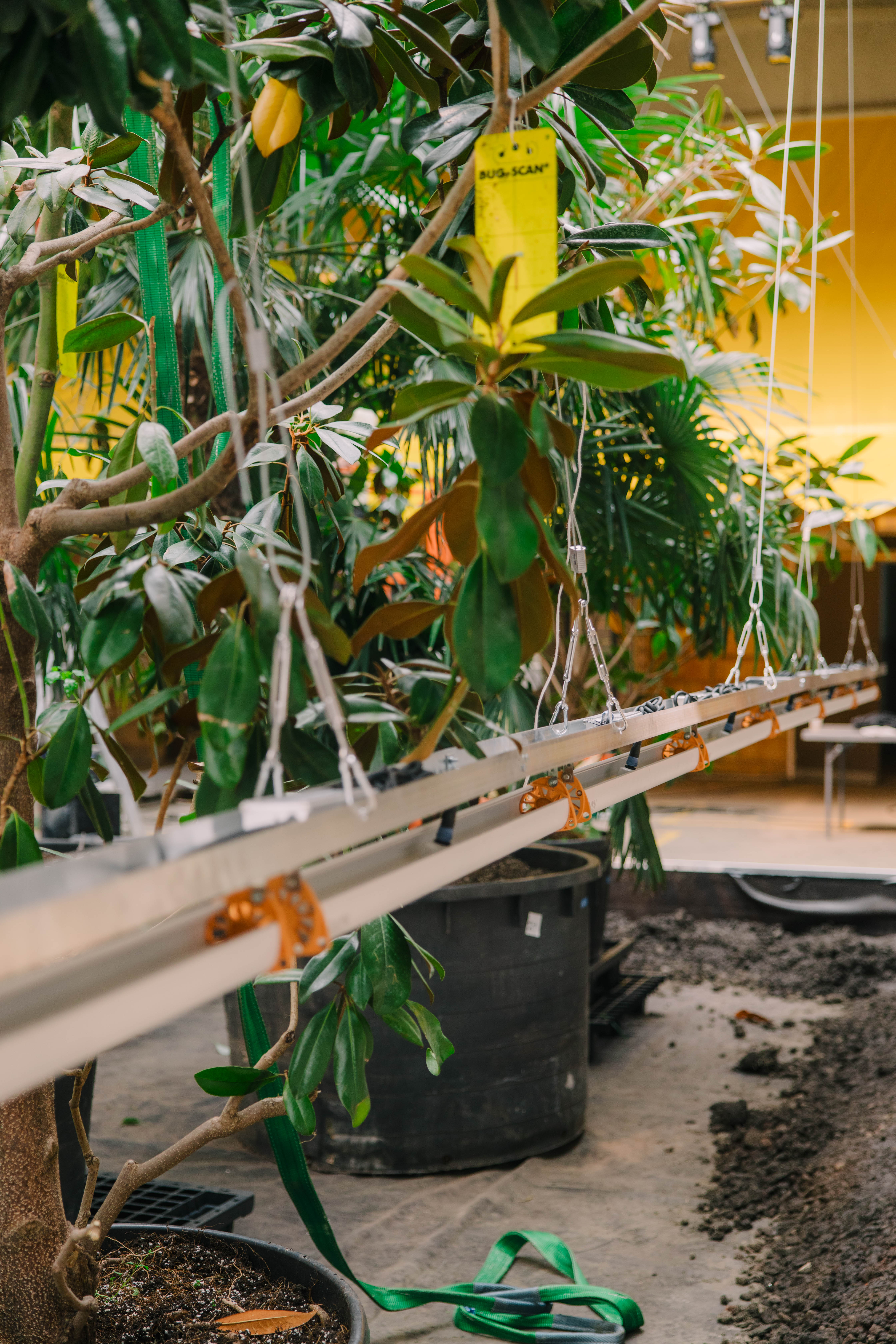
In Ghent and Venice, sensors continuously monitored temperature, humidity, light, and CO₂ concentration, enabling the system to regulate irrigation, ventilation, and lighting in response to the needs of the plants. In Vilvoorde, the prototype continues as a living experiment. It proposes a new alliance between architecture and nature, where buildings are conceived as biospheres capable of sustaining life in an increasingly unstable climate.
{{images-1}}
Bas Smets (1975°, Hasselt, BE) is a landscape architect trained in architecture, civil engineering, and landscape architecture, with degrees from the University of Leuven and the University of Geneva. Since 2023, he has been Professor in Practice at the Harvard University Graduate School of Design.
Through his Brussels-based studio, he investigates how cities can be transformed into urban ecologies that actively produce microclimates and respond to the challenges of climate change. His work develops new forms of landscape as climatic infrastructure, which he has termed Augmented Landscapes, in which vegetation, soil, and water operate as agents that modify atmospheric conditions and reshape the built environment. Notable projects include the LUMA Parc des Ateliers in Arles, the Tour & Taxis Park in Brussels, and the public spaces around Notre-Dame Cathedral in Paris, currently under construction.
A first monographic exhibition of his work was presented in 2013 at deSingel International Arts Centre in Antwerp and at the Arc-en-Rêve Centre d’Architecture in Bordeaux. In 2025, a second exhibition, Climates of Landscape, was presented at LUMA Arles, offering an immersive insight into his practice and research.
Bas Smets has received numerous honours and awards, including the Award for Urbanism and Public Space from the French Academy of Architecture, the Aga Khan Award for Architecture, and the Ultima for General Cultural Merit in Flanders. In November 2025, he was named Officer of the Order of Arts and Letters by the French Minister of Culture.
Credits
Flanders Architecture Institute: commissioner of the Belgian Pavillon
Stefano Mancuso: Plant neurobiologist
Bureau Bas Smets: Landscape architects
Arbor: Sponsor of the plants
Horteco: Partner of the installation
{{images-2}}
Dit prototype, dat hier aan zijn derde fase toe is, bouwt voort op een onderzoekstraject dat startte in de serres van de Universiteit Gent en zes maanden lang werd getest in het Belgisch Paviljoen in Venetië. Samen met leerlingen van Horteco, de tuinbouwschool in Vilvoorde, werd de plantinstallatie zorgvuldig heropgebouwd in de vijverhal. Deze heropbouw stelt de toekomst van het prototype veilig, zowel tijdens als na het festival.
Dit prototype, ontwikkeld door landschapsarchitect Bas Smets in samenwerking met neurobioloog Stefano Mancuso en in opdracht van het Vlaams Architectuurinstituut namens het Vlaams Ministerie van Cultuur, onderzoekt hoe een beter begrip van plant intelligentie kan bijdragen aan het genereren van een stabiel binnenklimaat. In plaats van gebouwen te isoleren van de biosfeer, bestudeert het prototype hoe architectuur kan samenwerken met levende organismen om leefbare omgevingen vorm te geven.
Planten kunnen zich niet verplaatsen en moeten daarom hun omgeving transformeren om te overleven. Door processen als verdamping (evapotranspiratie), schaduwwerking en de regulering van luchtvochtigheid, beïnvloeden planten actief hun omgeving en creëren ze lokale microklimaten. Door soorten uit subtropische klimaten samen te brengen en te observeren hoe zij reageren op de kunstmatige binnenomgeving, onderzoekt de installatie hoe vegetatie kan bijdragen aan het creëren van comfortabele klimatologische condities.
In Gent en Venetië registreerden sensoren continu de temperatuur, luchtvochtigheid, lichtinval en CO₂-waarden. Op basis van deze data stuurde het systeem de irrigatie, ventilatie en verlichting automatisch aan, volledig afgestemd op wat de planten op dat moment nodig hadden. In Vilvoorde blijft het prototype evolueren als een levend experiment. Dit werk stelt een nieuwe alliantie voor tussen architectuur en natuur, waarbij gebouwen worden opgevat als biosferen die in staat zijn om leven te ondersteunen binnen een steeds onstabieler klimaat.
{{images-1}}
Bas Smets (1975°, Hasselt, BE) heeft een achtergrond in landschapsarchitectuur, ingenieurswetenschappen en architectuur. In 2007 richtte hij zijn bureau op in Brussel en sindsdien heeft hij met zijn team van 24 architecten en landschapsarchitecten meer dan 50 internationale projecten gerealiseerd.
Tot zijn gerealiseerde projecten behoren het Parc des Ateliers in Arles, het park van Thurn & Taxis in Brussel, het Mandrake Hotel in Londen en het Himara Waterfront in Albanië. In 2022 won hij de internationale competitie voor Les Abords de Notre-Dame in Parijs.
Elk van deze projecten maakt deel uit van een onderling gerelateerd onderzoek naar de mogelijke rol en ambitie van landschapsprojecten. Het doel is om 'Augmented Landscapes' uit te vinden door gebruik te maken van de logica van de natuur. Deze augmented landscapes produceren een nieuw microklimaat en zorgen voor nieuwe sferen. De samenwerking met kunstenaars en wetenschappers staat centraal in dit onderzoek. Hij heeft vele prijzen ontvangen voor zijn unieke aanpak, waaronder de Aga Khan Award for Architecture in 2019.
Bas Smets is in 2023 benoemd tot Professor in Practice aan de GSD van Harvard University. Met zijn ontwerpstudio onderzoekt hij nieuwe manieren om de stad te transformeren in een stedelijke ecologie, die in staat is verkoelende microklimaten te produceren om klimaatverandering tegen te gaan.
Credits
Flanders Architecture Institute: commissioner of the Belgian Pavillon
Stefano Mancuso: Plant neurobiologist
Bureau Bas Smets: Landscape architects
Arbor: Sponsor of the plants
Horteco: Partner of the installation
{{images-2}}



The rich text element allows you to create and format headings, paragraphs, blockquotes, images, and video all in one place instead of having to add and format them individually. Just double-click and easily create content.
A rich text element can be used with static or dynamic content. For static content, just drop it into any page and begin editing. For dynamic content, add a rich text field to any collection and then connect a rich text element to that field in the settings panel. Voila!
Headings, paragraphs, blockquotes, figures, images, and figure captions can all be styled after a class is added to the rich text element using the "When inside of" nested selector system.

.jpg)


.webp)
.jpg)



.avif)