ON
VIEW
VIEW
Arts 2026

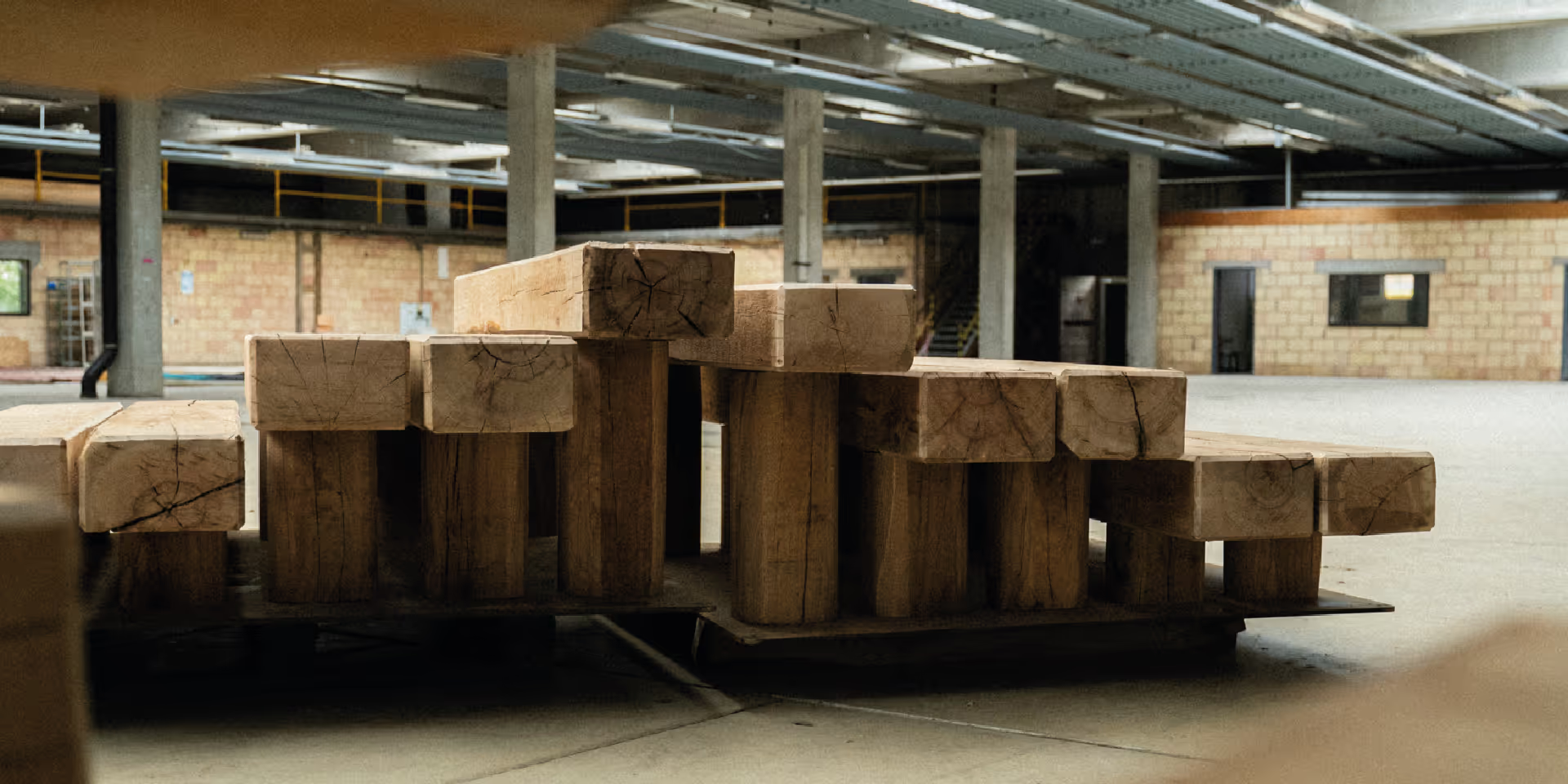
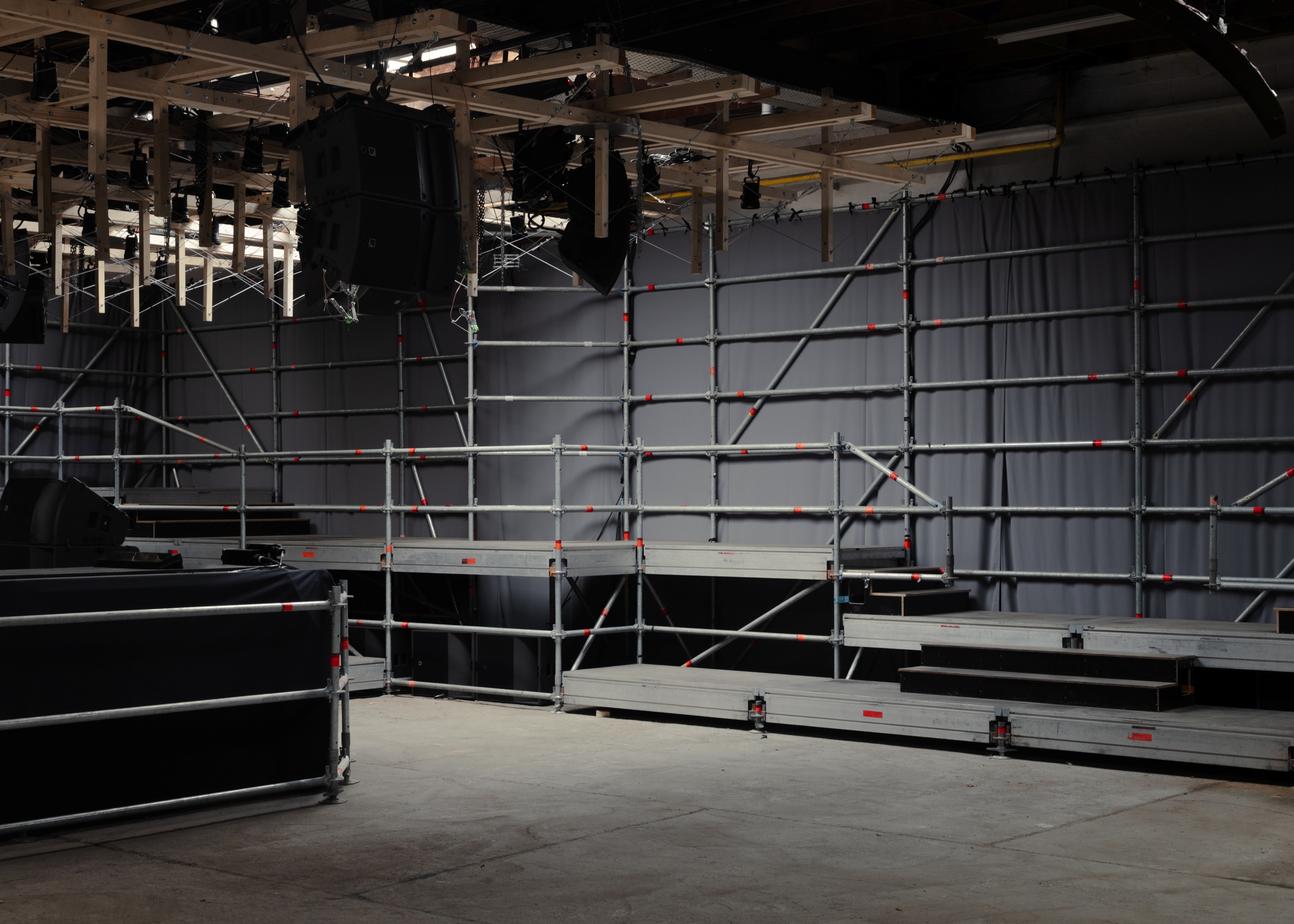
Conceived by artist Paul Maheke during his residency at the Villa Medici in Rome, the work emerges from his research into funeral rites, post-mortem violence, and the representation of marginalised bodies in the face of death.
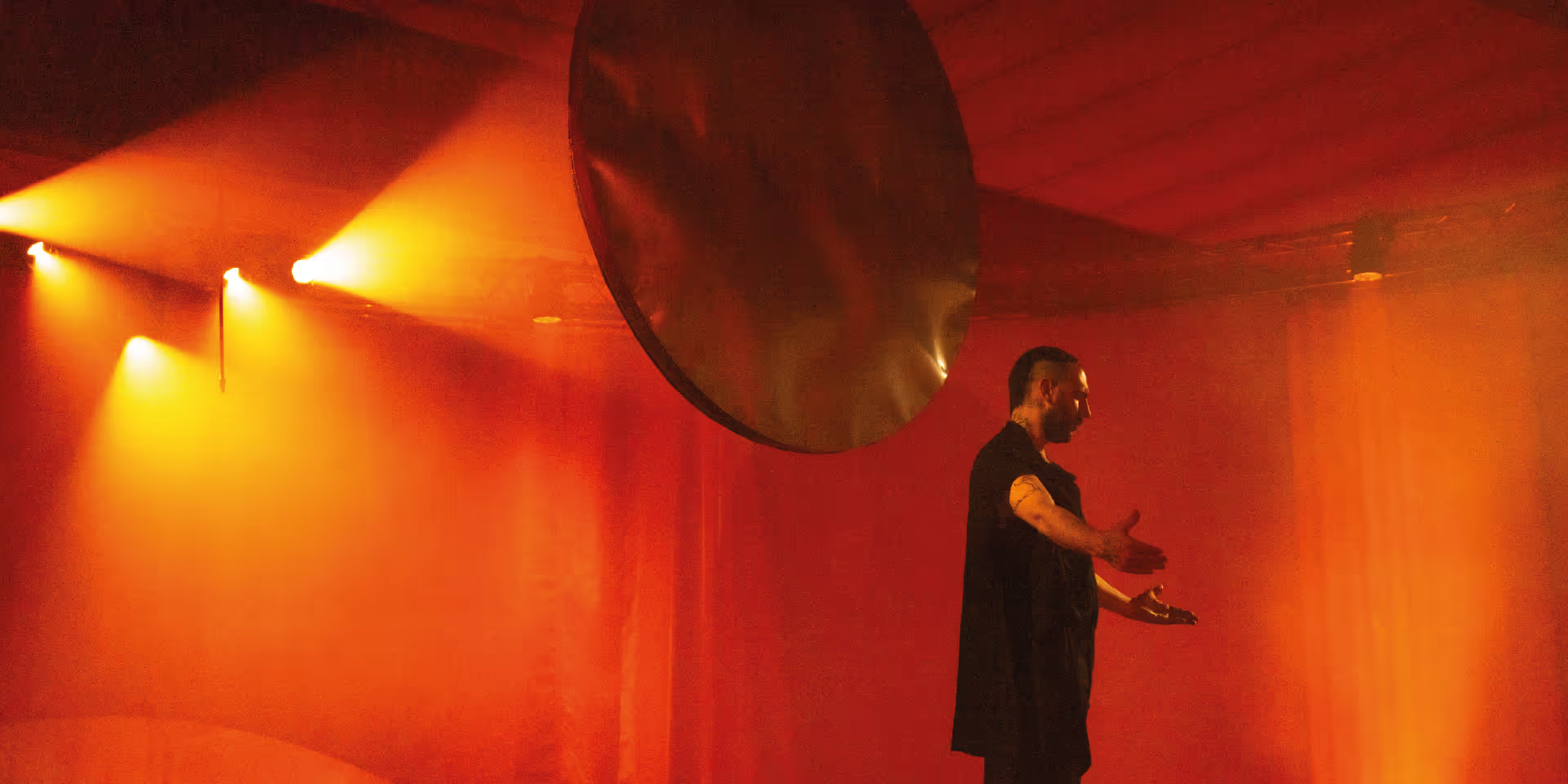
The installation reimagines the medieval “gisant” - traditional reclining funerary effigies - as a series of sarcophagi in black smoked plexiglass. Echoing ancient Roman coffins suspended in space and time, Maheke’s translucent black forms are filled with water to match the weight of an average human body. Hovering between visibility and erasure, they evoke the absence of those denied peaceful passage by historical violence, from Ancient Rome’s Damnatio Memoriae to the transatlantic slave trade and lynching spectacles in the United States.
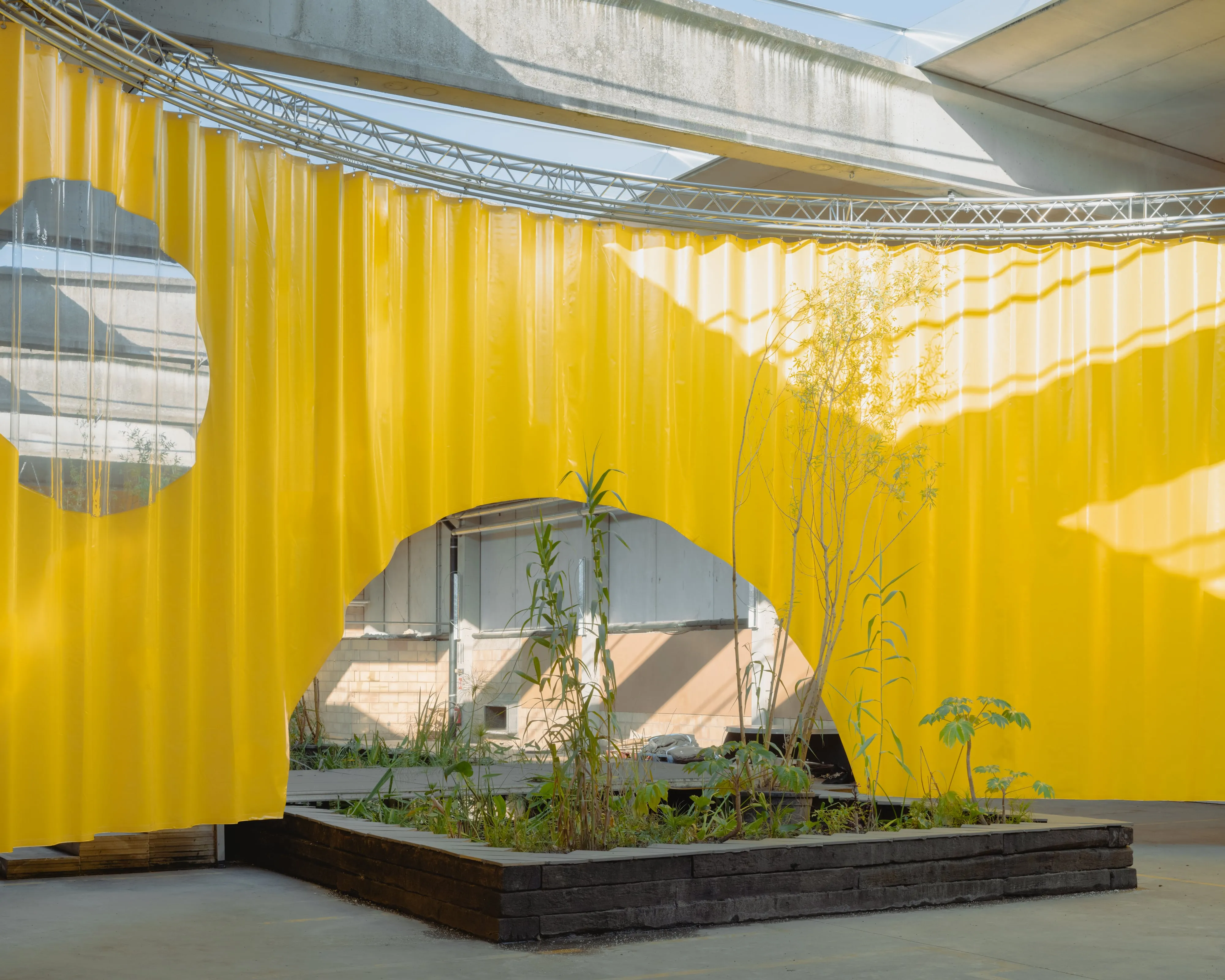
Yellow curtains partition the space, creating zones of concealment, reminiscent of a funeral home or a place of quiet grief. They function as thresholds between light and shadow, presence and oblivion. Visitors navigate this labyrinthine environment, encountering traces of the past filtered through a yellow hue. The Rise is part of a larger body of work that invites us to question who is remembered, who is forgotten, and how death itself can be weaponised or reclaimed, politically and socially.
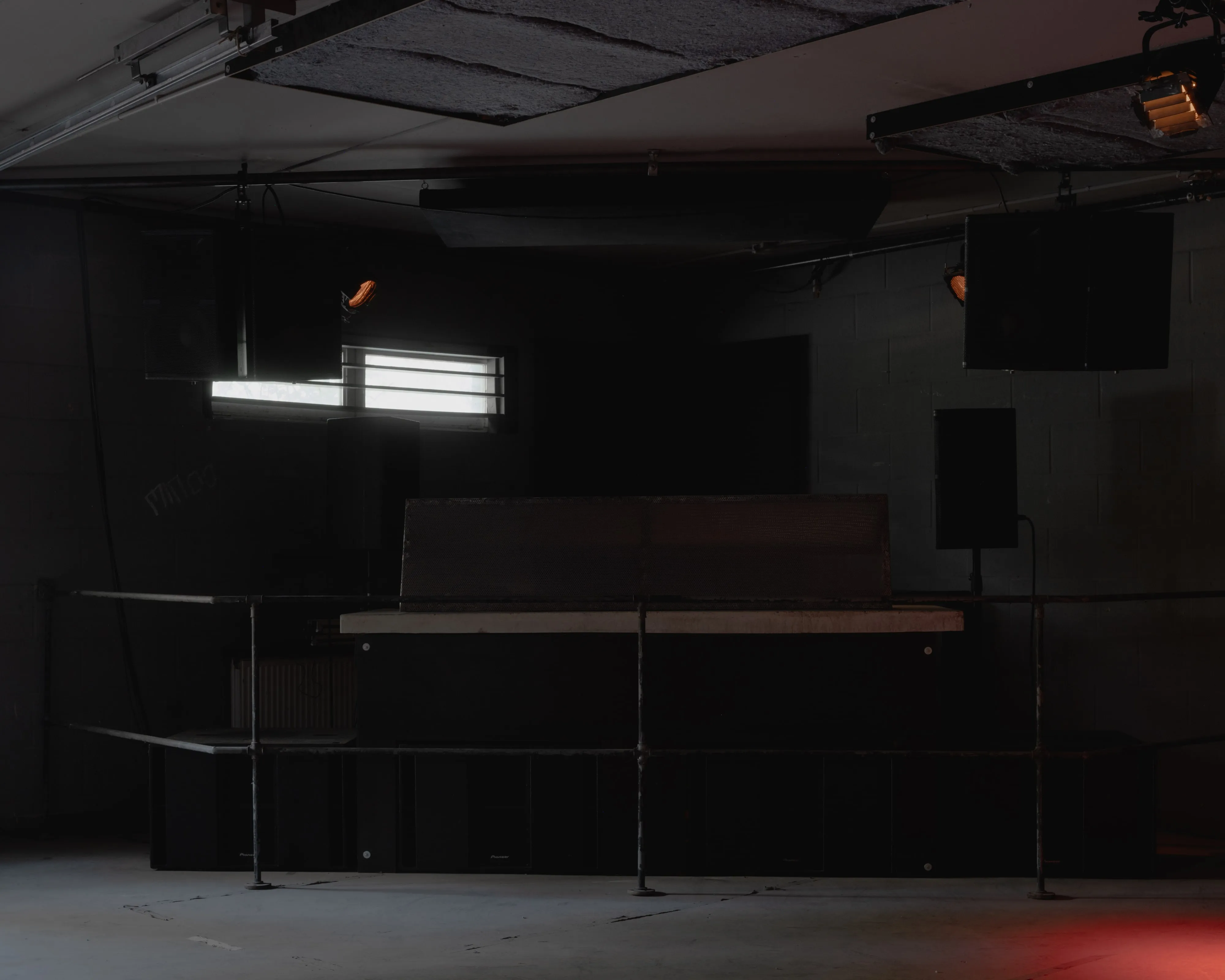
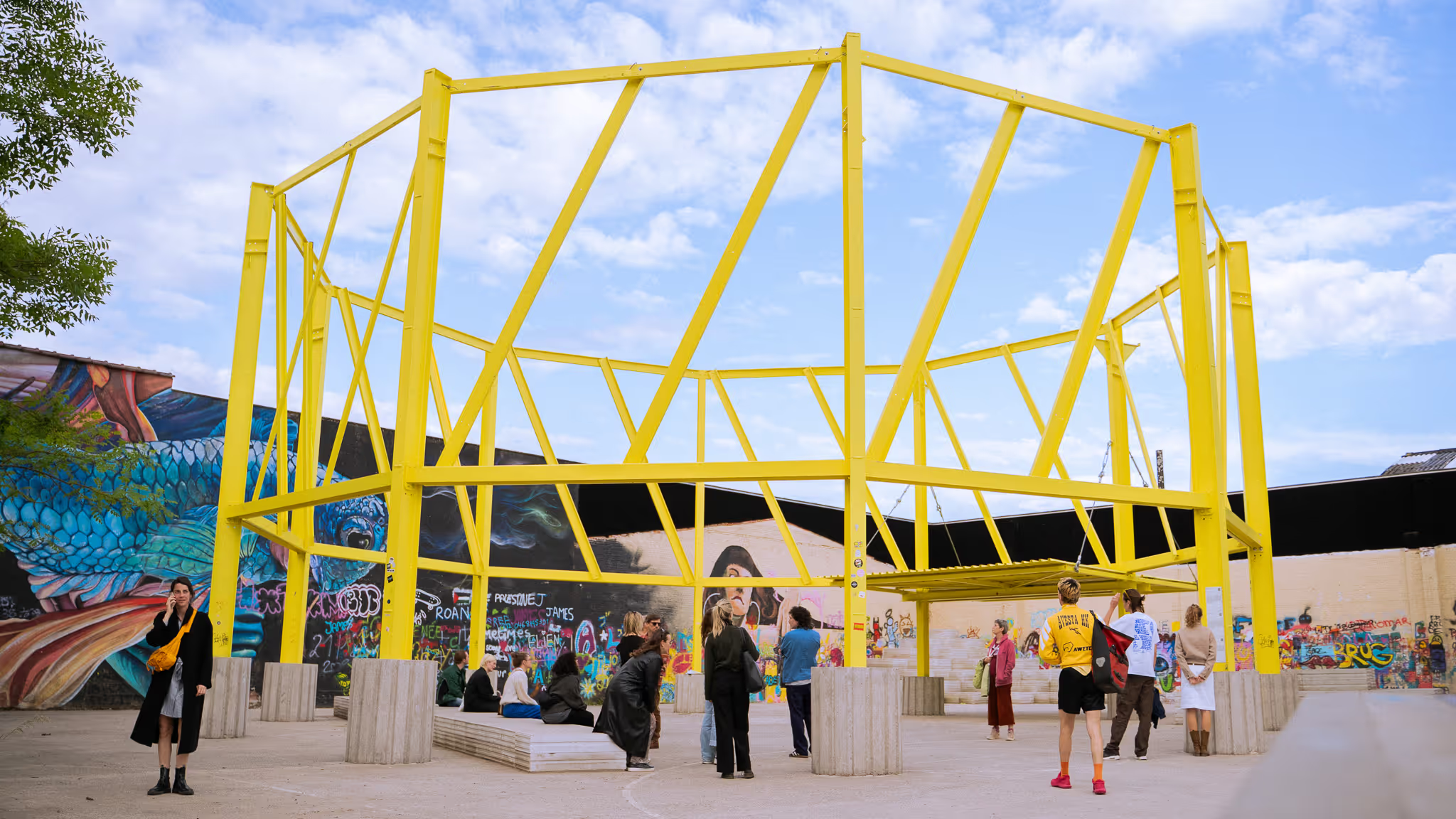
Within the context of Horst music festival, Maheke envisages this installation as a space for collective reflection on how we inhabit spaces of memory. In dialogue with electronic music and the neighbouring communal gatherings, the work becomes both memorial and site of celebration—a space where the shadows of the past stand tall in the present.
{{images-1}}
Paul Maheke (1985°, Brive-la-Gaillarde, FR) lives and works in Montpellier. Through various artistic forms and disciplines, Maheke has undertaken a sustained exploration of the ways marginalized bodies, narratives, and histories are rendered visible and invisible. Resisting an approach to identity that remains confined within the framework of identity politics, Maheke’s practice is channeled through spectral sensations. The artist calls upon ghosts, spirits, and non-human entities in their works to encourage a reorientation of perception, inviting audiences to reconsider how they see, feel, and listen. In reconfiguring the sensible, Maheke seeks to disrupt dominant systems of discourse that prioritize representation, visibility, and legibility as ultimate markers of truth, value, and power. Instead, he cultivates a self in a state of in-betweenness—where esoteric, spiritual, queer, and embodied knowledge(s) create potential for prophecy.
His work has been shown at Tate Modern and Tate Britain (London), the Venice Biennale, Smithsonian National Museum of African Art (Washington), The Renaissance Society (Chicago), Mercer Union (Toronto), Performa (New York), Centre Pompidou; Palais de Tokyo, Bourse de Commerce; and Lafayette Anticipations (Paris), Baltic Triennial, Manifesta (Palermo), Chisenhale Gallery; South London Gallery (London).Paul Maheke is the recipient of the 25th Fondation Pernod Ricard Prize and is a fellow at the Villa Medici – French Academy in Rome for the 2025-2026 academic year.
Het werk, bedacht door kunstenaar Paul Maheke tijdens zijn residentie bij Villa Medici in Rome, vloeit voort uit zijn onderzoek naar uitvaartrituelen, postmortaal geweld en de representatie van gemarginaliseerde lichamen in het licht van de dood.
De installatie herinterpreteert de middeleeuwse gisants — traditionele liggende grafsculpturen — als een reeks sarcofagen in zwart, gerookt plexiglas. Maheke’s doorschijnende, donkere volumes verwijzen naar antieke Romeinse doodskisten en lijken losgezongen van een specifieke tijd of plaats. Ze zijn gevuld met water dat het gewicht van een gemiddeld menselijk lichaam benadert. Balancerend tussen aanwezigheid en verdwijning evoceren ze de afwezigheid van degenen aan wie, door historisch geweld, een vreedzame overgang werd ontzegd — van de damnatio memoriae in het oude Rome tot de trans-Atlantische slavenhandel en de lynchpartijen in de Verenigde Staten.
Gele gordijnen verdelen de ruimte in intieme zones van geborgenheid en afzondering, refererend aan een uitvaartcentrum of een plek van ingetogen rouw. Ze fungeren als drempels tussen licht en schaduw, aanwezigheid en afwezigheid. Bezoekers bewegen zich door deze labyrintische omgeving en ontmoeten er sporen van het verleden, gefilterd door een gele gloed. The Rise maakt deel uit van een breder hoofdstuk binnen Maheke’s praktijk, waarin hij reflecteert op wie wordt herinnerd en wie wordt uitgewist, en op hoe de dood zowel politiek en sociaal kan worden ingezet als instrument van geweld, of opnieuw opgeëist kan worden als een ruimte van waardigheid en herinnering.
Binnen de context van het Horst Music Festival beschouwt Maheke deze installatie als een ruimte voor collectieve reflectie over hoe we ons verhouden tot plekken van herinnering. In dialoog met de elektronische muziek en de gemeenschappelijke samenkomsten, wordt het werk tegelijk een gedenkplaats en een plek van viering — een ruimte waar de schaduwen van het verleden zich oprichten in het heden.
{{images-1}}
Paul Maheke (1985°, Brive-la-Gaillarde, FR) woont en werkt in Montpellier. Via diverse artistieke vormen en disciplines onderzoekt Maheke voortdurend hoe gemarginaliseerde lichamen, verhalen en geschiedenissen zichtbaar en onzichtbaar worden gemaakt. Hij verzet zich daarbij tegen een benadering van identiteit die beperkt blijft tot het kader van identiteitspolitiek, en kanaliseert zijn werk via spookachtige gewaarwordingen. De kunstenaar roept in zijn werken geesten, spoken en niet-menselijke entiteiten op om een heroriëntatie van de perceptie te stimuleren en het publiek uit te nodigen om te heroverwegen hoe ze zien, voelen en luisteren. Maheke probeert zo dominante narratieven te ontwrichten die representatie, zichtbaarheid en leesbaarheid als ultieme maatstaven voor waarheid, waarde en macht beschouwen. In plaats daarvan positioneert de kunstenaar het idee van het ‘zelf’ in een tussenpositie – waar esoterische, spirituele, queer en belichaamde kennis(sen) de potentie voor profetie creëren.
Maheke’s werk en performances zijn onder meer getoond bij Tate Modern en Tate Britain (Londen), de Biënnale van Venetië, The Renaissance Society (Chicago), Mercer Union (Toronto), Performa (New York), Centre Pompidou, Palais de Tokyo, Bourse de Commerce, en Lafayette Anticipations (Parijs), de Baltic Triennial, Manifesta (Palermo), Chisenhale Gallery en de South London Gallery.
Paul Maheke is de winnaar van de 25ste Fondation Pernod Ricard Prize en is als fellow verbonden aan de Villa Medici (Académie de France à Rome) voor het academiejaar 2025-2026.
Evelyn Simons is een in Brussel gevestigde curator en schrijver, en medeoprichter van RendezVous – Brussels Art Week. Momenteel is zij co-artistiek directeur van de komende Busan Biënnale en zij is verbonden aan Horst Arts & Music. In haar praktijk verkent ze de raakvlakken tussen kunst, nachtleven, muziek, architectuur, performance en mode, waarbij ze interdisciplinaire samenwerkingen en ruimtes voor artistiek experiment stimuleert. Ze is in het bijzonder geïnteresseerd in hauntology, subculturen en de parallellen tussen de rave-cultuur en protest, waarbij ze onderzoekt hoe collectieve bijeenkomsten plekken worden voor verzet, verbeelding en het verbeelden van alternatieve werelden.


The rich text element allows you to create and format headings, paragraphs, blockquotes, images, and video all in one place instead of having to add and format them individually. Just double-click and easily create content.
A rich text element can be used with static or dynamic content. For static content, just drop it into any page and begin editing. For dynamic content, add a rich text field to any collection and then connect a rich text element to that field in the settings panel. Voila!
Headings, paragraphs, blockquotes, figures, images, and figure captions can all be styled after a class is added to the rich text element using the "When inside of" nested selector system.



.webp)
.avif)



.jpg)
.jpg)