ON
VIEW
VIEW
Arts 2026
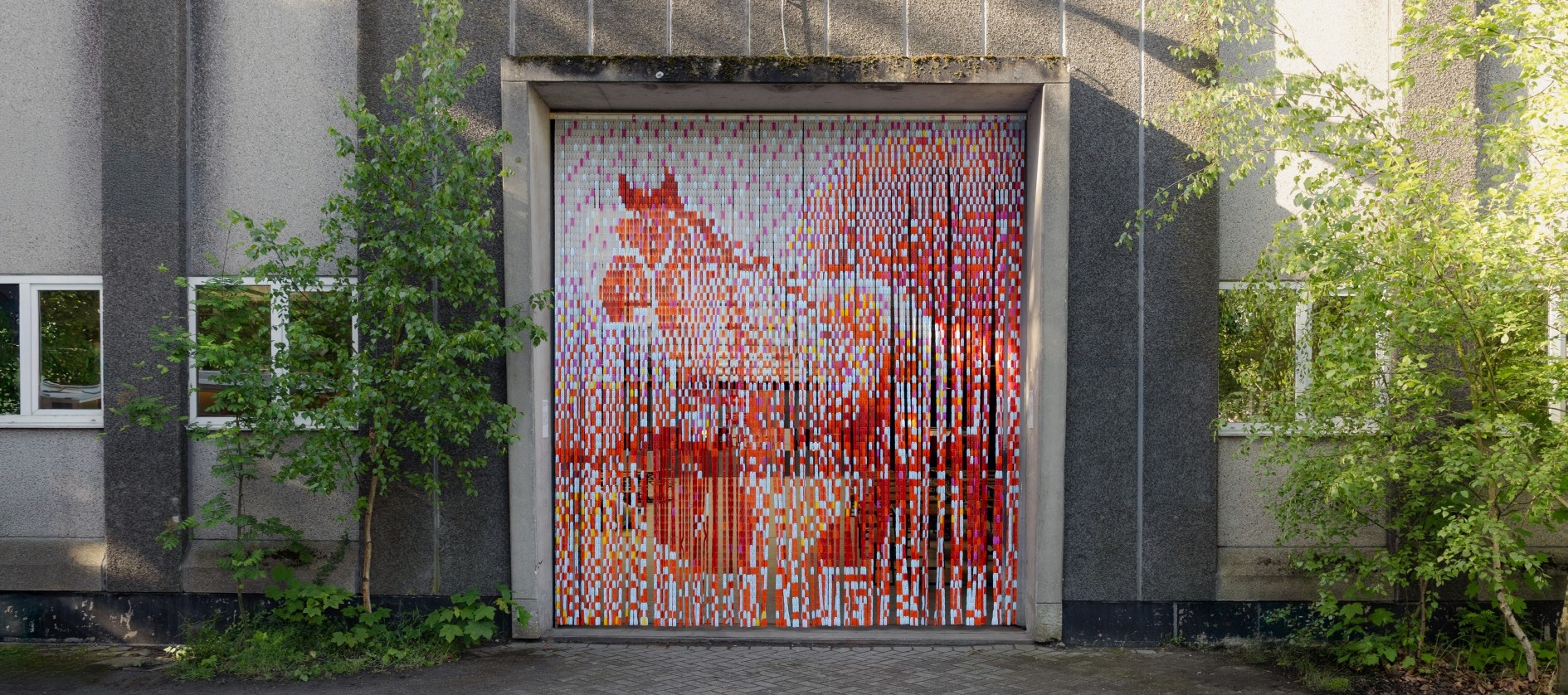
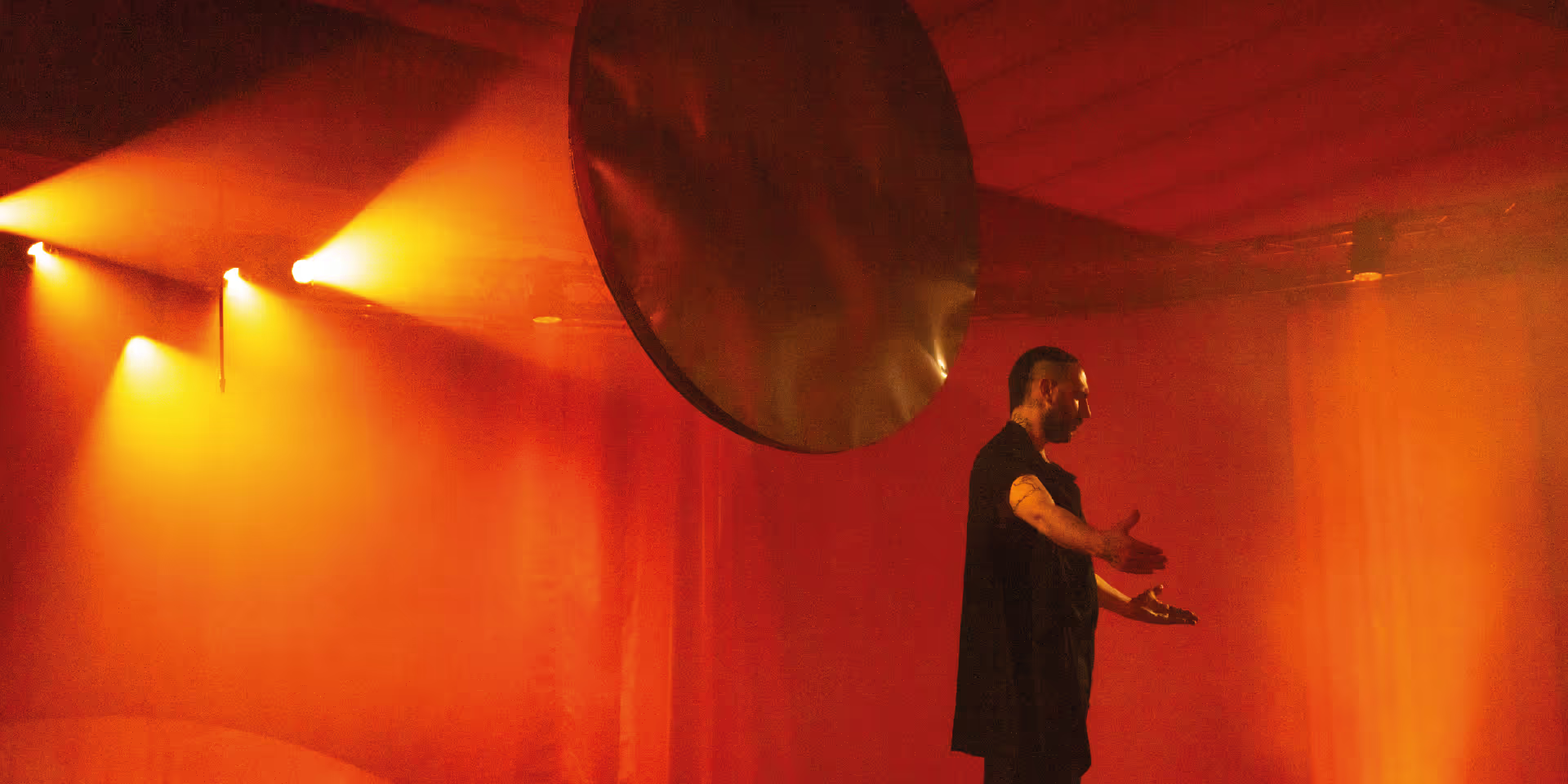
In the context of Horst, this pulse becomes that of the festival itself, one of celebration, collective energy, and the continuous movement of bodies carried by music.
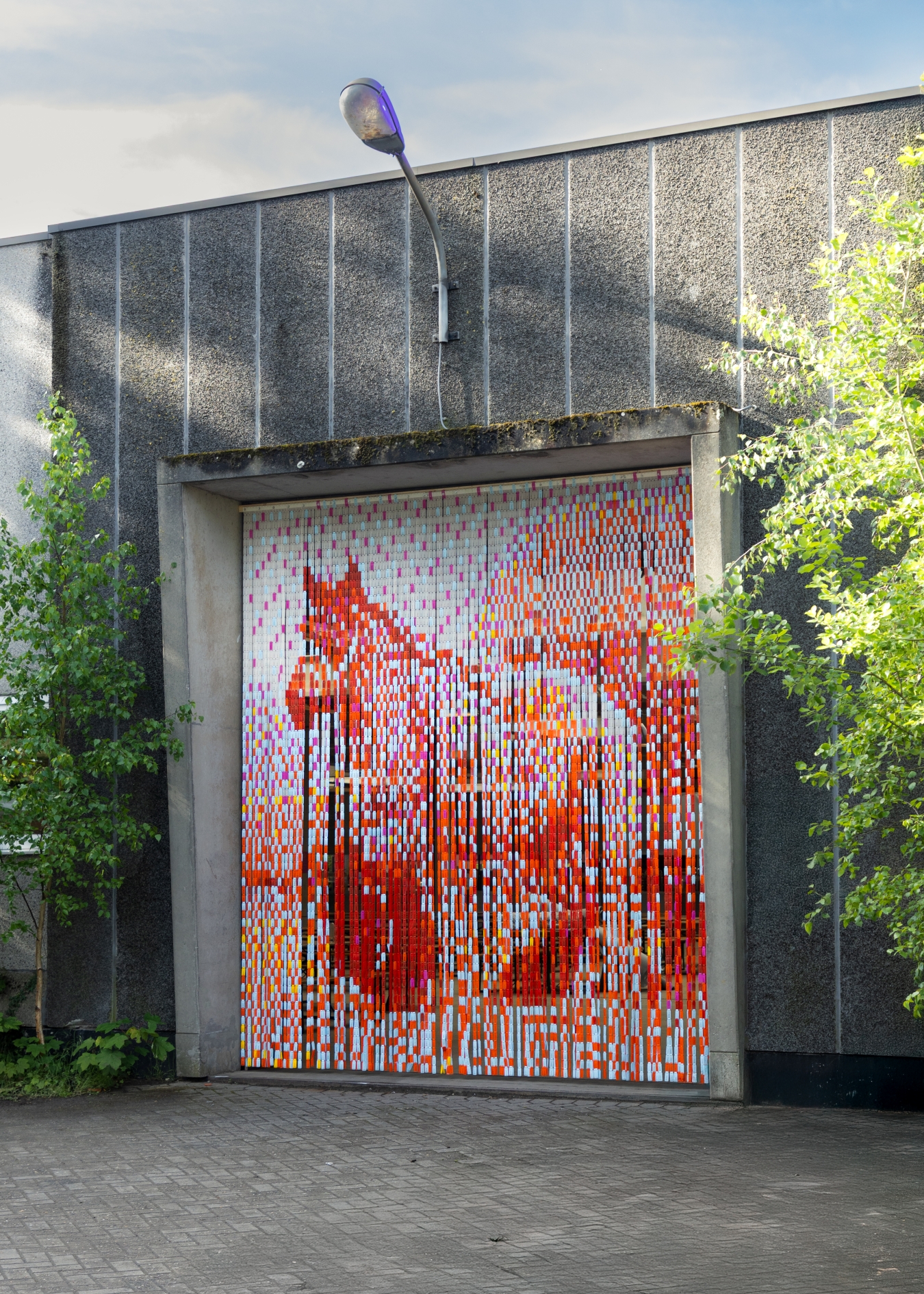
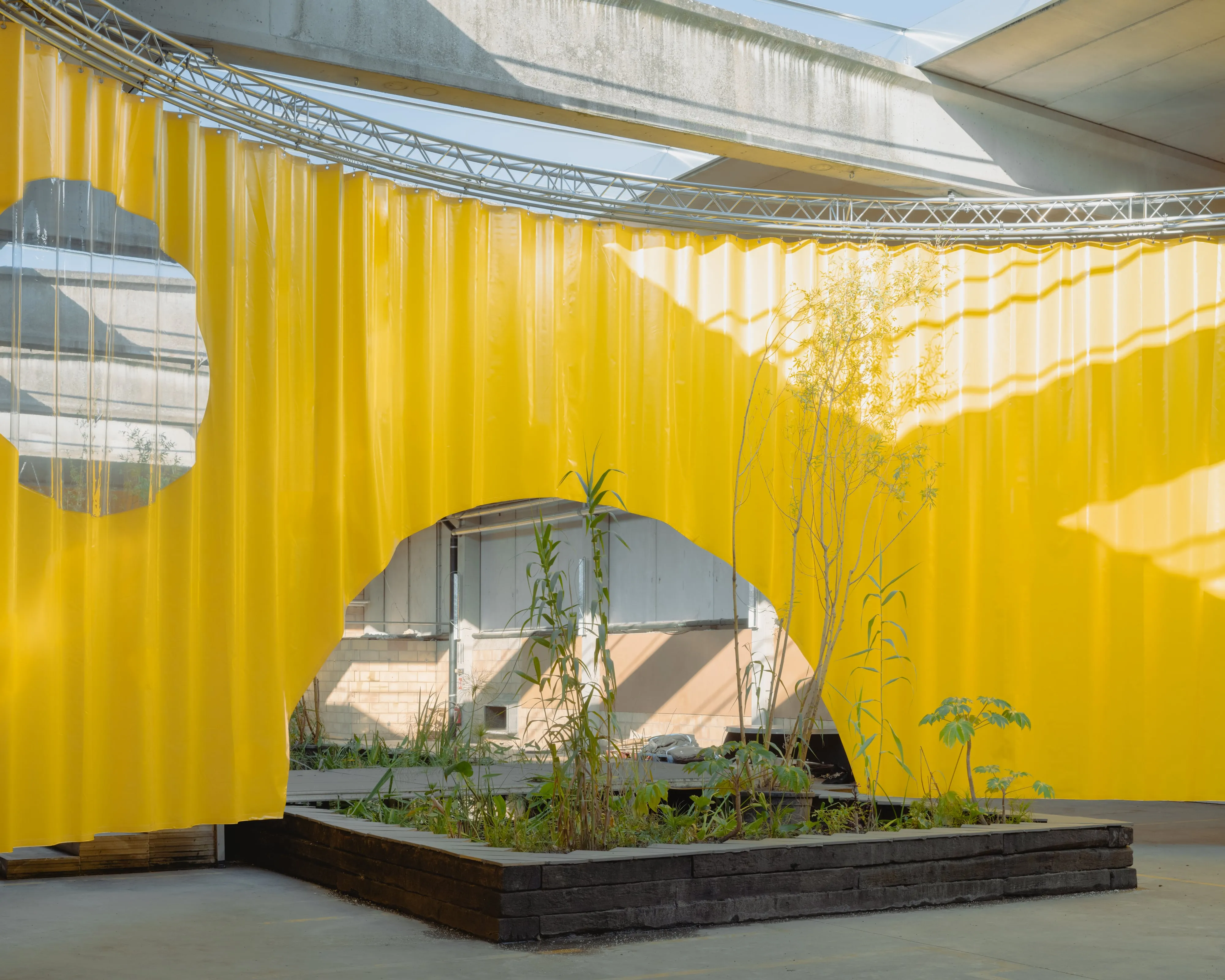
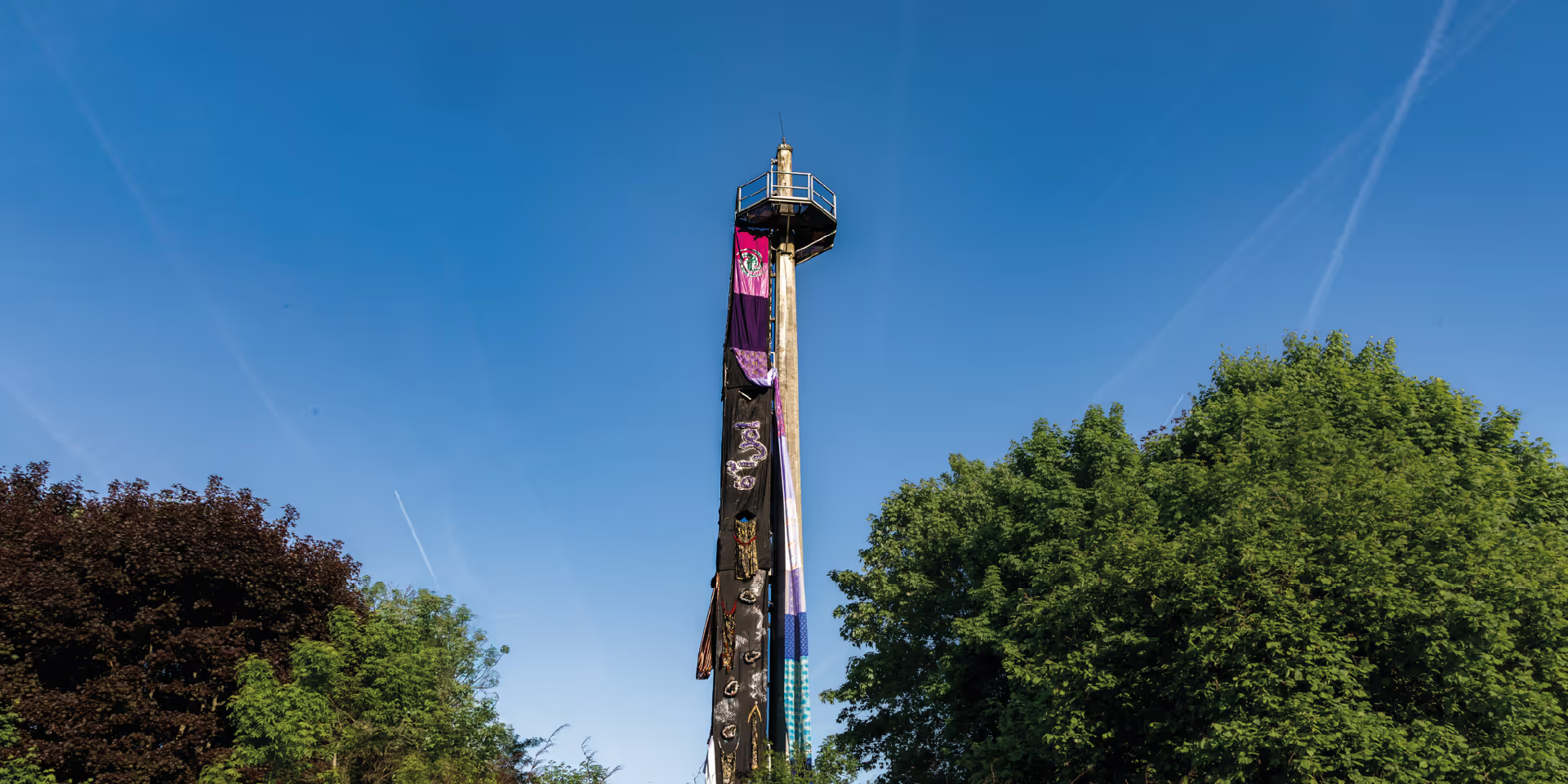
The project draws inspiration from the world of draft horses, emblematic figures of the city of Vilvoorde. Symbols of strength, resilience, and labour, they embody a relationship to work grounded in endurance.
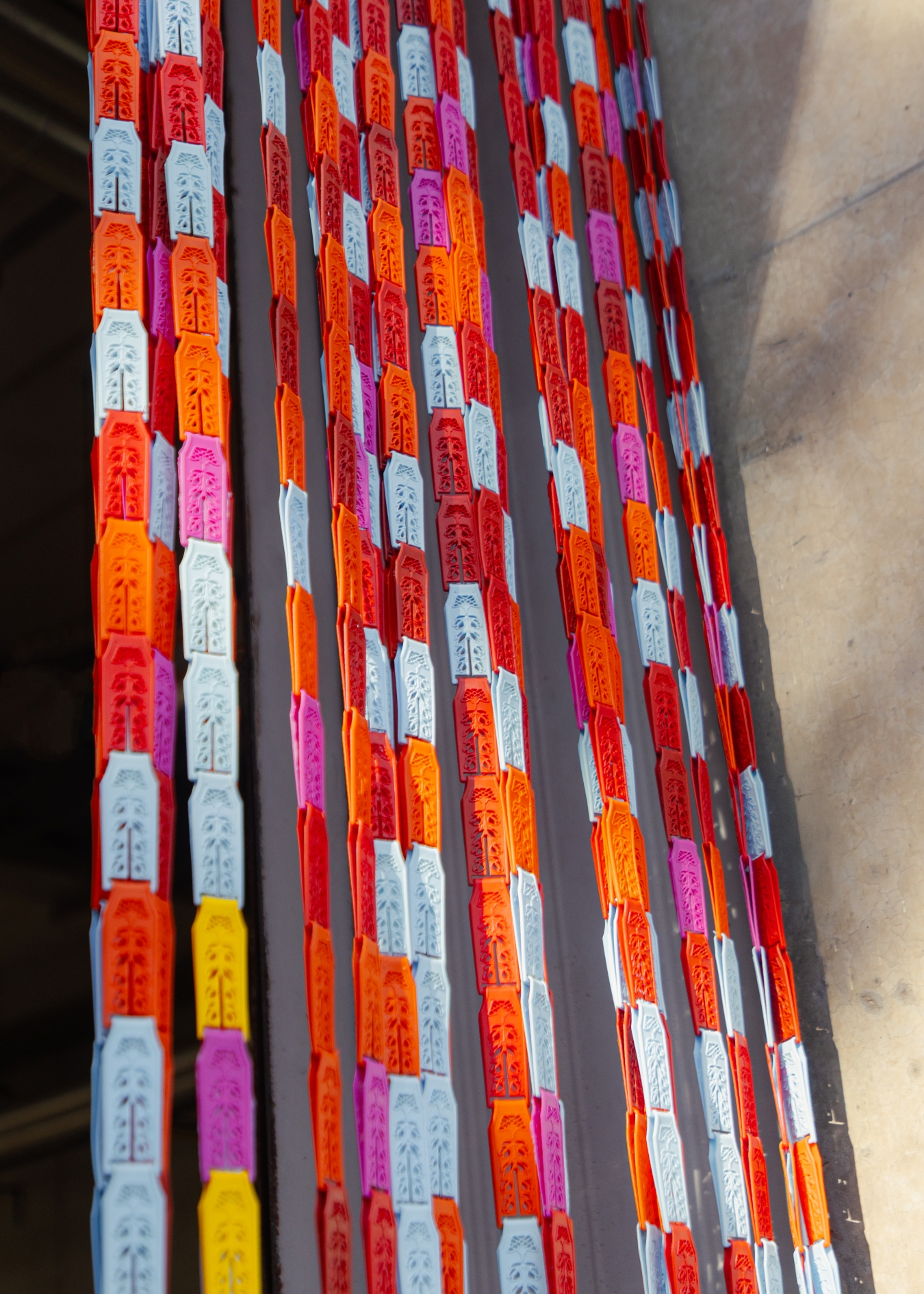
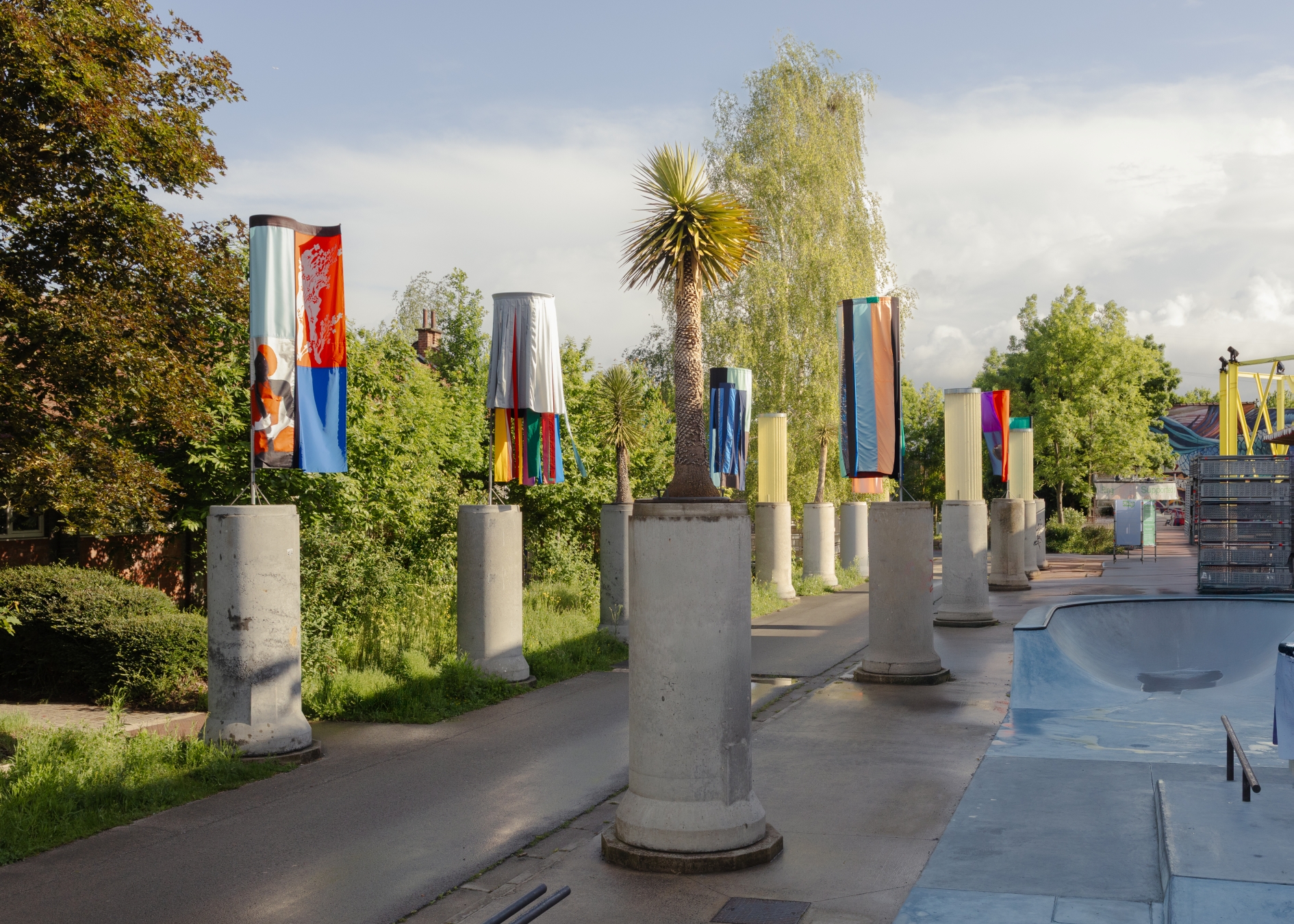
The installation takes the form of a large fly curtain, a vibrating and porous surface. Its structure is composed of piastrine,clip-on plastic modules traditionally used in southern Italy. Assembled into flexible vertical strands, they form a shifting, graphic layer that filters light and movement. Originally sourced during a previous collaboration with Every Island for the festival’s signage in 2023, the material reappears here as an evolving scenographic element, able to be assembled, moved, and reactivated across multiple editions.
Between horse, Horst, and hoarst, the project plays with slippages of language and imagery. The installation becomes a signal, a threshold, and a moving image shaped by the flow of the audience.
{{images-1}}
Emma Cogné (1993°,Segré-en-Anjou Bleu, FR) is a French designer based in Brussels. At the intersection of textiles and craftsmanship, her practice draws on materials sourced from the construction industry to question their uses, circulations, and the values attached to them. Through processes of reassignment and reuse, she displaces technical and artisanal gestures, allowing them to assume new functions and meanings. Conceived as an active threshold between the body and the built environment, textile becomes the central medium of her research, linking domestic and collective spheres. Through adaptation and reuse, her work explores forms of relation to the commons, where ornamentation operates as a politics of detail and care.
Flore Fockedey (1994°, Tournai, BE) is a Brussels-based designer and maker whose work explores surfaces as spatial and material systems. Working across textiles, architecture and installation, she assembles existing materials and techniques to question boundaries, temporality and construction. Her practice values collaboration, material intelligence and low-impact production, creating interventions that invite new ways of inhabiting space.
The rich text element allows you to create and format headings, paragraphs, blockquotes, images, and video all in one place instead of having to add and format them individually. Just double-click and easily create content.
A rich text element can be used with static or dynamic content. For static content, just drop it into any page and begin editing. For dynamic content, add a rich text field to any collection and then connect a rich text element to that field in the settings panel. Voila!
Headings, paragraphs, blockquotes, figures, images, and figure captions can all be styled after a class is added to the rich text element using the "When inside of" nested selector system.




.jpg)
.jpg)

.webp)

.avif)